7 Best Fusepoint Alternatives for Marketing Mix Modeling in 2025
Compare top fusepoint alternatives for marketing mix modeling and incrementality testing. Find the best MMM software for mid-market brands.
7 Best Fusepoint Alternatives for Marketing Mix Modeling in 2025
Your marketing budget is too valuable to waste on guesswork.
Yet most marketing teams still rely on platform-reported metrics that overstate results by 40-60%. They pour money into channels based on vanity metrics, wondering why revenue doesn't follow.
fusepoint emerged as a consultancy-first solution for marketing mix modeling, promising expert analysts to decode which channels actually drive revenue. But the market has evolved. New platforms now deliver the same insights faster, with more automation, and often at lower cost.
This guide explores seven fusepoint alternatives that help mid-market brands optimize marketing spend through proven marketing measurement methodologies. Whether you need AI-powered automation, faster implementation, or tighter budget constraints, you'll find a solution that fits.
What Is fusepoint?
fusepoint is a marketing analytics consultancy that specializes in media mix modeling and incrementality testing. Born from Power Digital's internal need to measure campaign effectiveness, fusepoint positions itself as a "measurement partner, not another SaaS tool."
Their approach combines human analysts with statistical modeling to answer one question: which marketing activities actually generate revenue?
Core services include:
- Media mix modeling across 24+ months of historical data
- Incrementality experiments with 95%+ statistical confidence
- Custom attribution frameworks
- Data infrastructure consulting
fusepoint targets mid-market brands looking to move beyond attribution models that broke when iOS 14 killed third-party tracking. They report clients achieve 22% faster revenue growth on average.
But here's the catch: fusepoint's consultancy model means longer implementation timelines, higher costs, and less flexibility for teams that need rapid answers. Modern alternatives automate much of this work while maintaining statistical rigor.
Why Consider fusepoint Alternatives?
Several factors drive marketing teams to explore other options:
Implementation speed matters. Traditional consulting approaches take 8-12 weeks to deliver initial insights. Modern MMM platforms deliver results in 3-4 weeks, with some providing preliminary insights within days.
Budget constraints are real. Consultancies charge premium rates for analyst time. Software-first platforms democratize access to the same statistical methods at 40-60% lower total cost.
Continuous measurement beats quarterly reports. Marketing moves fast. Waiting months between model updates means making decisions on stale data. Leading platforms now offer weekly or even daily model refreshes.
Automation reduces dependency. Relying on external analysts creates bottlenecks. Self-service platforms let internal teams run scenarios, test hypotheses, and optimize budgets without waiting for consultant availability.
Integration needs vary. Not every team needs full-service consulting. Some want plug-and-play MMM, others need incrementality testing, and many benefit from hybrid approaches that combine multiple marketing measurement techniques.
The best solution depends on your team's maturity, budget, timeline, and specific measurement challenges.
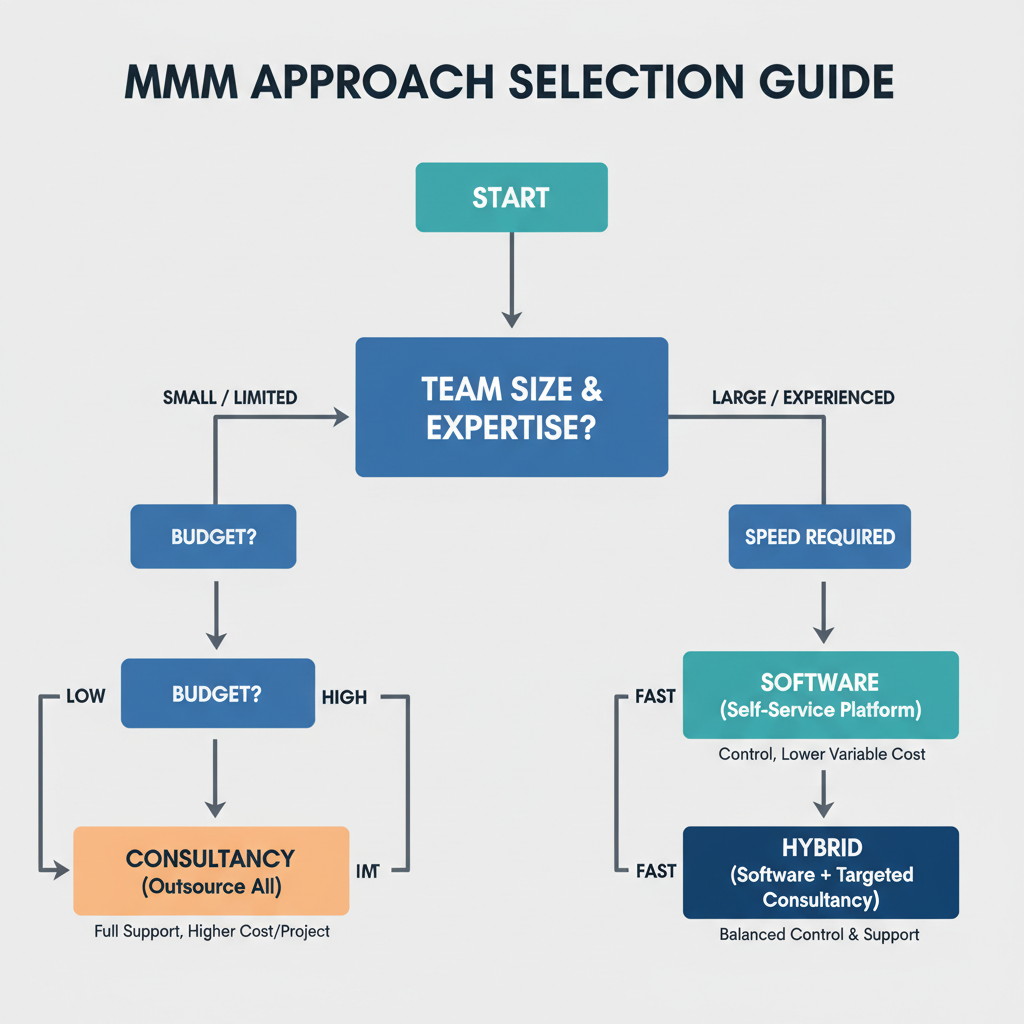
Choose your MMM approach based on team capabilities, budget constraints, and urgency of insights needed
Top 7 fusepoint Alternatives
1. BlueAlpha — Best AI-Powered MMM for Fast-Moving Brands
BlueAlpha turns marketing data into campaign-level recommendations in three weeks, not three months.
Built by the team behind Tesla's growth systems, BlueAlpha delivers what traditional consultancies struggle with: continuous measurement that keeps pace with how modern marketing actually operates.
What sets BlueAlpha apart:
Their AI-powered system integrates time-sensitive incrementality tests directly into a Bayesian MMM framework, offering more accurate attribution than static quarterly models. While competitors refresh models monthly, BlueAlpha measures the real impact of every channel continuously, giving teams fresh insights every week.
The platform automatically handles data integration, cleansing, and model deployment. No three-month waiting period for initial results. No dependency on analyst availability for optimization scenarios.
Best for: DTC brands, ecommerce companies, and mid-market businesses with monthly media spends of $50K+ who need rapid answers and continuous optimization. Teams that want expert marketing measurement without consultant dependencies.
Real results: When testing their methodology with beehiiv, BlueAlpha discovered Meta's true incremental cost was 345% higher than platform-reported CPA, while TikTok was performing significantly better than surface metrics suggested. These insights drove immediate budget reallocation that improved overall efficiency.
Pricing: Custom pricing based on media spend and complexity, typically 40-60% less than consultancy-based alternatives.
2. Measured — Incrementality-First Attribution Platform
Measured pioneered automated incrementality testing for brands tired of attribution theater.
Their platform makes it simple to launch controlled experiments that answer the only question that matters: what happens when we turn this channel off?
Core capabilities:
Measured automates the entire testing lifecycle, from experimental design through statistical analysis to actionable recommendations. Launch tests in minutes, not weeks. Results arrive with 95%+ statistical confidence, eliminating the guesswork that plagues correlation-based models.
The platform's MMM calibrates continuously against incrementality results, treating experiments as ground truth. This hybrid approach delivers accuracy that pure modeling can't match, while maintaining the coverage incrementality alone lacks.
Best for: Performance marketers managing Facebook, TikTok, and Google campaigns who need definitive answers about channel effectiveness. Especially valuable for brands spending $100K+ monthly on paid social.
Standout feature: Automated test-and-learn infrastructure that runs experiments continuously in the background, building a knowledge base of true channel performance over time.
Considerations: Heavier focus on paid digital channels; less comprehensive for brands with significant offline spend or emerging channel mix.
3. Lifesight — Unified Marketing Measurement Suite
Lifesight combines MMM, incrementality testing, and attribution in a single platform designed for data-driven marketers.
Their unified approach eliminates the fragmentation that occurs when using separate tools for different measurement methodologies.
Platform architecture:
Lifesight's AI engine automatically suggests test designs based on your channel mix and historical performance, reducing manual effort by approximately 60%. The platform handles the statistical heavy lifting while keeping marketers in control of strategic decisions.
Real-time dashboards show channel performance across multiple measurement lenses simultaneously. See attribution weights, MMM coefficients, and incrementality results side-by-side, gaining triangulated confidence in optimization recommendations.
Best for: Mid-to-large DTC and ecommerce brands with annual revenues between $30M-$1B and media spends exceeding $5M annually. Teams that value comprehensive measurement but lack dedicated data science resources.
Pricing structure: Starter plans for mid-size brands begin at $5,000 monthly, scaling based on data volume and feature requirements.
Integration strength: Pre-built connectors for 100+ marketing platforms accelerate implementation. Most brands achieve full deployment within 4-6 weeks.
4. Rockerbox — Agile MMM for Ecommerce Growth Teams
Rockerbox specializes in marketing measurement for fast-growing ecommerce brands that can't wait months for insights.
Their agile MMM methodology delivers continuous measurement capabilities while maintaining the rigor of traditional approaches.
Measurement philosophy:
Rockerbox combines three methodologies—MMM, multi-touch attribution, and incrementality testing—to provide complete visibility into marketing performance. This triangulated approach compensates for each method's blind spots while amplifying their strengths.
The platform's visualization layer makes complex statistical outputs accessible to non-technical stakeholders. CMOs and executives get executive summaries; analysts access the underlying model details and assumptions.
Best for: Ecommerce brands with diversified channel mix including significant organic, referral, and lifecycle marketing efforts. Companies that need board-ready reporting alongside tactical optimization guidance.
Unique advantage: Testing infrastructure designed specifically for ecommerce constraints, accounting for typical conversion windows, seasonal patterns, and promotional cycles that generic tools miss.
Implementation timeline: Most brands see preliminary insights within 2-3 weeks, with full model deployment complete in 4-6 weeks.
5. Haus — Marketing Science Platform for Rigorous Measurement
Haus takes an academic approach to marketing measurement, prioritizing statistical correctness over speed.
Their platform caters to sophisticated marketing teams who understand the difference between correlation and causation.
Methodological rigor:
Haus built their entire platform around one principle: measure incrementality, then calibrate everything else against it. Their experimentation infrastructure runs controlled tests across online and offline channels, establishing ground truth for true marketing impact.
The platform's Bayesian MMM then extends experimental learnings across channels and timeframes where testing isn't feasible, maintaining causal rigor while providing comprehensive coverage.
Best for: Brands with mature marketing organizations, dedicated analytics teams, and appreciation for statistical nuance. Companies willing to invest in proper measurement infrastructure rather than chasing quick wins.
Standout capability: Geo-based incrementality testing that works for channels like TV, podcast, and brand campaigns where user-level testing isn't possible.
Learning curve: Steeper than plug-and-play alternatives, but this reflects genuine complexity rather than poor UX. Teams invest 2-3 weeks learning the platform but gain measurement capabilities that last years.
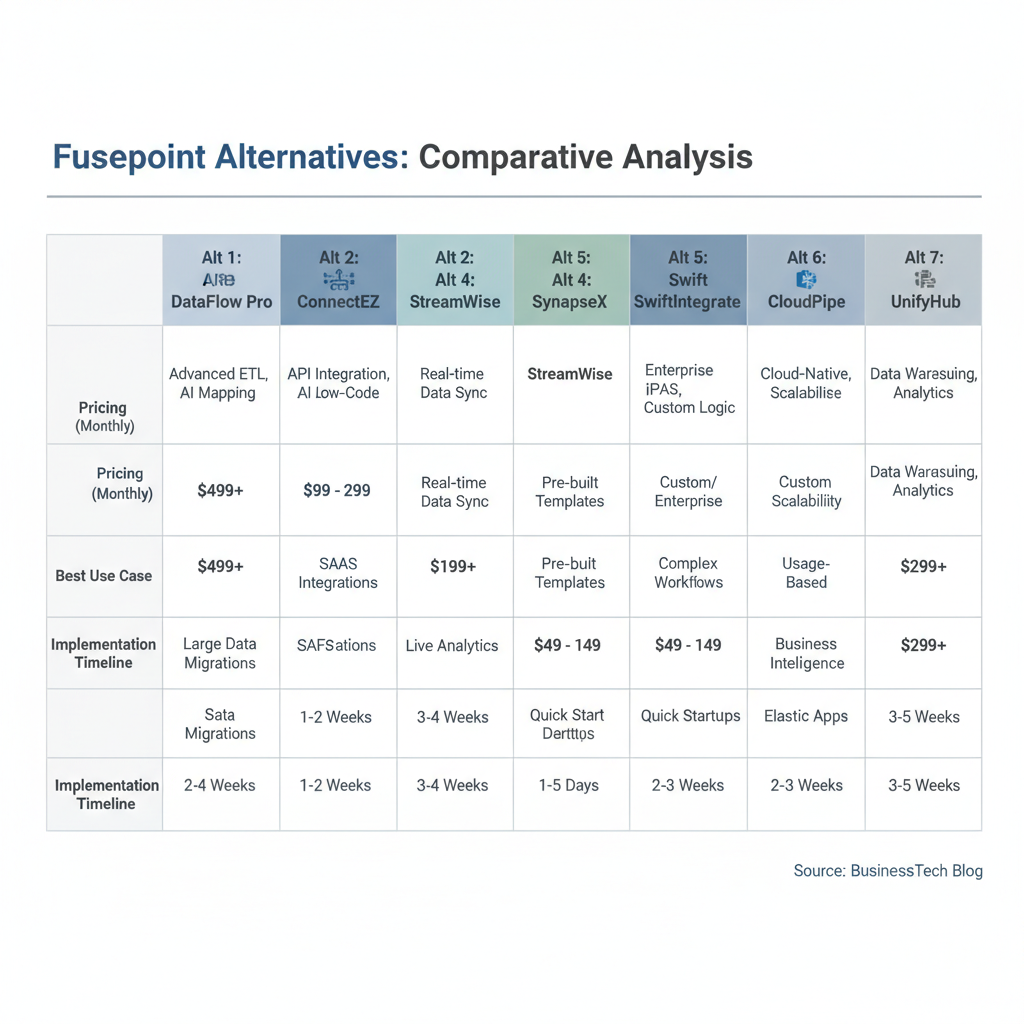
Compare MMM platforms across implementation speed, automation level, and ideal company size
6. Sellforte — eCommerce-Optimized MMM Platform
Sellforte specializes in continuous MMM tailored specifically for ecommerce and retail brands.
Their platform acknowledges that ecommerce operates differently than traditional businesses, with shorter decision cycles and more volatile performance patterns.
eCommerce-specific features:
Sellforte's models account for same-day and next-day effects that matter immensely in digital commerce but get averaged out in traditional monthly MMM. This granularity reveals optimization opportunities competitors miss.
The platform provides unbiased campaign insights by modeling saturation curves for each tactic, showing exactly where diminishing returns begin. No more wondering whether to increase or decrease spend—the recommendations come with confidence intervals.
Best for: eCommerce and DTC brands seeking comprehensive MMM without traditional consulting overhead. Companies with €200K+ monthly media spend benefit most from the platform's sophisticated optimization algorithms.
Pricing accessibility: €2,990 monthly for ecommerce businesses, €3,490 for DTC brands. Also offers free "Launchpad" tier for qualifying early-stage companies.
Technical edge: AI-powered forecasting that adjusts for seasonality, promotional cycles, and competitive dynamics automatically. Most platforms require manual seasonal adjustments.
7. Recast — DTC-Focused MMM for Paid Social Heavy Brands
Recast built their MMM platform specifically for DTC brands with heavy Facebook, TikTok, and Google Ads exposure.
They understand the unique challenges of managing paid social at scale, where platform attribution is notoriously unreliable.
Paid social expertise:
Recast's models incorporate platform-specific nuances like Meta's learning phase dynamics, TikTok's creative decay patterns, and Google's auction dynamics. Generic MMM tools treat all channels the same; Recast optimizes for the reality of how paid social actually works.
Campaign-level budget recommendations arrive weekly, not quarterly. The platform tells you exactly which campaigns deserve more budget and which hit diminishing returns, with the statistical backing to defend decisions to executives.
Best for: DTC brands spending 70%+ of budgets on paid social channels. Companies frustrated with Meta and Google's inflated performance reports who need objective measurement.
Validation approach: Rigorous holdout testing and continuous model validation ensure recommendations remain accurate as markets shift. Many MMM tools ignore model drift; Recast monitors it actively.
Support structure: Dedicated customer success teams help translate model outputs into actionable media plans. Bridges the gap between data science and day-to-day execution.
How to Choose the Right MMM Alternative
Selecting the best marketing measurement solution requires matching capabilities to your specific needs.
Start with budget reality. Consultancies like fusepoint offer white-glove service but cost significantly more. Software platforms deliver 80% of the value at 40% of the price. Determine whether you're optimizing for hand-holding or efficiency.
Consider implementation urgency. Need insights next month or next quarter? AI-powered platforms like BlueAlpha deliver preliminary results in weeks. Traditional consulting approaches require 2-3 months before first insights.
Assess internal capabilities. Teams with strong analytics talent benefit from self-service platforms that provide tools and autonomy. Less technical organizations might prefer solutions with more consultation and support.
Evaluate channel coverage. Platforms vary in how well they handle different channel types. Digital-first brands need strong paid social modeling. Omnichannel retailers require robust offline measurement and integration with retail sales data.
Question everything about causality. The biggest mistake in MMM evaluation is accepting correlation-based results as causal truth. Ask providers: How do you validate models? What's your approach to incrementality? How do you handle confounding variables?
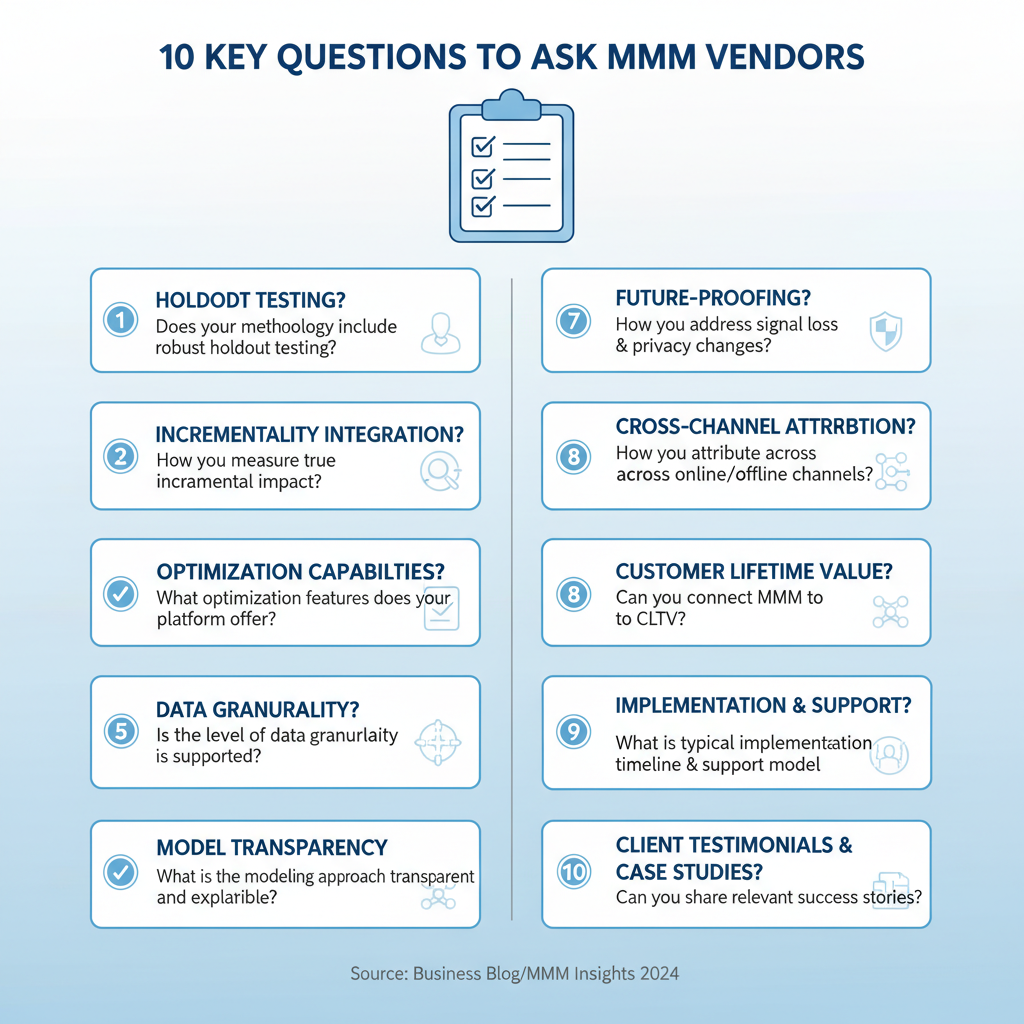
Use this evaluation framework to assess MMM providers and avoid correlation-based modeling that overstates channel performance Look for continuous measurement. Quarterly model updates made sense in 2015. In 2025, modern platforms offer weekly refreshes that keep pace with how fast marketing actually changes. Static models become outdated before you can act on them.
Demand campaign-level insights. Channel-level optimization (Google vs Meta) barely moves the needle. The real gains come from campaign-level and creative-level optimization. Ensure your platform provides granular recommendations that translate directly to media plans.
Test their testing. The best MMM platforms integrate incrementality experiments as validation. Ask how they handle geo-based testing, holdout groups, and test-control matching. Poor experimental design produces worthless results.
Frequently Asked Questions
What's the difference between MMM software and marketing analytics platforms?
Marketing analytics platforms track and report what happened. They show you clicks, impressions, conversions, and costs across channels. Think Google Analytics or platform dashboards.
MMM software goes deeper, using statistical modeling to estimate the causal impact of each channel on business outcomes. While analytics shows correlation, MMM reveals which channels actually drive incremental revenue when you account for seasonality, competitive activity, and external factors.
Do I need a consultancy or can I use MMM software directly?
Depends on your team's analytical capabilities and the complexity of your channel mix. Software platforms like BlueAlpha work well for teams with at least one analytically-minded marketer who can interpret results and build media plans.
Consultancies add value when you're completely new to MMM, have exceptionally complex attribution challenges, or lack internal resources to implement recommendations. But recognize you're paying 2-3x more for this hand-holding.
How much data do I need before starting with MMM?
Most platforms require minimum 12-18 months of historical data across all channels. You need enough data points to isolate true signal from noise and model seasonal patterns accurately.
Brands spending less than $50K monthly on marketing typically don't have enough volume for reliable MMM. The statistical uncertainty becomes too large to generate actionable insights.
Can MMM measure brand campaigns and upper-funnel activity?
Yes, though it requires more sophisticated modeling than direct-response channels. Advanced MMM platforms use stock and flow models that capture how brand investment builds over time and decays gradually, unlike performance campaigns with immediate impact.
Brand measurement benefits significantly from incorporating incrementality tests. Geo-based experiments help establish ground truth for channels like TV, podcast, and display where user-level tracking doesn't work.
What's the ROI of investing in proper marketing measurement?
Most brands see 15-25% improvement in marketing efficiency within the first year of implementing rigorous measurement. This comes from eliminating waste on overstated channels and doubling down on genuinely effective tactics.
For a brand spending $2M annually on marketing, a 20% efficiency gain equals $400K in either cost savings or incremental revenue for the same spend. Most MMM platforms cost $60-150K annually, delivering 3-7x ROI in year one.
How often should MMM models update?
Weekly for digital-heavy brands operating in dynamic markets. Monthly for more stable businesses with significant offline channels. Quarterly updates—the old consulting standard—no longer keep pace with modern marketing velocity.
The best platforms offer continuous learning, where models update automatically as new data arrives. This eliminates the lag between market changes and model understanding.
Should I prioritize MMM or incrementality testing?
Start with incrementality testing if you're new to rigorous measurement. Tests provide definitive answers about specific channels and build organizational trust in causal measurement.
Add MMM once you're comfortable with incrementality concepts and need comprehensive coverage across all channels. The ideal state combines both: MMM for continuous measurement, incrementality tests for validation and exploring edge cases.
Finding Your Best fusepoint Alternative
fusepoint helped legitimize marketing mix modeling for mid-market brands. But the measurement landscape evolved.
Modern platforms deliver faster insights, continuous optimization, and AI-powered automation that consultancy models can't match. You no longer choose between accuracy and speed—the best tools provide both.
For most performance-focused marketing teams, BlueAlpha offers the ideal balance: rigorous methodology, rapid implementation, and continuous measurement that keeps pace with modern marketing. Their AI-powered platform delivers campaign-level recommendations in weeks, not quarters, while maintaining the statistical rigor that makes MMM valuable.
Ready to move beyond attribution theater? Explore BlueAlpha's approach to marketing measurement or compare how different platforms handle your specific channel mix and measurement challenges.
The brands winning in 2025 aren't guessing which channels work. They're measuring incrementality, optimizing continuously, and allocating budgets based on causal evidence rather than correlation.
Your marketing budget deserves better than platform-reported metrics. Choose a measurement solution that tells you the truth.
Stay in the loop
Get updates on new posts and resources.