Lifesight vs BlueAlpha.ai: Which Platform Delivers Better Marketing Measurement?
Compare Lifesight vs BlueAlpha.ai for marketing measurement. Discover which unified analytics platform best fits your attribution and optimization needs.
Marketing measurement has become a strategic imperative. With privacy regulations tightening and third-party cookies disappearing, the platforms you choose today determine whether you'll have visibility into marketing performance tomorrow.
Lifesight vs BlueAlpha.ai represents one of the more nuanced decisions in the marketing analytics space. Both platforms promise comprehensive measurement, AI-powered insights, and privacy-compliant approaches. But their methodologies, strengths, and ideal use cases differ in ways that matter.
This comparison breaks down exactly what each platform offers, where they excel, and which type of organization should choose each solution.
The Marketing Measurement Challenge Both Platforms Solve
Before diving into specifics, it's worth understanding the problem space. According to Gartner, marketing teams waste 26% of their budgets on ineffective channels and strategies—largely due to measurement gaps.
Traditional attribution models built on user-level tracking are collapsing. iOS privacy changes, GDPR, CCPA, and the impending death of third-party cookies have rendered legacy approaches unreliable. Research from the IAB confirms that 78% of marketers report significant measurement disruption from privacy changes.
Both Lifesight and BlueAlpha.ai emerged as solutions to this new reality. They share a common goal: help marketers understand what's actually working without relying on individual user tracking. How they achieve this goal differs substantially.
For foundational context on why measurement methodology matters, our marketing effectiveness measurement guide covers the core concepts both platforms build upon.
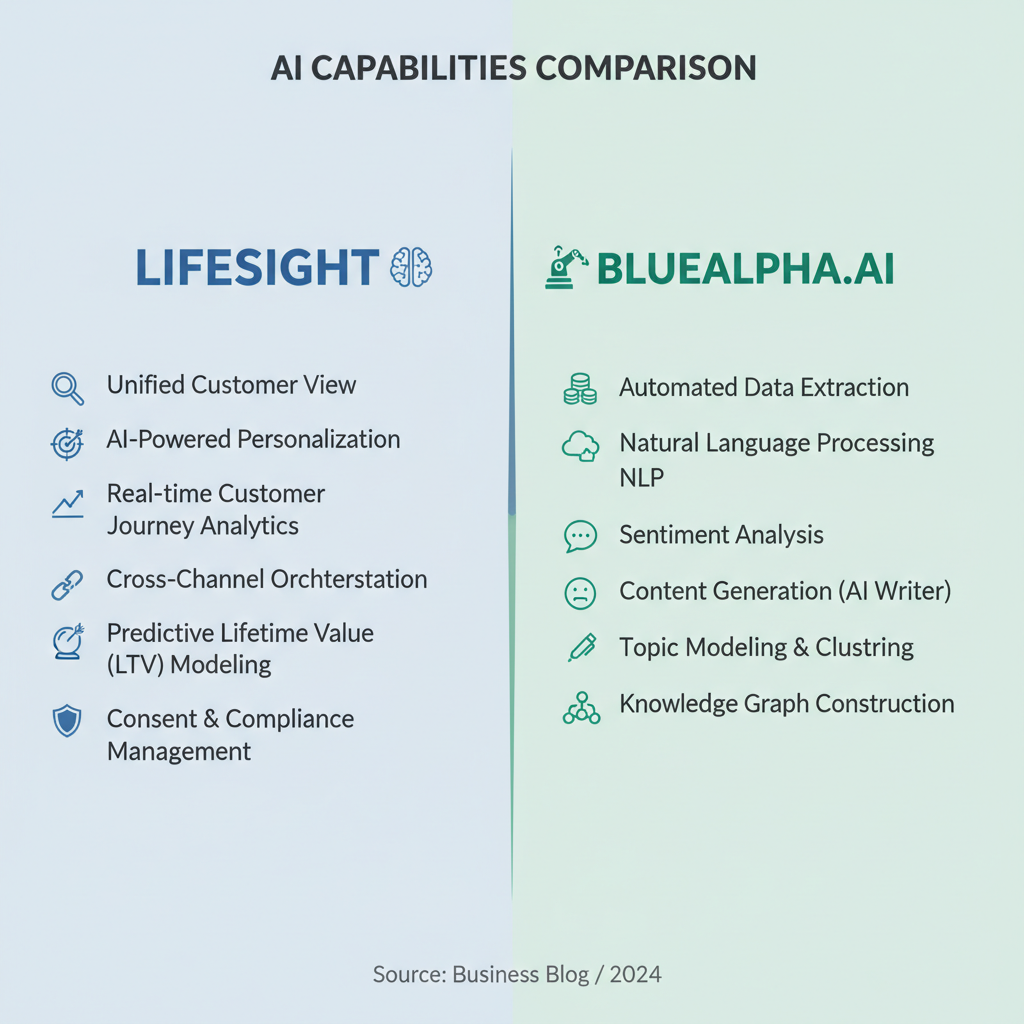
Both platforms solve privacy-compliant measurement but employ different methodologies
Lifesight: Platform Deep Dive
Platform Overview
Lifesight positions itself as a "unified marketing measurement platform"—a single system that combines multiple measurement methodologies into one cohesive solution. Rather than forcing marketers to choose between attribution models, Lifesight integrates them.
The platform launched with a specific thesis: no single measurement methodology captures the full picture. By combining marketing mix modeling, multi-touch attribution, incrementality testing, and causal AI, Lifesight aims to provide comprehensive visibility that individual approaches can't match.
Core philosophy: Measurement should be unified, not fragmented—multiple methodologies working together produce better answers than any single approach alone.
Key Features
Marketing Mix Modeling (MMM) Lifesight's MMM capabilities analyze aggregate data to assess the incremental impact of different marketing channels. This enables budget optimization and outcome forecasting without individual user tracking. For deeper context on MMM methodology, our guide on media mix modeling and attribution explains the underlying principles.
Multi-Touch Attribution (MTA) Beyond last-click attribution, Lifesight provides granular campaign-level insights by evaluating the contribution of each touchpoint in the customer journey. Their MTA is powered by incrementality insights, calibrating attribution weights based on actual measured impact rather than arbitrary rules.
Incrementality Testing The platform includes built-in incrementality testing capabilities to measure true marketing effectiveness. These tests calibrate and validate Lifesight's models, grounding statistical estimates in experimental evidence. McKinsey research confirms that experimental validation significantly improves model accuracy.
Causal AI Lifesight integrates causal AI with their MMM and MTA components to deliver insights that distinguish causation from correlation. This helps marketers understand not just what happened, but why—and what to do about it.
Unified Data Integration The platform centralizes marketing data from various channels into a single source of truth. This eliminates the data fragmentation that plagues many marketing teams managing complex media budgets across multiple platforms.
Budget Planning and Forecasting Scenario planning tools allow marketers to create and compare budget plans, forecasting their impact on revenue before committing spend. This transforms measurement from backward-looking reporting into forward-looking strategy.
Ideal Use Cases
Lifesight works best for:
- Mid-market to enterprise brands seeking unified measurement across methodologies
- Teams wanting self-service analytics with built-in statistical sophistication
- Organizations requiring multiple measurement approaches in one platform
- Marketers focused on budget optimization and scenario planning
The platform appeals to teams that want comprehensive measurement without building separate systems for MMM, attribution, and incrementality testing.
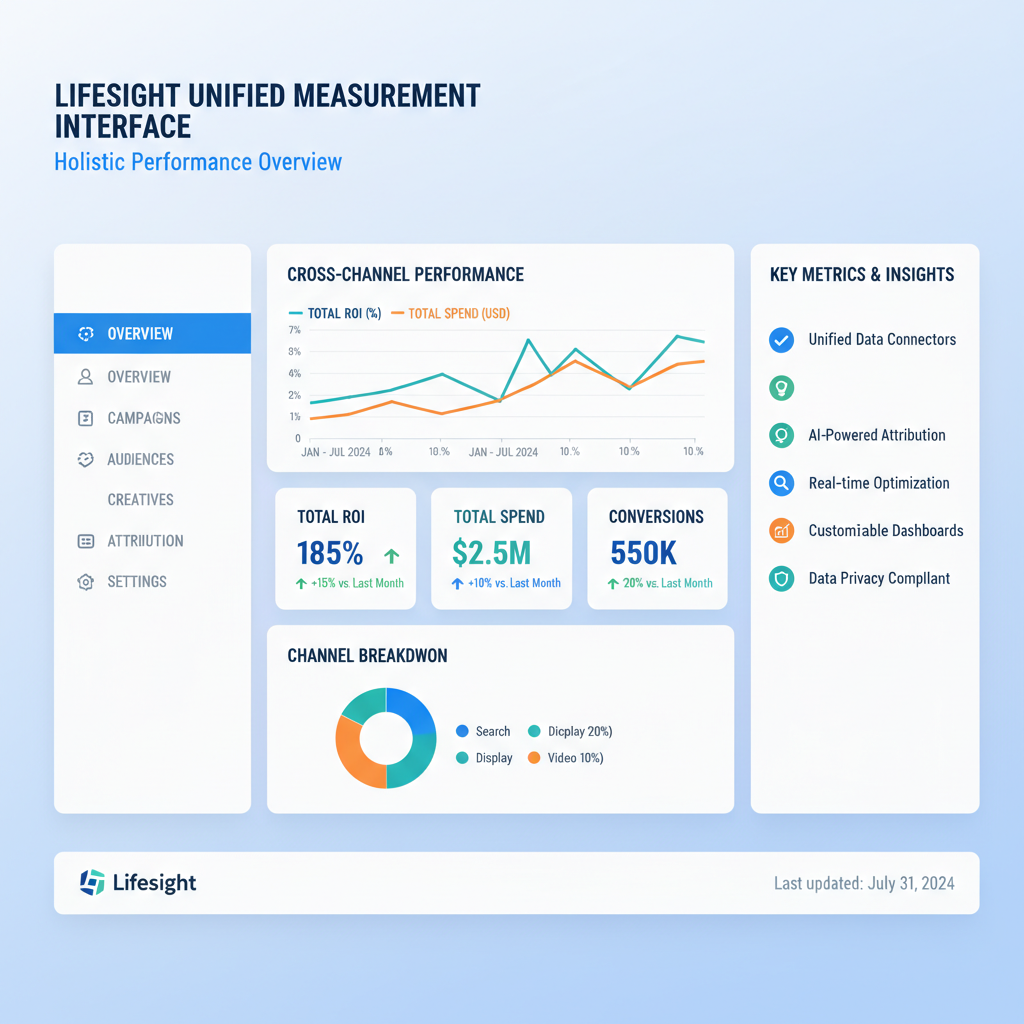
Lifesight combines multiple measurement methodologies in a single interface
BlueAlpha.ai: Platform Deep Dive
Platform Overview
BlueAlpha.ai takes a different approach, emphasizing AI-driven action over passive measurement. Founded by former Tesla growth leaders, the platform positions itself as "The AI Action System for Marketing"—focused on turning data into decisions, not just dashboards.
Where Lifesight asks "how do we measure everything comprehensively?", BlueAlpha.ai asks "how do we drive better outcomes faster through AI?"
Core philosophy: Measurement exists to inform action. The faster you can move from insight to optimization, the more value you create.
Key Features
AI-Powered Marketing Optimization BlueAlpha.ai's standout capability is its AI-driven approach to marketing optimization. Rather than presenting data for marketers to interpret, the platform delivers specific, actionable recommendations with expected outcomes. This reduces the gap between measurement and action that slows many marketing teams.
Data Unification and Synthesis The platform addresses data silos by consolidating insights from various marketing tools and platforms. But BlueAlpha.ai goes beyond simple aggregation—it synthesizes data to identify patterns and opportunities that manual analysis would miss. According to Forrester, data fragmentation is the top barrier to marketing effectiveness.
Incremental Impact Analysis BlueAlpha.ai employs statistical modeling to isolate true incremental marketing contribution. This separates what marketing actually drove from what would have happened anyway—crucial for understanding real marketing ROI.
Campaign-Level Optimization While many measurement platforms operate at the channel level, BlueAlpha.ai provides campaign and creative-level granularity. This enables optimizations within channels—adjusting individual campaigns rather than just shifting budget between platforms. Our guide on funnel stage budget allocation explores why this granularity matters.
Transparent Decision-Making Despite AI automation, BlueAlpha.ai emphasizes transparency. Marketers can see the reasoning behind recommendations, maintaining human oversight while benefiting from AI speed and scale.
Privacy-Compliant Architecture Like Lifesight, BlueAlpha.ai operates without user-level tracking or cookies. Their statistical modeling approach naturally accommodates privacy constraints, future-proofing measurement against ongoing regulatory changes.
Ideal Use Cases
BlueAlpha.ai works best for:
- Growth-focused organizations prioritizing speed to action
- Teams without deep analytics resources needing AI-driven insights
- Organizations managing significant media spend requiring optimization at scale
- Marketers seeking campaign-level recommendations for day-to-day decisions
- Companies valuing transparent AI that explains its reasoning
The platform appeals to teams that want AI to do the analytical heavy lifting while maintaining strategic control.
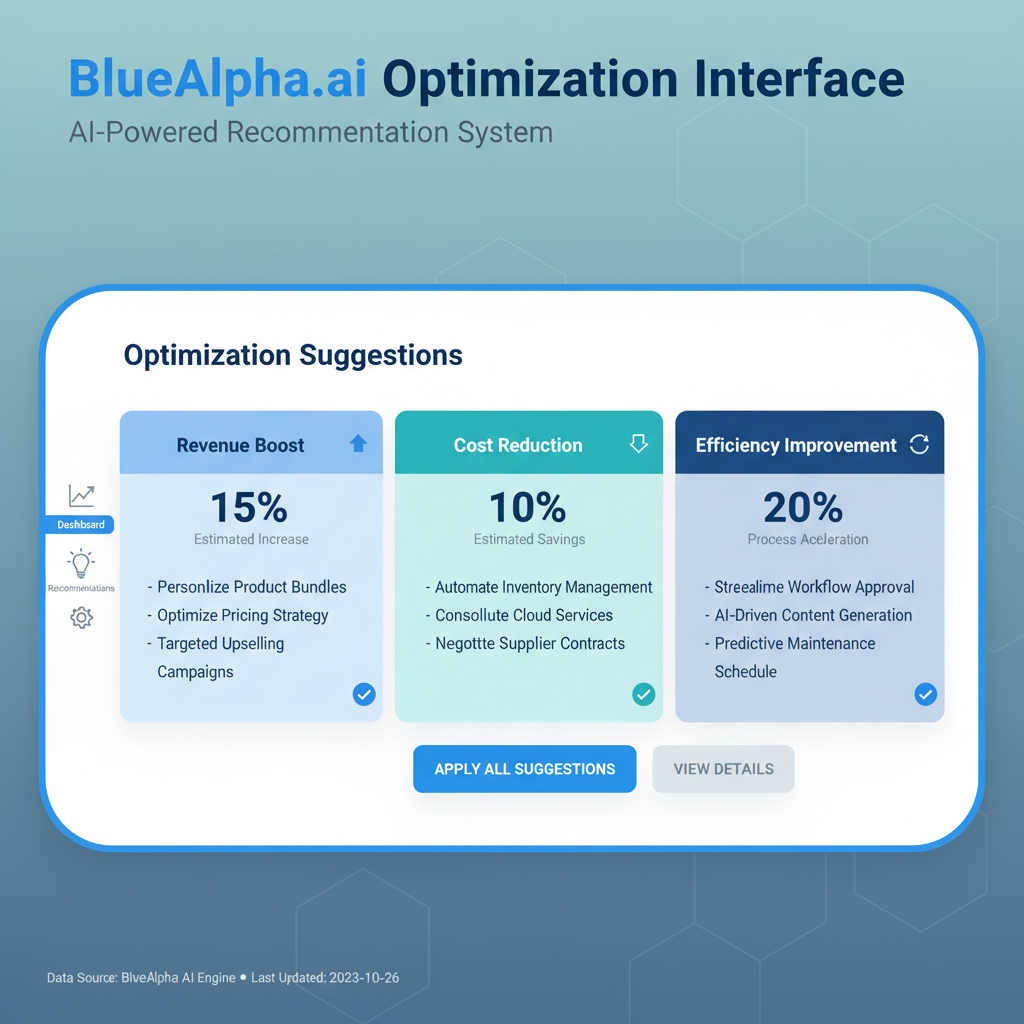
AI-driven recommendations transform measurement into immediate action
Head-to-Head Comparison
Methodology: Unified Measurement vs. AI-First Action
This represents the fundamental difference between platforms.
Lifesight unifies multiple measurement methodologies—MMM, MTA, incrementality testing, and causal AI—into one comprehensive system. The emphasis is on complete, accurate measurement across approaches.
BlueAlpha.ai leads with AI-powered analysis designed to drive action. Measurement serves optimization, and the platform is architected to move quickly from insight to recommendation.
Neither approach is inherently superior. Comprehensive unified measurement provides confidence and completeness. AI-first action provides speed and operational efficiency. Research from the Marketing Science Institute suggests that measurement value ultimately depends on how quickly and effectively organizations act on insights.
| Aspect | Lifesight | BlueAlpha.ai |
|---|---|---|
| Primary Focus | Unified measurement | AI-driven action |
| Methodologies | MMM + MTA + Incrementality + Causal AI | AI/ML modeling with incremental analysis |
| Data Integration | Unified single source | Synthesized insights |
| Recommendation Style | Insights for human decision-making | Direct AI recommendations |
| Granularity | Channel and campaign level | Campaign and creative level |
| Implementation | Self-service platform | Guided consulting approach |
For deeper understanding of measurement methodology differences, our marketing effectiveness guide explores when each approach works best.
Target Audience and Company Profile
Lifesight targets mid-market to enterprise organizations seeking comprehensive measurement capabilities. Their unified approach appeals to teams that want multiple methodologies without managing separate vendors.
BlueAlpha.ai serves organizations prioritizing growth efficiency and rapid optimization. Their AI-first approach reduces the internal expertise required to extract value from marketing data.
Implementation and Time to Value
Lifesight offers a self-service platform with:
- Faster initial setup through native integrations
- Multiple methodologies available immediately
- Ongoing self-service analysis and optimization
BlueAlpha.ai provides a consultative approach:
- Custom implementation tailored to business context
- Guided model development and validation
- Expert interpretation and strategic recommendations
Pricing Considerations
Neither platform publishes transparent pricing—typical for enterprise marketing analytics. Both likely price based on:
- Total marketing spend under measurement
- Number of channels and data sources
- Level of support and services required
Based on market positioning, both platforms target similar mid-market to enterprise segments. Organizations should request detailed pricing based on their specific requirements.
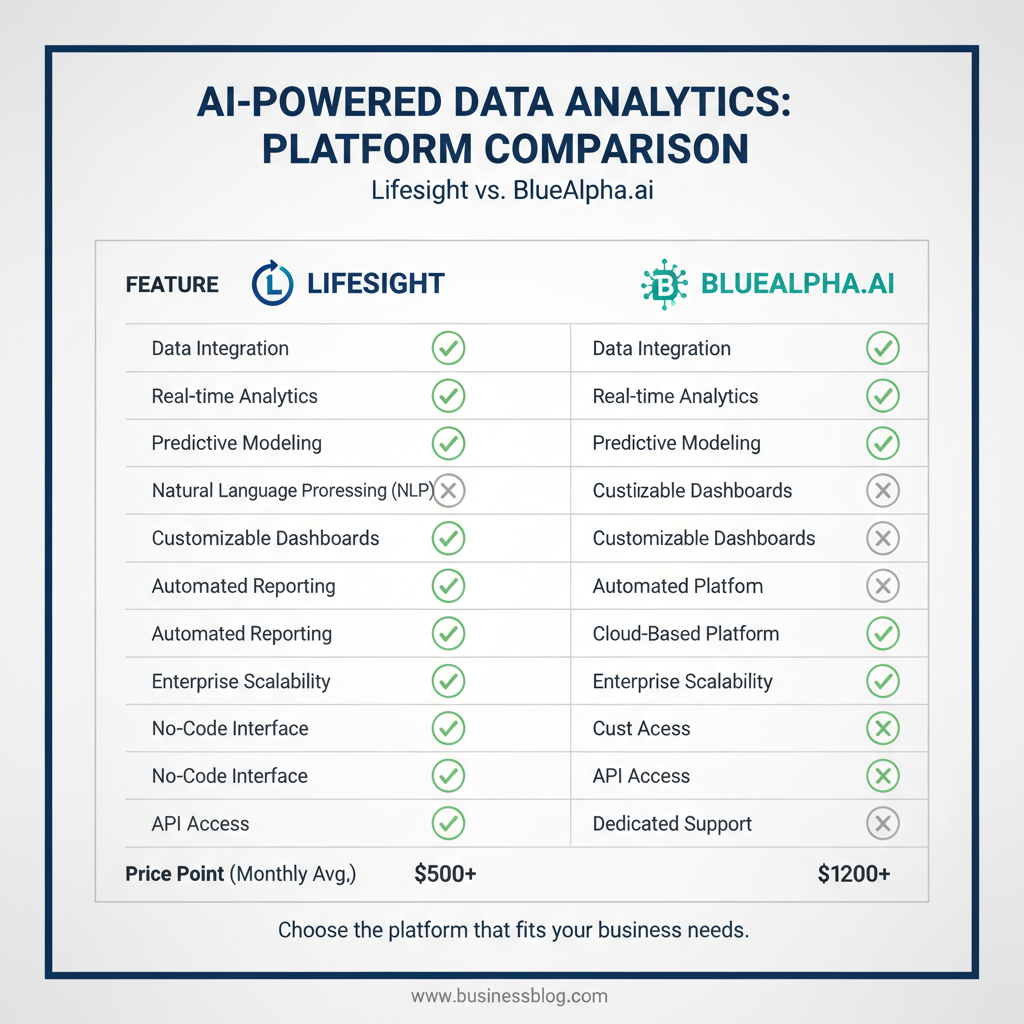
Feature-by-feature comparison reveals where each platform's strengths lie
Decision Framework: Which Platform Fits Your Needs?
Choose Lifesight If:
- You want multiple methodologies unified in a single platform without managing separate tools
- Self-service analytics is important and your team can interpret sophisticated outputs
- You need built-in incrementality testing to validate model accuracy
- Scenario planning matters for budget decisions and executive presentations
- Privacy compliance is a priority and you want a platform built for the cookieless future
Choose BlueAlpha.ai If:
- Speed to action matters most and you want AI driving recommendations
- Your team lacks deep analytics expertise and needs guidance, not just data
- Campaign-level optimization is critical for day-to-day performance management
- You prefer transparent AI that explains its reasoning
- You value a consultative approach with expert interpretation included
Consider Alternatives If:
Both platforms may not fit if:
- You're building in-house measurement capabilities and need methodology transfer, not software
- Your spend is below $500K annually where platform costs may exceed value
- You lack clean first-party data required for any measurement approach
Our MMM readiness checklist helps assess whether your organization is prepared for either platform.
Integration With Your Marketing Stack
Both platforms need to connect with your existing marketing infrastructure. Consider how each fits your current setup.
Data Sources: Both platforms can ingest data from major advertising platforms, analytics tools, and CRM systems. Evaluate connector availability for your specific tools.
Downstream Systems: Consider where insights need to flow—BI tools, ad platforms, or planning systems.
Complementary Tools: Some organizations use platforms like these alongside broader marketing measurement ecosystems. Ensure compatibility with existing investments.
Limitations and Considerations
Lifesight Limitations
- Complexity can overwhelm teams without analytics experience
- Multiple methodologies require understanding to interpret correctly
- Self-service model assumes capability that not all teams have
BlueAlpha.ai Limitations
- AI recommendations require validation before blind execution
- Consulting approach adds timeline compared to pure self-service
- Less public methodology documentation compared to some competitors
Both platforms require quality first-party data to deliver value. Our preparation tips cover building the data foundation both require.
Making Your Decision
The Lifesight vs BlueAlpha.ai choice reflects your organization's measurement philosophy and operational model.
Lifesight suits teams that want comprehensive, unified measurement with self-service capabilities. If you value having multiple methodologies in one platform and have the expertise to leverage them, Lifesight provides that foundation.
BlueAlpha.ai suits teams that prioritize action over analysis paralysis. If you want AI-driven recommendations with expert guidance and transparent reasoning, BlueAlpha.ai's approach accelerates time to value.
Neither represents a wrong choice—the right choice depends on your specific context, capabilities, and how you want to operationalize measurement insights.
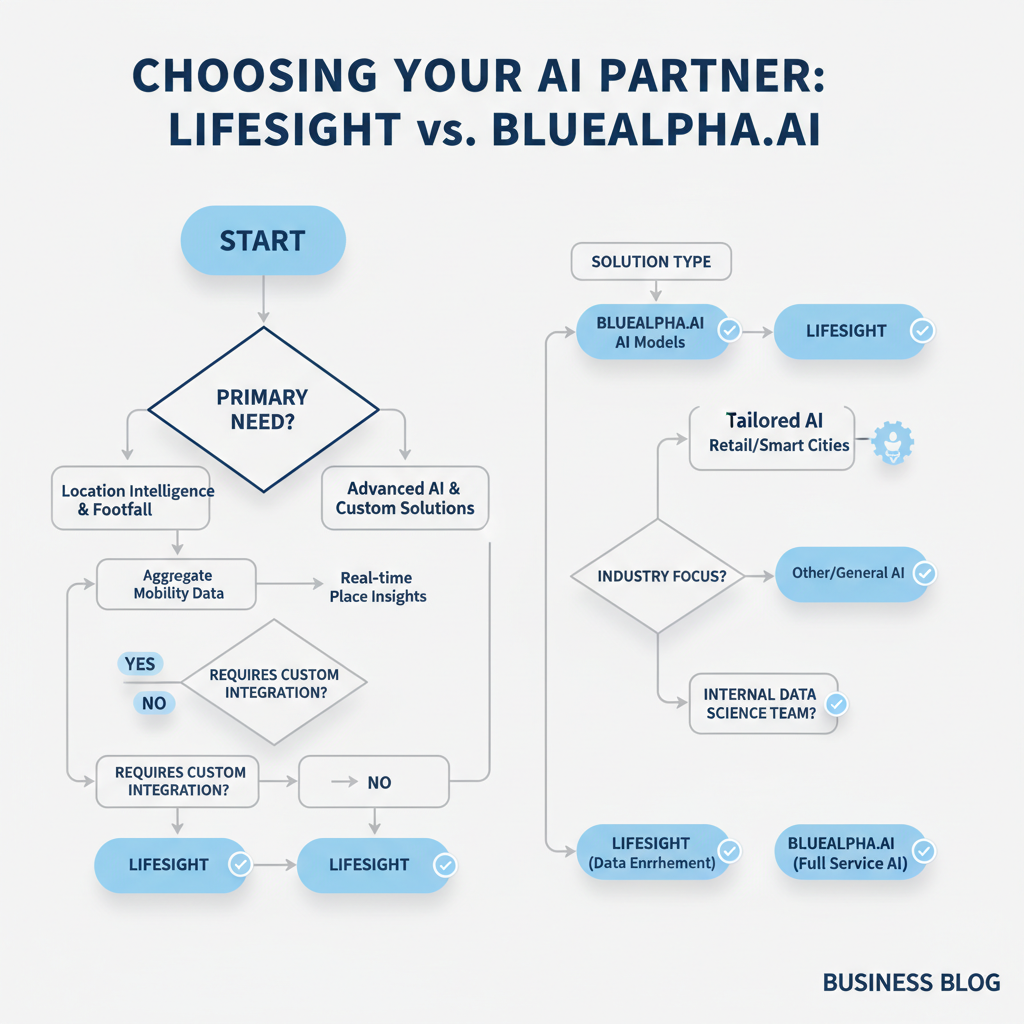
Use this framework to determine which platform aligns with your measurement needs
Frequently Asked Questions
How do Lifesight and BlueAlpha.ai handle privacy compliance?
Both platforms operate without individual user tracking, making them compliant with GDPR, CCPA, and similar regulations. Lifesight emphasizes privacy-first design across all methodologies. BlueAlpha.ai uses aggregate statistical modeling that doesn't require cookies or user-level data. Both are built for the post-cookie measurement landscape.
What's the minimum marketing budget needed for each platform?
Neither platform publishes minimum requirements. Generally, marketing mix modeling platforms deliver strongest ROI for organizations spending $500K+ monthly across multiple channels, where optimization improvements translate to significant dollars. Smaller organizations should evaluate expected ROI against platform costs.
Can Lifesight and BlueAlpha.ai work together?
While most organizations choose one primary measurement platform, some use multiple tools for different purposes. However, running two comprehensive measurement platforms creates overlap and complexity. Most organizations are better served choosing one that fits their primary needs.
How long does implementation take for each platform?
Lifesight's self-service model enables faster initial setup—often weeks rather than months. BlueAlpha.ai's consultative approach typically requires 6-12 weeks for full implementation including model development and validation. Both timelines depend on data readiness and complexity.
Do these platforms replace traditional attribution tools?
Both platforms provide attribution capabilities that can replace legacy attribution tools, especially those dependent on cookies and user-level tracking. However, some organizations maintain multiple measurement approaches. Our guide on media mix modeling and attribution explores how these methodologies complement each other.
Which platform is better for e-commerce vs. B2B?
Both platforms serve e-commerce and B2B organizations. The choice depends more on your measurement philosophy, team capabilities, and operational preferences than industry vertical. E-commerce may value faster optimization cycles (favoring AI-driven action), while B2B's longer sales cycles may benefit from comprehensive unified measurement.
Conclusion
The Lifesight vs BlueAlpha.ai decision ultimately reflects what you value most in marketing measurement.
Key takeaways:
- Lifesight excels at unified measurement across MMM, MTA, incrementality, and causal AI
- BlueAlpha.ai prioritizes AI-driven action and transparent recommendations
- Both are privacy-compliant and built for the cookieless future
- Neither is universally "better"—organizational context determines fit
- Both require solid first-party data foundations to deliver value
The marketing measurement landscape continues evolving. Forrester predicts that by 2026, most enterprise organizations will consolidate around fewer, more comprehensive measurement platforms. Whichever platform you choose, ensure it aligns with your team's capabilities, decision-making style, and appetite for AI-driven versus human-interpreted insights.
Ready to evaluate your measurement readiness? Take our readiness quiz to assess your current capabilities, or explore our preparation tips for guidance on building the data infrastructure both platforms require.
Stay in the loop
Get updates on new posts and resources.