Paramark Alternatives: 11 Best Marketing Measurement Platforms in 2026
Discover the top Paramark alternatives for marketing mix modeling and incrementality testing. Compare features, pricing, and capabilities to find your perfect fit.
The era of guessing which marketing channels drive real growth is over.
Paramark pioneered the unified approach to marketing measurement—combining marketing mix modeling with incrementality testing to show what actually works. But as the marketing measurement space explodes with innovation, you have more options than ever to measure true marketing impact.
Whether you're looking for faster implementation, more advanced AI capabilities, better pricing, or specialized features for your industry, the right Paramark alternative can transform how you allocate your marketing budget. This guide breaks down 11 platforms that challenge Paramark's approach, from AI-powered solutions to open-source alternatives.
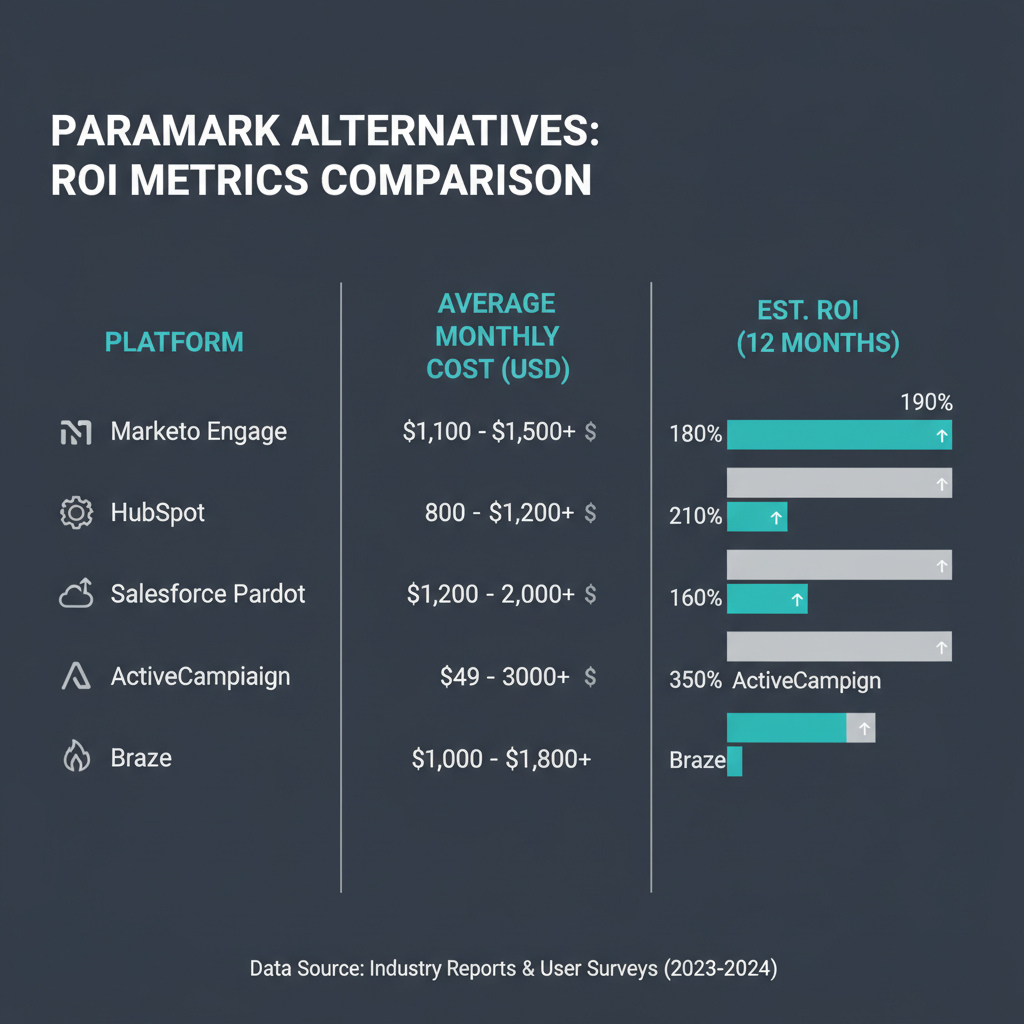
Modern marketing measurement platforms offer varying approaches to MMM and incrementality testing
What Is Paramark and Why Consider Alternatives?
Paramark is a marketing measurement platform that unifies incrementality testing, marketing mix modeling (MMM), and growth advisory in one package. Founded in 2023, Paramark targets mid-market and enterprise B2B companies with longer sales cycles, automating MMM analysis by connecting directly to your data warehouse.
The platform wraps around Google's lightweight_mmm framework and refreshes models weekly or monthly. Companies like Chime, Plaid, and Square use it as their lift-based source of truth for marketing decisions.
But Paramark isn't perfect for everyone. Common reasons to explore alternatives include:
- Implementation timeline: Some platforms promise faster time-to-value
- Pricing structure: Alternative pricing models might fit your budget better
- Industry specialization: Platforms built specifically for eCommerce, gaming, or B2B
- AI capabilities: More advanced automation and natural language insights
- Open-source preference: Full control over your modeling approach
- Integration ecosystem: Better compatibility with your existing martech stack
Top 11 Paramark Alternatives for Marketing Measurement
1. BlueAlpha: AI-Powered Marketing Measurement
BlueAlpha represents the next generation of marketing measurement platforms. Founded in 2024 by the team that built Tesla's marketing optimization frameworks, BlueAlpha uses always-on Bayesian marketing mix models that learn and adapt automatically.
What sets BlueAlpha apart:
The platform delivers fresh insights every week without manual model updates. An LLM interprets results in plain language, explaining exactly why performance changed and how to fix it—no PhD in statistics required.
BlueAlpha's implementation timeline beats most competitors at just three weeks from connection to measurable lift. The process includes one-click ad platform access, automated data cleaning, and deployment of your first MMM within 21 days.
The platform combines Bayesian modeling, causal inference, and AI automation to deliver actionable recommendations down to the campaign level. Instead of just showing which channels work, BlueAlpha tells you what to scale, pause, or optimize.
Best for: Mid-market brands seeking fast implementation with AI-powered insights and automated optimization recommendations.
Key features:
- Always-on Bayesian MMM with weekly updates
- Explainable AI with plain-language insights
- Automated incrementality testing
- Campaign-level optimization recommendations
- 3-week implementation timeline
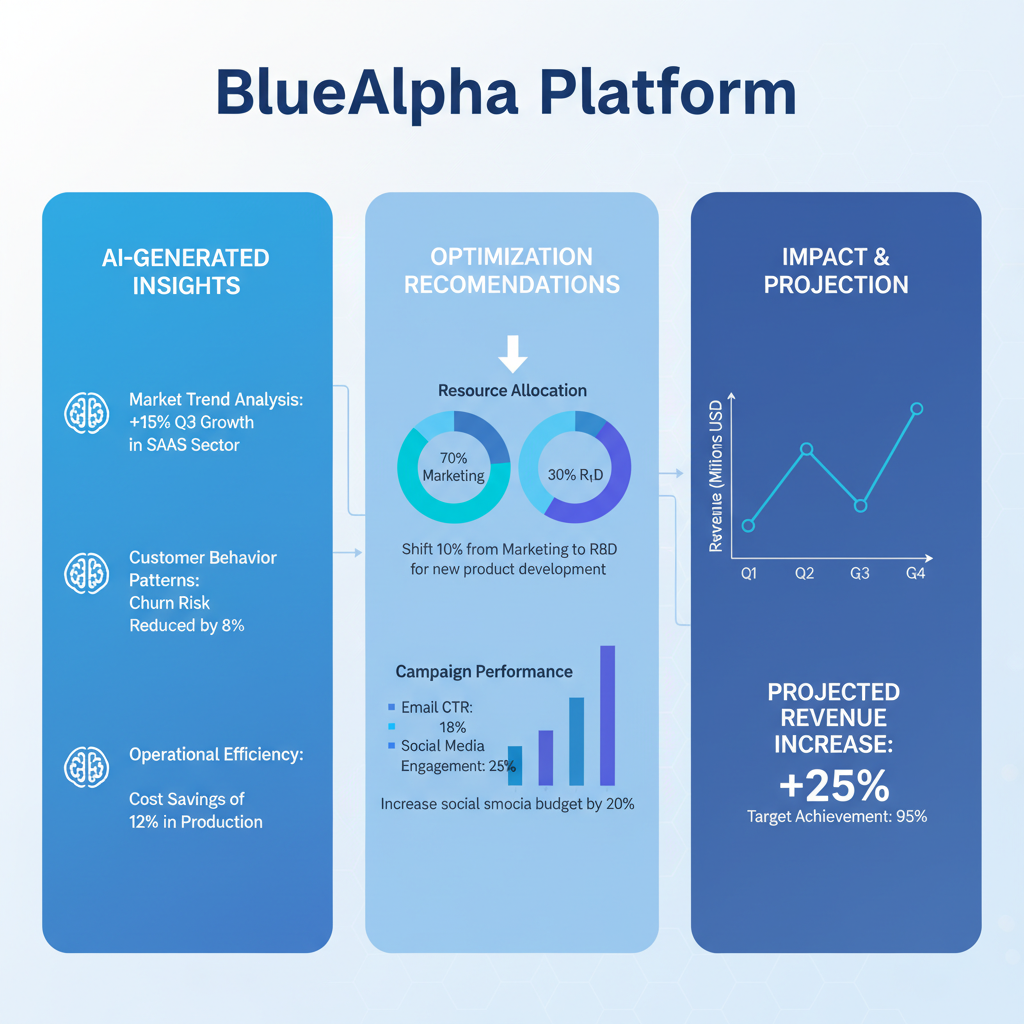
BlueAlpha's LLM translates complex statistical findings into actionable marketing decisions
2. Measured: Automated Incrementality at Scale
Measured focuses specifically on incrementality testing with automation at its core. Rated 4.9/5 on G2, the platform automates geo-testing and multi-tactic experiments while integrating with causal MMM.
The platform excels at running controlled experiments across channels, making it ideal for mid-market to enterprise brands that want scientific rigor without manual complexity. Measured's approach emphasizes causal measurement over correlation.
Best for: Brands prioritizing fast, automated incrementality testing with scientific rigor.
Key features:
- Automated geo-testing
- Multi-tactic experiment design
- Causal MMM integration
- No-code experiment setup
- Real-time lift measurement
3. Haus: Experiment-Driven Marketing Science
Haus (rated 4.5/5 on G2) leverages frontier methodologies like synthetic controls and placebo testing. The platform requires no cookies, pixels, or PII—addressing modern privacy concerns head-on.
Haus positions itself as a marketing science platform rather than just attribution software. Their approach focuses on understanding true causal effects of advertising campaigns across online and offline channels.
Best for: Digital-first brands seeking experiment-driven incrementality with privacy-safe design.
Key features:
- Synthetic control methodology
- Privacy-safe measurement (no PII)
- Automated experiment design
- Cross-channel incrementality
- Statistical significance testing
4. Lifesight: Comprehensive Marketing Intelligence
Lifesight combines geo-experiments, MMM, and incrementality-adjusted attribution in one platform. This unified approach provides multiple measurement perspectives without juggling separate tools.
The platform serves as an all-in-one marketing intelligence solution, particularly strong for brands wanting attribution and MMM working together rather than as competing methodologies.
Best for: Brands wanting geo-experiments, MMM, and attribution unified in one platform.
Key features:
- Unified measurement approach
- Geo-experiment capabilities
- Incrementality-adjusted attribution
- Marketing mix modeling
- Cross-channel journey tracking
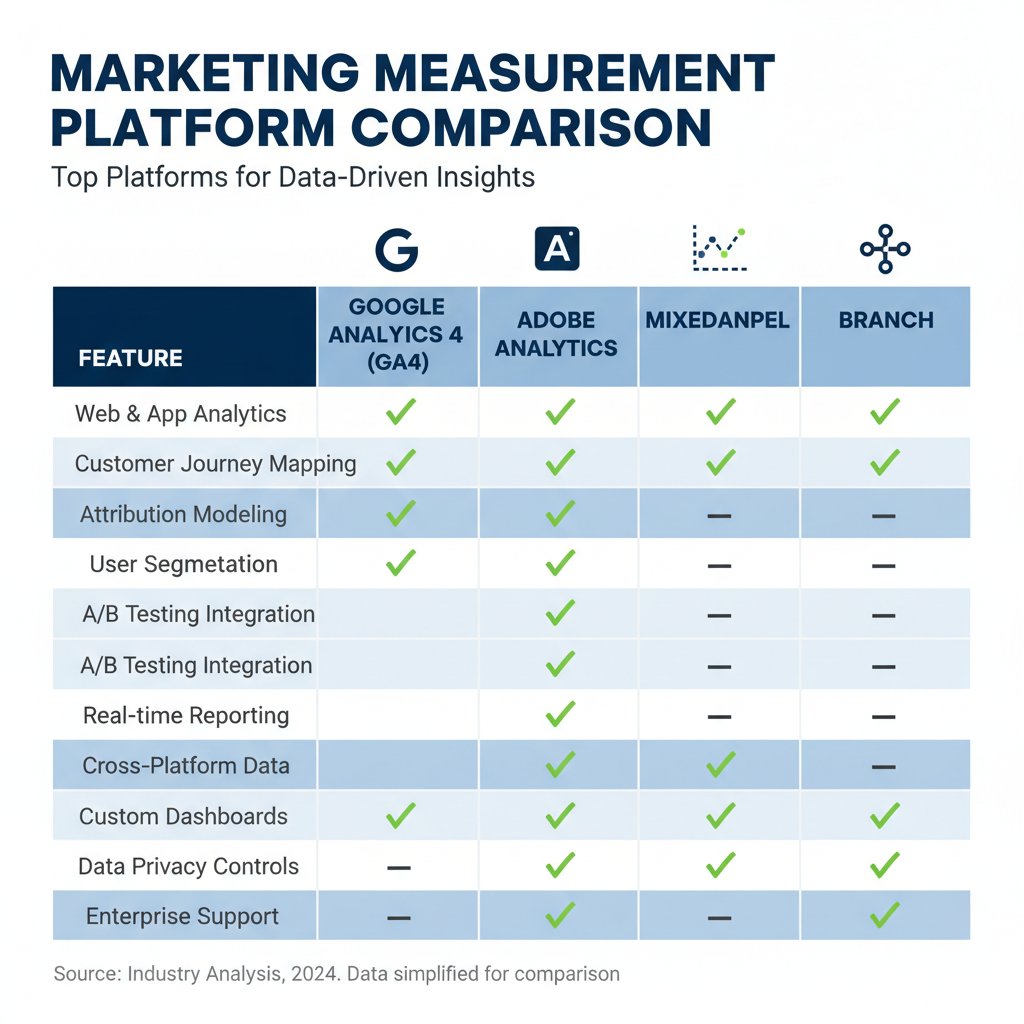
Each platform offers unique strengths for different measurement needs
5. Sellforte: The DTC and eCommerce Specialist
Sellforte specializes in retail, eCommerce, and DTC brands. The platform combines marketing mix modeling with geo-lift study analysis, optimized specifically for online retail business models.
Sellforte's measurement approach focuses on the unique challenges of direct-to-consumer brands: shorter conversion windows, heavy digital spend, and the need for rapid optimization.
Best for: Retail, eCommerce, and DTC brands needing specialized measurement for online sales.
Key features:
- DTC-optimized algorithms
- Geo-lift analysis
- Fast-moving optimization cycles
- eCommerce platform integrations
- Revenue attribution modeling
6. Rockerbox: Agile Attribution for DTC Brands
Acquired by DoubleVerify in 2025, Rockerbox (rated 4.6/5 on G2 and Capterra) started as multi-touch attribution and expanded into MMM. The platform excels at agile, in-platform incrementality testing for DTC and eCommerce brands.
Rockerbox bridges the gap between attribution and mix modeling, offering both bottom-up and top-down perspectives on marketing performance.
Best for: DTC and eCommerce brands seeking agile, in-platform incrementality testing.
Key features:
- Multi-touch attribution
- Marketing mix modeling
- In-platform incrementality tests
- eCommerce integrations
- Customer journey analytics
7. LiftLab: Economic Modeling Meets Experimentation
LiftLab combines economic modeling with specialized media experimentation. The platform links causal-based geo experiments with correlative mix models, providing both perspectives on marketing impact.
This hybrid approach appeals to brands that want the strategic view of MMM combined with the precision of controlled experiments.
Best for: Brands wanting economic modeling combined with geo-based experiments.
Key features:
- Causal geo experiments
- Correlative mix models
- Economic impact modeling
- Media optimization
- Cross-platform measurement
8. Recast: Rigorous Model Validation
Recast highlights rigorous modeling and model validation as its core strength. The platform focuses on statistical accuracy and transparent methodology.
For teams prioritizing model accuracy over speed, Recast's emphasis on validation and statistical rigor provides confidence in results.
Best for: Brands prioritizing statistical rigor and transparent model validation.
Key features:
- Rigorous validation processes
- Transparent methodology
- Statistical accuracy focus
- Model diagnostics dashboard
- Confidence interval reporting
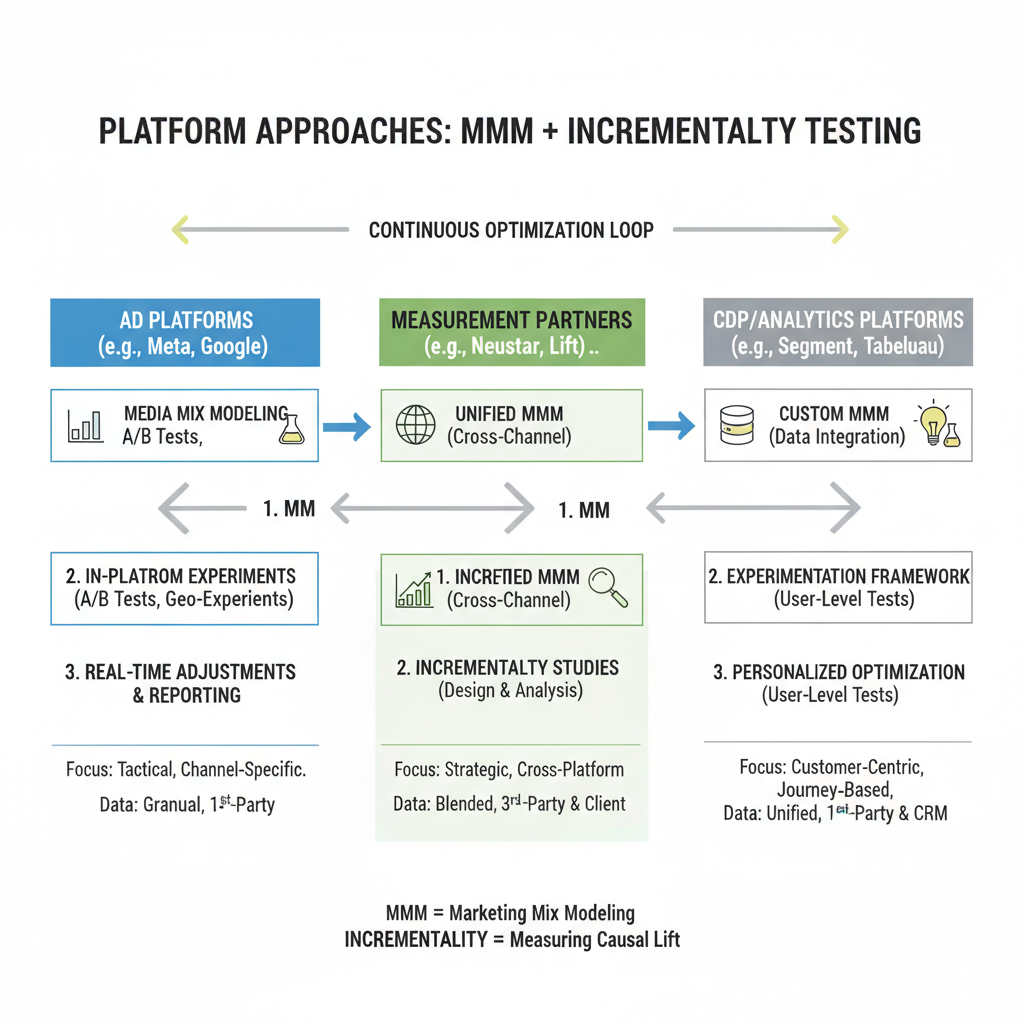
Platforms vary in their approach to combining MMM with incrementality testing
9. Incrmntal: Gaming Industry Specialist
Incrmntal focuses on the gaming sector with reference customers including Supercell, Rovio, and SEGA. Founded in 2020 in Israel, the platform specializes in the unique attribution challenges gaming companies face.
The gaming industry's reliance on user acquisition campaigns and in-app monetization requires specialized measurement approaches that Incrmntal addresses.
Best for: Gaming companies needing specialized incrementality measurement for UA campaigns.
Key features:
- Gaming-specific algorithms
- UA campaign optimization
- In-app event tracking
- Cohort analysis
- LTV prediction modeling
10. Google Meridian: Enterprise Open-Source MMM
Google launched Meridian as a free, open-source MMM tool to replace LightweightMMM. This enterprise-grade solution gives large organizations full control over their marketing mix modeling.
Meridian requires technical expertise but offers unlimited customization for companies with data science teams.
Best for: Large enterprises with data science teams wanting full control over MMM.
Key features:
- Open-source framework
- Full customization
- No licensing costs
- Google-backed development
- Enterprise-grade infrastructure
11. Meta Robyn: Community-Driven Open Source
Meta's Robyn is the most frequently discussed open-source MMM tool among practitioners. The active community and regular updates make it a viable alternative for technical teams.
Robyn represents Meta's approach to democratizing marketing measurement, providing sophisticated MMM capabilities to organizations willing to invest in setup and maintenance.
Best for: Technical teams wanting free, community-supported MMM with active development.
Key features:
- Open-source framework
- Active community support
- Regular updates from Meta
- Hyperparameter optimization
- Budget allocation tools
How to Choose the Right Paramark Alternative
Selecting a marketing measurement platform requires aligning platform capabilities with your specific needs. Consider these factors:
1. Business Model and Industry
Your industry shapes which platform fits best. DTC and eCommerce brands benefit from platforms like Sellforte or Rockerbox with retail-specific features. Gaming companies should explore Incrmntal's specialized approach. B2B companies with long sales cycles might prefer BlueAlpha or platforms designed for complex customer journeys.
2. Technical Resources
Open-source solutions like Meridian and Robyn offer powerful capabilities but require data science expertise. SaaS platforms like BlueAlpha, Measured, and Haus provide turnkey solutions with minimal technical overhead.
3. Implementation Timeline
Speed to value varies dramatically. BlueAlpha promises 3-week implementation, while traditional MMM approaches can take 3-6 months. Consider how quickly you need actionable insights versus how much customization you require.
4. Measurement Methodology Preference
Some platforms emphasize incrementality testing over MMM (Measured, Haus), while others lead with mix modeling (Sellforte, Recast). BlueAlpha combines both with AI automation. Your preference for experimental vs. observational approaches should guide your choice.
5. Budget and Pricing Structure
Platforms range from free open-source options to enterprise pricing exceeding $100K annually. SaaS platforms typically charge based on ad spend, users, or data volume. Determine your budget and preferred pricing model before evaluating specific platforms.
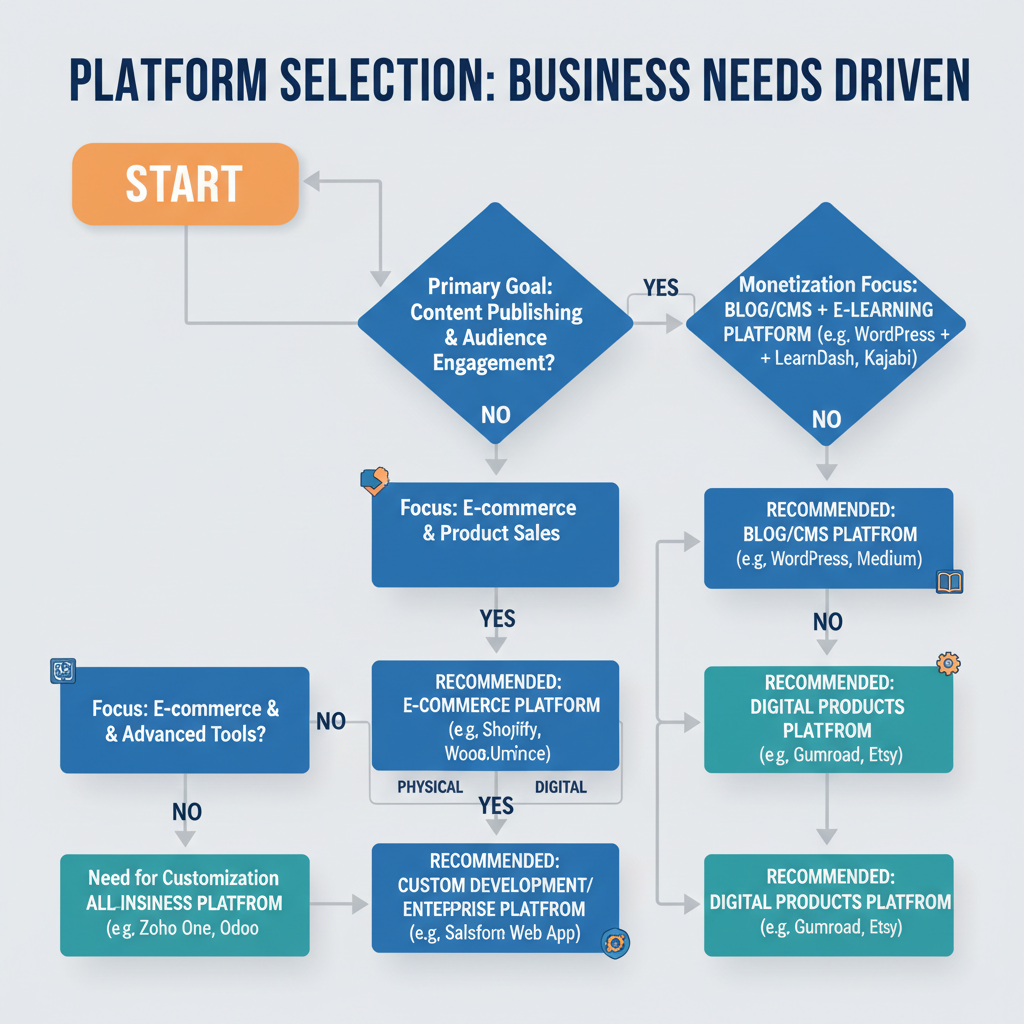
Match platform selection to your industry, technical resources, and measurement priorities
6. Integration Requirements
Seamless integration with your existing martech stack is non-negotiable. Verify that alternatives connect with your CRM, ad platforms, analytics tools, and data warehouse. Platforms with one-click integrations (like BlueAlpha) reduce implementation friction.
7. AI and Automation Level
Modern platforms leverage AI to varying degrees. BlueAlpha uses LLMs for natural language insights. Others automate experiment design or model updates. Consider how much manual analysis your team can handle versus the value of automated recommendations.
MMM vs. Multi-Touch Attribution: Understanding the Difference
Many brands confuse marketing mix modeling with multi-touch attribution (MTA). Understanding the distinction helps you evaluate alternatives effectively.
Marketing Mix Modeling provides a top-down, strategic view using aggregated data. MMM analyzes how different marketing elements contribute to business outcomes over time, incorporating external factors like seasonality and economics. MMM works better for brands investing in both digital and traditional media, long-term budget planning, and executive-level reporting.
Multi-Touch Attribution takes a bottom-up approach, tracking individual user journeys across touchpoints. MTA excels at optimizing digital campaigns and tracking specific user paths, enabling precise short-term adjustments.
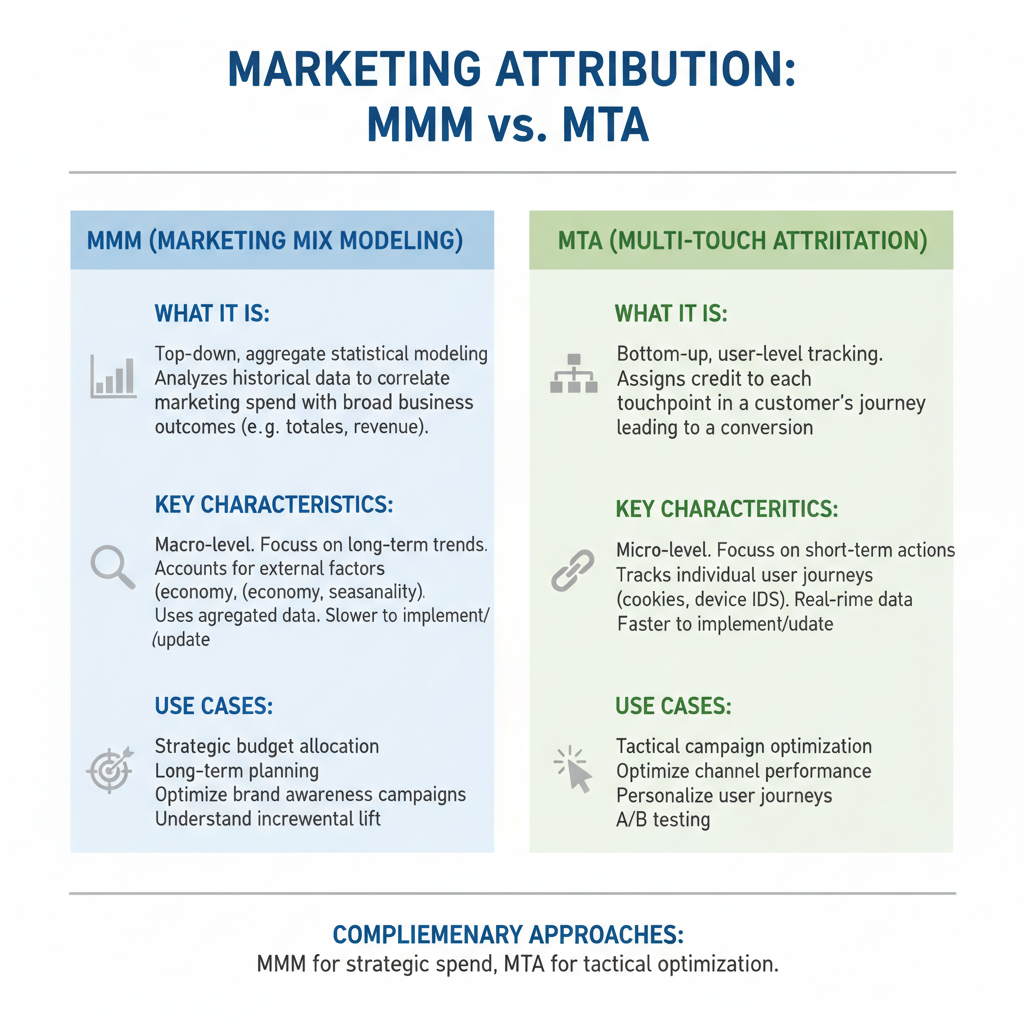
Marketing Mix Modeling and Multi-Touch Attribution serve different purposes - the best approach combines both The optimal approach combines both methodologies. Platforms like Lifesight and Rockerbox offer unified solutions, while others specialize in one approach. BlueAlpha focuses on MMM with automated incrementality testing, providing the strategic view most CMOs need for budget allocation.
Frequently Asked Questions
What makes a good Paramark alternative?
A strong Paramark alternative should offer comparable or superior marketing measurement capabilities, including MMM and incrementality testing. Look for platforms with faster implementation, better pricing, specialized industry features, or more advanced AI capabilities. The best alternative matches your specific business model, technical resources, and measurement priorities.
How much does marketing measurement software cost?
Marketing measurement platform pricing varies dramatically. Open-source solutions like Meridian and Robyn are free but require technical resources. SaaS platforms typically charge $10K-$100K+ annually based on ad spend, data volume, or users. BlueAlpha and similar platforms often offer flexible pricing for mid-market brands. Request quotes from multiple vendors to compare total cost of ownership.
Can small businesses use marketing mix modeling?
Traditionally, MMM required large budgets and data science teams. Modern platforms like BlueAlpha democratize access with automated setup, faster implementation, and lower costs. Small businesses spending $50K+ monthly on marketing can now benefit from MMM. However, companies with very small budgets might start with simpler attribution tools before graduating to full MMM platforms.
How long does it take to implement a marketing measurement platform?
Implementation timelines range from 3 weeks to 6 months. BlueAlpha promises 3-week implementation with one-click integrations. Traditional MMM implementations typically take 3-6 months for data collection, model building, and validation. Open-source solutions require additional time for technical setup. Prioritize platforms with automated onboarding if speed matters for your business.
Do I need a data science team to use MMM software?
Not anymore. While platforms like Meridian and Robyn require technical expertise, modern SaaS solutions handle complexity behind the scenes. BlueAlpha uses AI to interpret results in plain language, eliminating the need for statistical knowledge. Measured and Haus automate experiment design and analysis. Choose turnkey platforms if you lack dedicated data science resources.
Is incrementality testing better than MMM?
Incrementality testing and MMM serve different purposes. Incrementality testing runs controlled experiments to prove causation for specific campaigns. MMM provides strategic, cross-channel insights for budget allocation. Most brands benefit from both approaches working together. Platforms like BlueAlpha, Measured, and Lifesight combine incrementality testing with MMM for comprehensive measurement.
Key Takeaways: Finding Your Ideal Marketing Measurement Platform
The marketing measurement landscape offers diverse alternatives to Paramark, each with unique strengths.
For fastest implementation with AI-powered insights: BlueAlpha delivers 3-week deployment with automated recommendations and explainable AI that translates complex data into plain-language actions.
For incrementality-first measurement: Measured and Haus excel at automated experiments with scientific rigor, ideal for brands prioritizing causal proof over correlative models.
For DTC and eCommerce specialization: Sellforte and Rockerbox optimize specifically for online retail business models with fast optimization cycles.
For full control and customization: Open-source options like Google Meridian and Meta Robyn provide unlimited flexibility for technical teams willing to invest in setup and maintenance.
For comprehensive unified platforms: Lifesight combines attribution, MMM, and geo-experiments in one solution, eliminating the need to reconcile multiple tools.
The right Paramark alternative aligns with your industry, technical resources, budget, and measurement philosophy. Marketing measurement success requires matching platform capabilities to your specific needs rather than choosing based on features alone.
Stop guessing which channels drive real growth. Explore these alternatives, request demos, and find the platform that transforms your marketing from cost center to revenue engine.
Ready to see how AI-powered marketing measurement works? Explore BlueAlpha's approach to always-on Bayesian MMM with 3-week implementation and explainable insights that your entire team can understand.
Stay in the loop
Get updates on new posts and resources.