Paramark vs Blue Alpha: Which Marketing Measurement Platform is Right for You?
Compare Paramark and Blue Alpha's features, pricing, and capabilities to find the best marketing mix modeling platform for your business in 2026.

You're drowning in marketing data. Your CFO wants proof that ad spend is working. And attribution tools? They stopped telling you the truth years ago.
Welcome to 2026, where marketing mix modeling (MMM) has evolved from an enterprise luxury into a necessity for any serious marketing team. Two platforms promise to cut through the noise: Paramark and Blue Alpha.
But which one actually delivers?
This comparison breaks down everything you need to know about Paramark vs Blue Alpha—from their core methodologies to pricing and implementation timelines. By the end, you'll know exactly which platform fits your marketing stack.
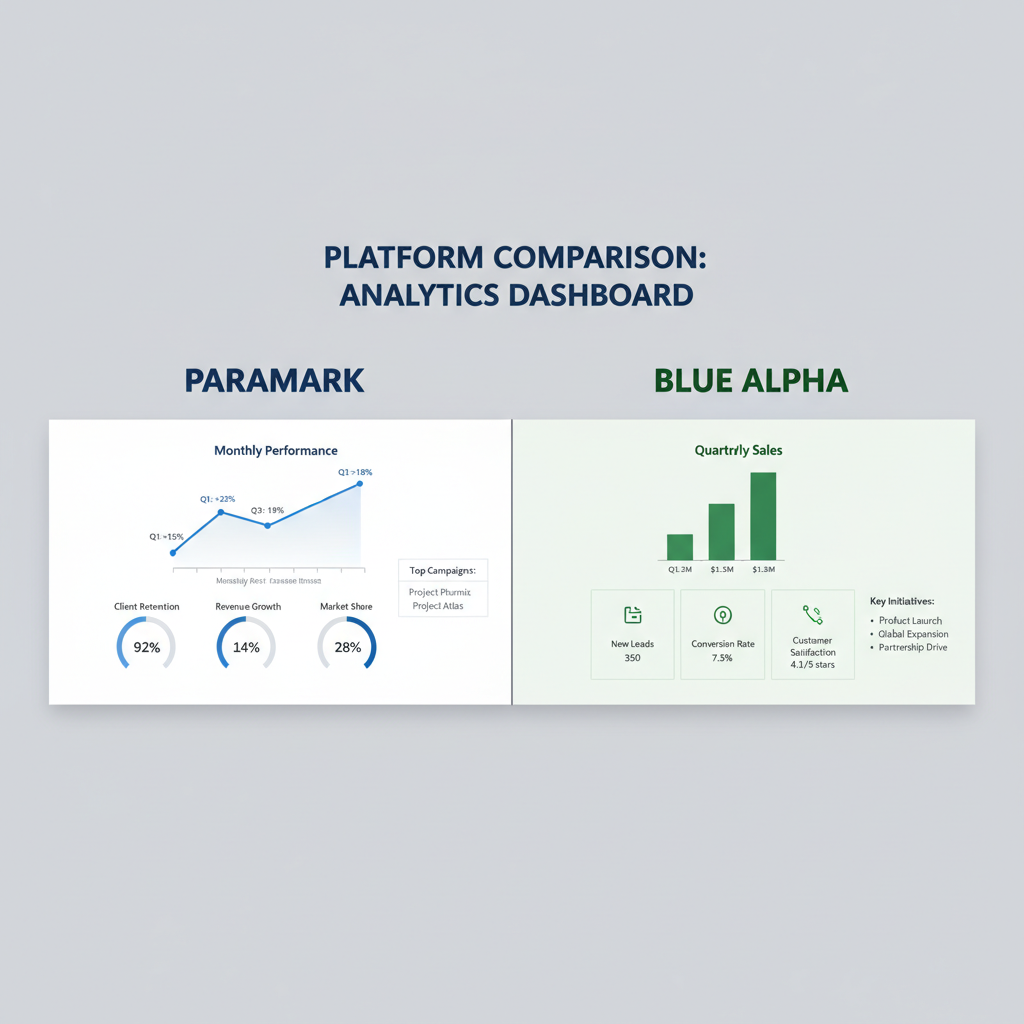
Both platforms offer distinct approaches to measuring marketing effectiveness
What Are Paramark and Blue Alpha?
Paramark: The Scientific Measurement Purist
Paramark positions itself as the platform for marketers who want scientific rigor. Founded in 2023 and backed by $10.4M from Greylock and 20VC, Paramark combines marketing mix modeling with geo-based incrementality testing.
The platform's methodology centers on what they call "The Paramark Method"—a unified approach that surfaces both correlation and causation. Instead of relying on click-based attribution that broke when iOS 14 launched, Paramark measures real incremental lift across all channels: paid social, search, out-of-home, TV, and beyond.
Paramark serves B2B and B2C marketing leaders who need to justify budgets to CFOs. Their sweet spot is mid-market to enterprise companies spending $500K+ annually on marketing.
Blue Alpha: The AI Action System
Blue Alpha takes a different approach. Founded in 2024 by former Tesla leaders, Blue Alpha positions itself as an "AI Action System" rather than just another analytics platform.
Blue Alpha transforms first-party data and ad platform insights into specific campaign-level recommendations. The platform combines Bayesian modeling, causal inference, and AI automation to deliver weekly actionable insights—not quarterly reports that arrive too late to matter.
Their promise? Connection to measurable lift in three weeks. That's faster than most platforms even complete onboarding.
Blue Alpha's founding team brings proven expertise from scaling Tesla's marketing operations, and it shows in their product philosophy: speed matters, and data without action is just expensive noise.
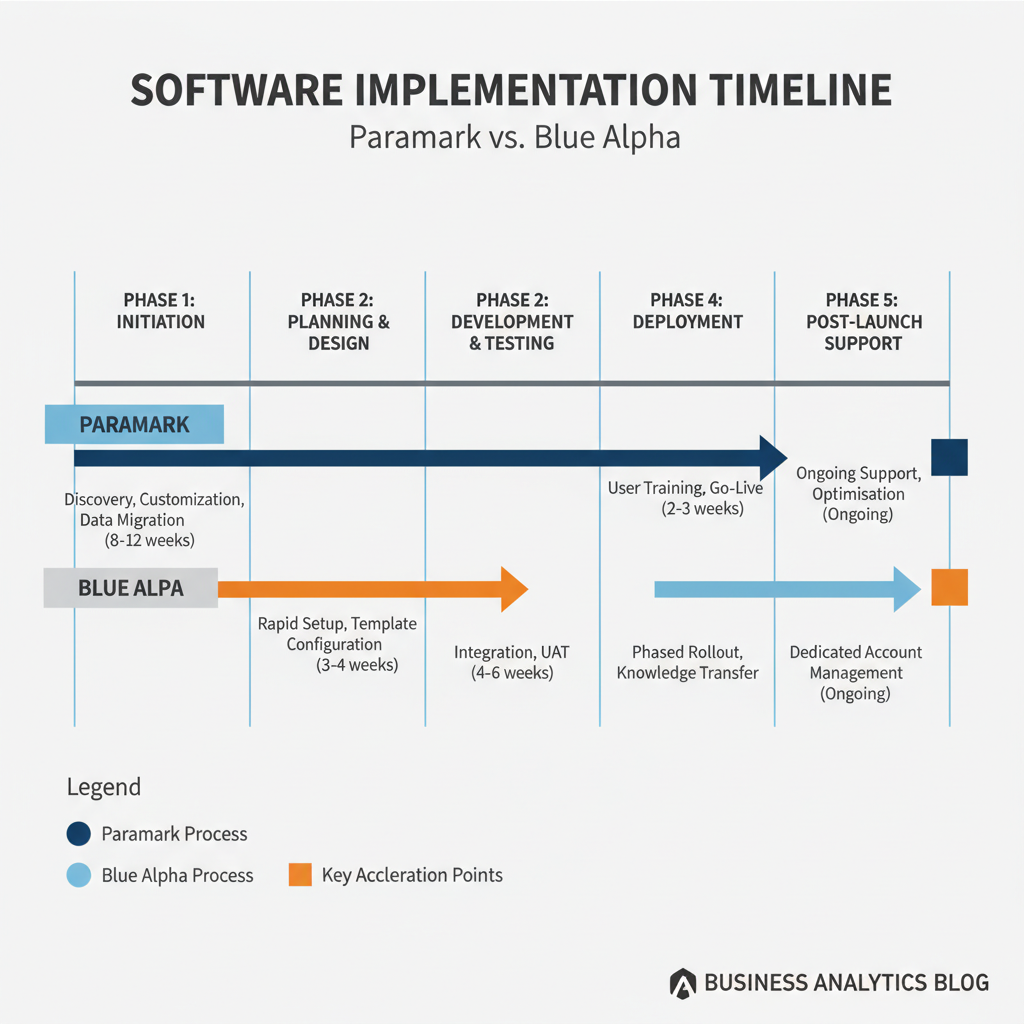
Blue Alpha promises measurable results in 3 weeks compared to traditional MMM timelines
Core Methodology: How They Actually Work
Paramark's Unified Measurement Framework
Paramark's approach centers on combining two complementary methodologies:
Marketing Mix Modeling (MMM): Paramark's MMM analyzes historical data to understand how different marketing channels contribute to conversions. Unlike touch-based attribution that only sees digital clicks, MMM captures the full picture—including brand awareness from TV, billboards, and organic word-of-mouth.
Geo-Based Incrementality Testing: Here's where Paramark differentiates itself. They run controlled experiments at the geographic level to measure true causal impact. Did that Facebook campaign actually drive sales, or were those customers going to buy anyway?
The combination addresses MMM's traditional weakness: correlation without causation. Paramark validates MMM predictions with real experiments, creating what they call a "closed-loop measurement system."
Blue Alpha's Always-On Bayesian Models
Blue Alpha's methodology emphasizes continuous measurement and rapid iteration:
Always-On Bayesian Marketing Mix Models: Instead of quarterly MMM refreshes, Blue Alpha updates models weekly with fresh data. This matters because marketing performance changes fast in 2026—waiting three months for insights means you're optimizing yesterday's campaigns.
Synthetic-Control Incrementality Tests: Blue Alpha uses synthetic control methods to measure incrementality without the disruption of traditional holdout tests. You don't need to turn off spend in entire markets to understand what's working.
Explainable AI Recommendations: The platform doesn't just show you data—it tells you what to do. Scale this campaign. Pause that one. Shift budget from here to there. Every recommendation includes the causal reasoning behind it.
Blue Alpha's edge is speed and specificity. You get campaign-level guidance updated weekly, not channel-level insights updated quarterly.
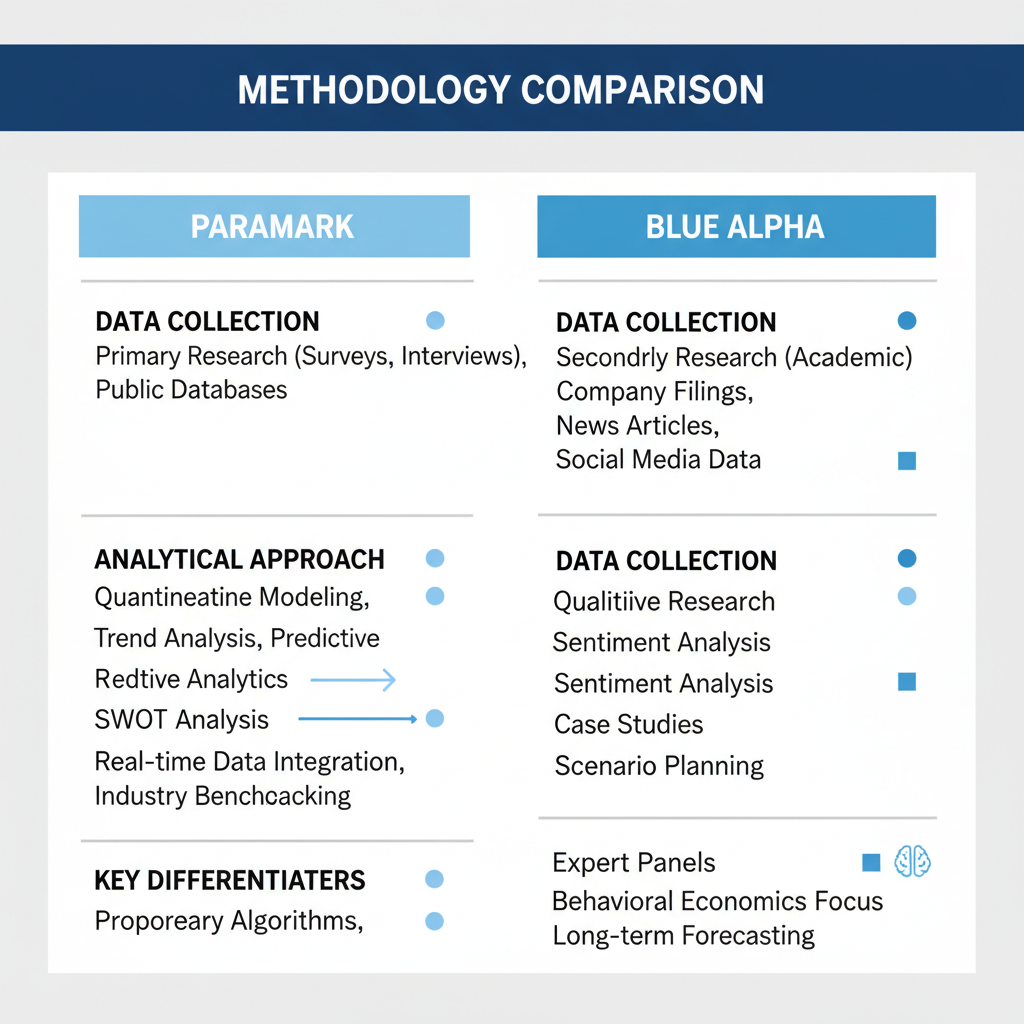
Key methodological differences between the two platforms
Features Comparison: What You Actually Get
Measurement Capabilities
Both platforms offer core marketing mix modeling and incrementality testing, but with different approaches:
Paramark provides comprehensive MMM that analyzes TV, out-of-home, paid social, search, email, and organic channels. Their geo-based experiments measure true incremental impact, and scenario planning tools let you forecast different budget allocations. The platform includes growth advisory services to help interpret findings.
Blue Alpha delivers weekly-updated Bayesian MMM with unified platform tracking across all major ad networks. Their synthetic-control testing measures incrementality without disrupting campaigns, and the Explainable Performance Engine breaks down exactly why each recommendation matters. Strategic planning tools help forecast future performance.
Data Integration and Compatibility
Paramark connects to major ad platforms, analytics tools, and CRMs. Implementation typically takes 4-6 weeks and includes personalized onboarding. The platform grants unlimited user access and offers API connectivity for custom integrations with in-house reporting tools.
Blue Alpha emphasizes rapid deployment with their three-week timeline to first insights. The platform is built for privacy-compliant measurement using first-party data—critical as third-party cookies disappear. Blue Alpha integrates with ad platforms, analytics, and sales data sources.
Reporting and Insights Delivery
Paramark focuses on executive-level reporting designed for CMO-to-CFO conversations. Reports emphasize statistical confidence intervals and causal validation. The platform offers both self-service dashboards and curated insights from their analytics team.
Blue Alpha delivers actionable weekly briefs with specific campaign-level recommendations. The interface prioritizes speed—showing you the three most important decisions to make this week, not 50 metrics to interpret. Reports emphasize what changed and what to do about it.
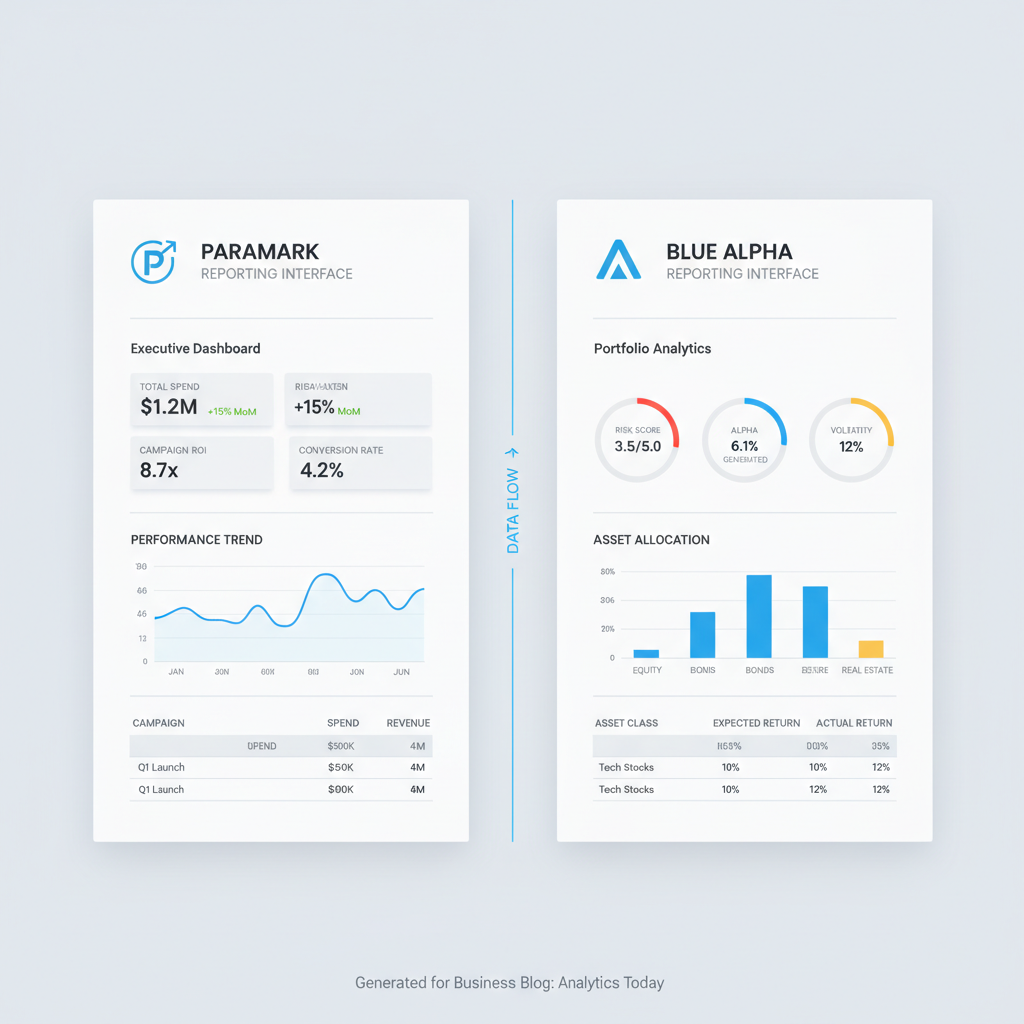
Paramark emphasizes statistical rigor while Blue Alpha prioritizes actionable recommendations
Pricing: What Does It Actually Cost?
Neither platform publishes transparent pricing, which is standard for enterprise marketing analytics software in 2026. Both use custom quote models based on your ad spend, data complexity, and feature needs.
Paramark Pricing Factors:
- Annual marketing spend (typically $500K+ minimum)
- Number of channels analyzed
- Experiment frequency and scope
- Advisory services included
- Based on third-party reviews, expect enterprise-level pricing
Blue Alpha Pricing Factors:
- Marketing budget size
- Data sources and complexity
- Update frequency requirements
- AI recommendation access levels
- Referral program offers 15% commission for 12 months
To get accurate pricing for either platform, request a demo and be prepared to share your annual marketing budget and measurement goals.
Implementation: How Long Until You See Value?
This is where Blue Alpha and Paramark diverge significantly.
Paramark's Approach: Traditional MMM onboarding takes 4-6 weeks minimum. Paramark follows this timeline:
- Week 1-2: Data integration and validation
- Week 3-4: Model training and calibration
- Week 5-6: First insights delivery and team training
- Ongoing: Quarterly model refreshes and experiment design
You'll see your first actionable insights 6-8 weeks after kickoff. Geo-based experiments add 4-8 weeks for initial results.
Blue Alpha's Approach: Three weeks to measurable lift. Here's how:
- Week 1: Rapid data onboarding and initial model training
- Week 2: First recommendations delivered
- Week 3: Campaign adjustments implemented and early results measured
Blue Alpha's faster timeline comes from their always-on architecture and AI automation. Where traditional MMM requires manual model calibration, Blue Alpha's Bayesian approach updates continuously.
For marketing teams under pressure to show quick wins, Blue Alpha's speed advantage is substantial.
Ideal Use Cases: Which Platform Fits Your Needs?
Choose Paramark If You Need:
Enterprise-Grade Scientific Rigor: Your CFO demands statistical proof with confidence intervals. Paramark's methodology combines academic rigor with practical application—perfect for organizations where measurement credibility matters as much as the insights themselves.
Complex Multi-Channel Attribution: You're running TV, outdoor, radio, digital, and in-store promotions simultaneously. Paramark excels at untangling complex marketing mixes where traditional attribution completely fails.
Long-Term Strategic Planning: You're setting annual budgets and need scenario planning for different investment strategies. Paramark's forecasting tools model best-case, base-case, and worst-case scenarios.
Advisory Partnership: You want more than software—you want experts who help interpret findings and design experiments. Paramark includes growth advisory services in their offering.
Choose Blue Alpha If You Need:
Rapid Deployment and Quick Wins: You can't wait 8 weeks for first insights. Blue Alpha's three-week timeline lets you start optimizing immediately—critical when market conditions change fast.
Weekly Actionable Guidance: You need specific campaign-level recommendations every week, not quarterly channel insights. Blue Alpha tells you exactly what to scale, pause, or optimize down to individual campaigns.
AI-Powered Automation: Your team is lean and you need intelligent recommendations, not just dashboards to analyze manually. Blue Alpha's Explainable AI does the heavy lifting.
Modern Privacy-First Measurement: You're building for a cookieless future and need privacy-compliant attribution that works with first-party data only.
Proven Scale Expertise: The founding team scaled marketing at Tesla—one of the most data-driven growth companies ever built. That expertise shows in every product decision.
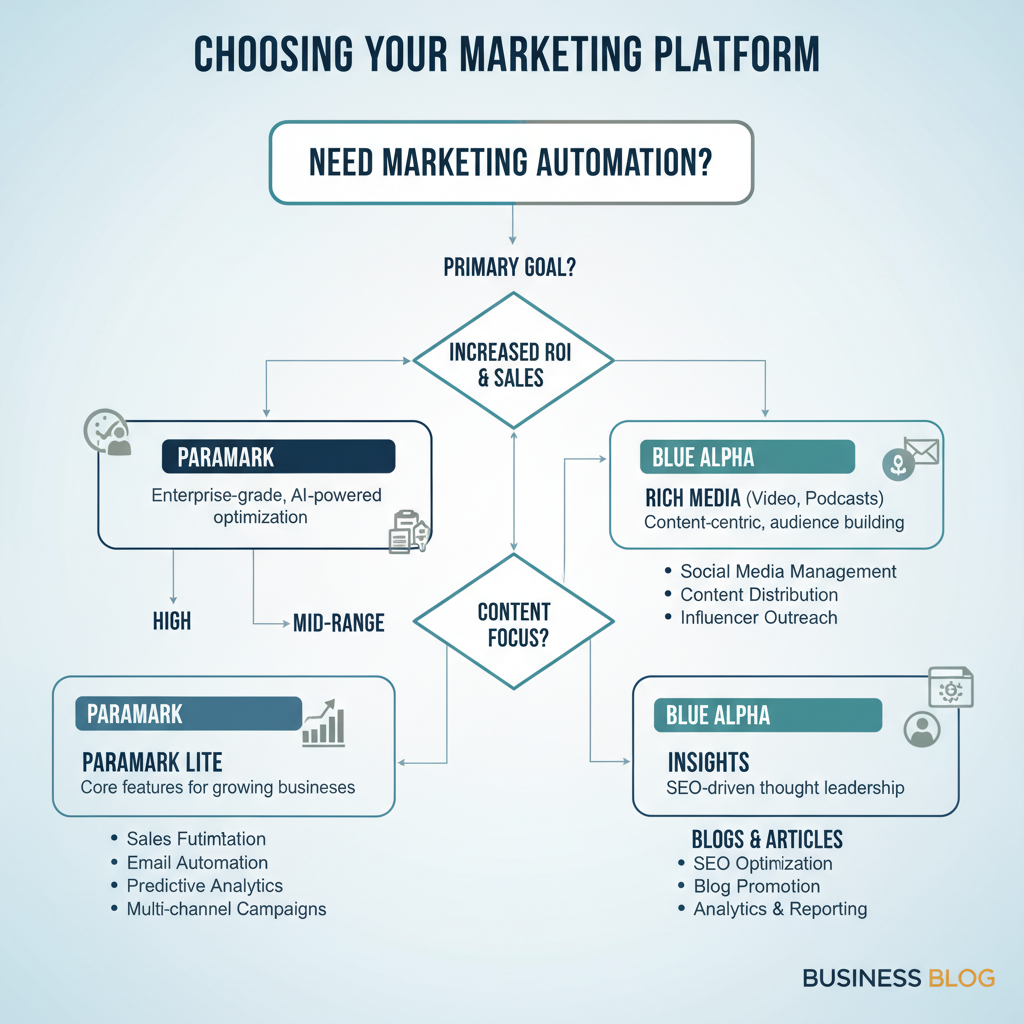
Select the platform that aligns with your timeline, budget, and measurement priorities
The Verdict: Paramark vs Blue Alpha in 2026
Both platforms represent the evolution of marketing measurement beyond broken attribution tools. But they solve different problems.
Paramark wins when: Statistical rigor and scientific validation matter most. You're making million-dollar budget decisions and need bulletproof methodology to back them up. The platform is built for patient, methodical measurement that prioritizes accuracy over speed.
Blue Alpha wins when: Speed and specific action matter more than academic rigor. You need campaign-level decisions every week, not channel-level insights every quarter. The platform is built for agile marketing teams that test, learn, and iterate rapidly.
For most modern marketing teams in 2026, Blue Alpha's approach aligns better with how businesses actually operate. Markets move too fast for quarterly insights. AI-powered recommendations at the campaign level beat perfect-but-slow channel attribution.
The best platform isn't the one with the most sophisticated models—it's the one that makes your marketing measurably better, faster.
Frequently Asked Questions
What's the main difference between Paramark and Blue Alpha?
Paramark emphasizes scientific rigor with quarterly MMM refreshes and geo-based experiments. Blue Alpha prioritizes speed with weekly AI-powered recommendations and three-week implementation. Both use incrementality testing and MMM, but Blue Alpha's always-on Bayesian models update continuously while Paramark focuses on validated statistical precision.
How long does implementation take for each platform?
Paramark requires 4-6 weeks for initial setup with first insights arriving 6-8 weeks after kickoff. Geo experiments add another 4-8 weeks. Blue Alpha promises measurable lift within three weeks total—from data connection to first optimizations implemented.
Do these platforms work for small businesses?
Both platforms target mid-market to enterprise companies typically spending $500K+ annually on marketing. Smaller businesses should explore alternatives like Google Analytics 4 or lighter-weight MMM solutions designed for lower budgets.
Can I use both platforms together?
You could, but it's inefficient. Both platforms measure similar outcomes using related methodologies. Running both creates redundant measurement overhead without proportional insight gains. Choose the platform that best fits your speed and rigor priorities.
How do these compare to traditional attribution tools?
Traditional multi-touch attribution broke when iOS 14 eliminated cross-site tracking. MMM platforms like Paramark and Blue Alpha measure true incremental impact across all channels—including brand awareness, offline media, and untrackable touchpoints that attribution tools miss completely.
What if my marketing spend is mostly digital?
Both platforms work for digital-heavy marketers, but the value increases with channel complexity. If you're purely running Facebook and Google ads, lighter analytics tools might suffice. Blue Alpha's campaign-level recommendations and rapid iteration cycles add significant value even for digital-only teams.
Is the pricing worth it compared to free tools?
Free tools like Google Analytics show correlation, not causation. They tell you which campaigns had conversions, not which campaigns caused them. For companies spending $1M+ annually on marketing, understanding true incrementality easily justifies the platform cost through better allocation decisions.
Next Steps: Start Measuring What Actually Matters
Attribution is dead. Correlation isn't causation. And your CFO is right to question whether that ad spend really works.
Both Paramark and Blue Alpha solve the core problem: measuring true marketing impact in a privacy-first world. Your choice comes down to timeline, team resources, and whether you value statistical perfection or rapid iteration.
For most teams in 2026, Blue Alpha's AI-powered approach delivers faster value. But if you need bulletproof methodology for high-stakes decisions, Paramark's scientific rigor might justify the longer timeline.
Ready to move beyond broken attribution? Explore how modern marketing mix modeling can transform your marketing effectiveness. The platforms exist. The question is: are you ready to measure what actually drives growth?
Stay in the loop
Get updates on new posts and resources.