11 Best Funnel.io Alternatives for Marketing Data Integration in 2025
Compare the best Funnel.io alternatives for marketing data integration. Find platforms that match your budget, technical needs, and analytics requirements.
Funnel.io does a lot of things well. It connects your marketing data sources, transforms messy campaign metrics into clean datasets, and feeds everything into your analytics stack. But it's not the right fit for everyone.
Maybe you've hit the pricing wall. Maybe the learning curve is steeper than you expected. Or maybe you need features—like native visualization or media mix modeling support—that Funnel.io doesn't prioritize.
Whatever the reason, you're looking for Funnel.io alternatives. And the market has plenty of options.
This guide breaks down the best marketing data integration platforms available today. We'll cover what each does well, where they fall short, and which scenarios make sense for each tool. No fluff—just the information you need to make a smart decision.
Why Marketers Look for Funnel.io Alternatives
Before diving into alternatives, it's worth understanding what drives the search in the first place.
Funnel.io has established itself as a solid marketing data hub. It aggregates data from advertising platforms, CRMs, and analytics tools into a centralized location. For teams drowning in spreadsheets and manual exports, that's genuinely valuable.
But common pain points emerge:
Steep learning curve. Funnel.io assumes a certain level of technical sophistication. Non-technical marketers often struggle with data transformation rules and schema mapping. If your team lacks dedicated data analysts, expect a rocky onboarding period.
Pricing scales quickly. Funnel.io's pricing model works well for smaller operations but becomes expensive as you add data sources and connectors. According to G2 reviews, enterprise teams regularly report bills that exceed expectations once they scale beyond initial use cases.
Limited native visualization. Funnel.io focuses on data aggregation and transformation, not visualization. You'll need separate tools—Looker, Tableau, Power BI—to actually see your data. For teams wanting an all-in-one solution, this creates friction and additional cost.
Basic transformation capabilities. While adequate for standard use cases, complex data transformations often require workarounds or external processing. Teams building sophisticated marketing attribution models sometimes find the transformation layer limiting.
These aren't dealbreakers for everyone. But if any resonate, the alternatives below might serve you better.
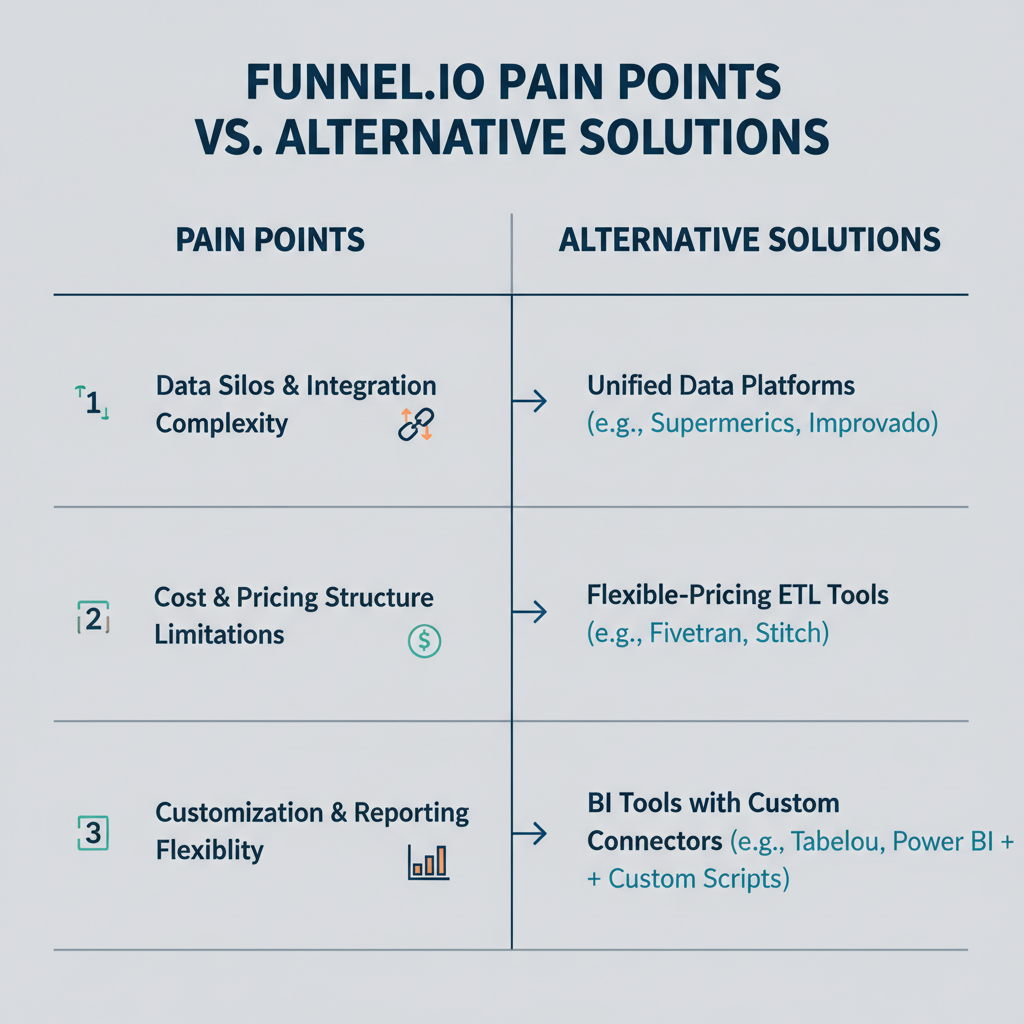
Different alternatives solve different problems—identify your pain point first
Top Funnel.io Alternatives for 2025
1. BlueAlpha.ai
Best for: Teams wanting AI-powered media mix modeling with integrated data connectivity
BlueAlpha.ai goes beyond basic data integration to deliver what most marketers actually need: actionable insights about marketing performance. While Funnel.io stops at data aggregation, BlueAlpha connects your marketing data and immediately applies media mix modeling to reveal which channels actually drive results.
Key strengths:
- Built-in media mix modeling—no separate analytics tools required
- AI-powered budget optimization recommendations
- Automated incrementality measurement across channels
- Intuitive interface designed for marketers, not data scientists
- Fast time-to-insight (days, not months)
Limitations:
- Focused on MMM use cases rather than general data warehousing
- Newer platform compared to established ETL tools
- Best suited for teams with $50K+ monthly ad spend
The fundamental difference: most Funnel.io alternatives help you move data around. BlueAlpha.ai helps you understand what your data means and what to do about it. For marketing teams serious about marketing attribution and budget optimization, this changes everything.
Pricing: Tiered pricing based on ad spend and data sources; contact for quotes.
2. Supermetrics
Best for: Teams needing simple, spreadsheet-friendly data extraction
Supermetrics takes a fundamentally different approach than Funnel.io. Instead of building a centralized data hub, it focuses on pulling data directly into the destinations you already use—Google Sheets, Excel, Looker Studio, and data warehouses.
Key strengths:
- Over 100 data source connectors
- Native integrations with spreadsheet tools marketers already know
- Significantly lower learning curve than Funnel.io
- Affordable entry-level pricing
Limitations:
- Less sophisticated data transformation capabilities
- Not designed for complex data modeling
- Can become unwieldy with many data sources
For marketing teams that live in spreadsheets and need reliable data pulls without building a full data infrastructure, Supermetrics delivers. It won't power advanced marketing effectiveness measurement, but it handles day-to-day reporting exceptionally well.
Pricing: Starts around $39/month for basic plans; enterprise pricing available.
3. Improvado
Best for: Enterprise teams needing comprehensive marketing intelligence
Improvado positions itself as an AI-powered marketing analytics platform, not just a data integration tool. It handles the full cycle—aggregation, transformation, visualization, and even automated insights.
Key strengths:
- 500+ pre-built data connectors
- Native visualization and dashboarding
- AI-powered anomaly detection and insights
- Custom connector development (typically 2-4 weeks)
- Unlimited accounts per data source on all plans
Limitations:
- Enterprise-focused pricing excludes smaller teams
- Overkill for simple reporting needs
- Implementation requires meaningful setup time
If your organization spends serious money on marketing and needs sophisticated measurement capabilities, Improvado deserves consideration. According to Gartner's marketing analytics research, enterprises with centralized marketing data platforms achieve 15-25% better ROI visibility than those with fragmented systems.
Pricing: Enterprise pricing; contact for quotes.
4. Whatagraph
Best for: Agencies and teams wanting built-in reporting
Whatagraph differentiates by covering the entire journey—data connection, transformation, visualization, and sharing—in one platform. No separate BI tool required.
Key strengths:
- Intuitive drag-and-drop report builder
- Live dashboards with automated sharing
- No technical expertise required
- Strong agency-focused features (white labeling, client portals)
Limitations:
- Smaller connector library than Funnel.io
- Less flexible for complex data transformations
- Visualization-first approach may not suit data warehouse workflows
For marketing agencies juggling multiple clients and needing polished, automated reports, Whatagraph eliminates the complexity of managing separate data and visualization tools. The tradeoff is less flexibility for advanced analytics work like marketing ROI analysis.
Pricing: Starts around $249/month; scales based on data sources and users.
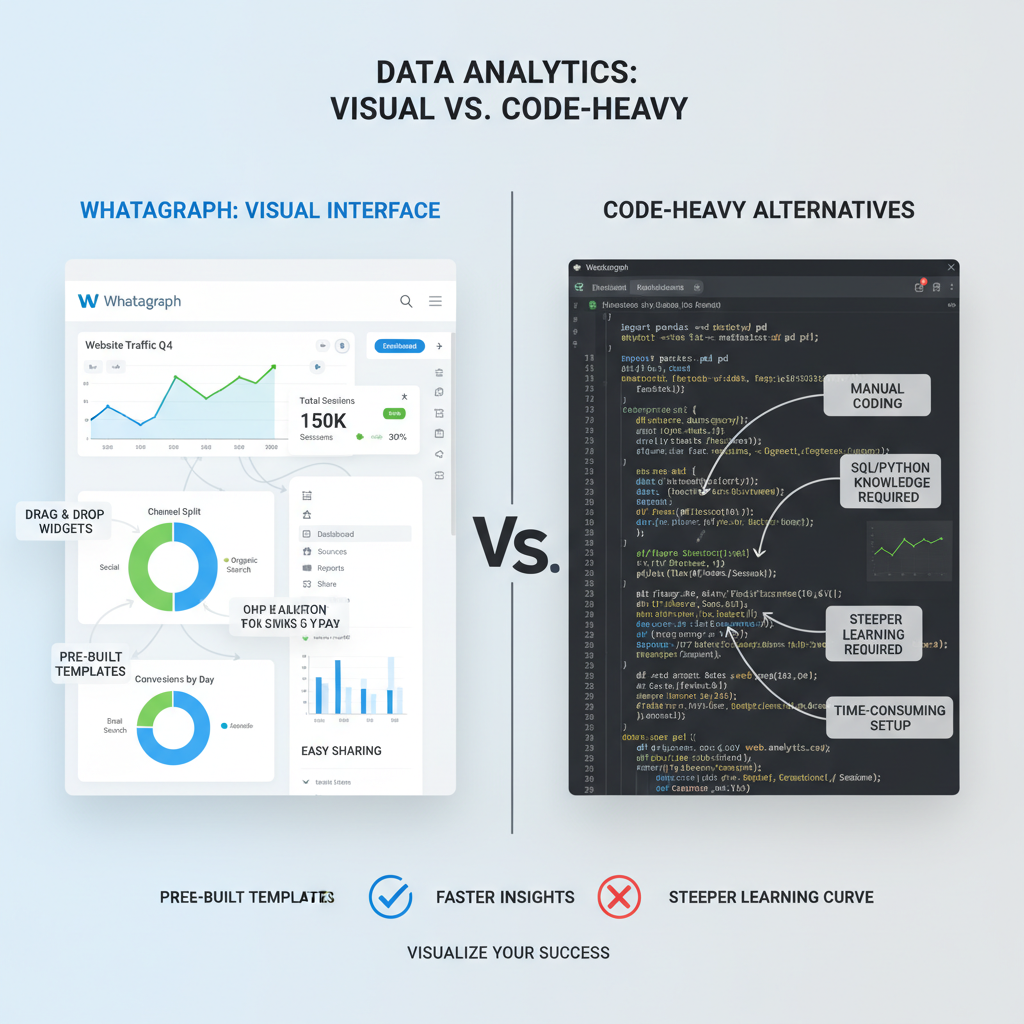
Whatagraph's visual interface appeals to teams without technical data expertise
5. Adverity
Best for: Data-driven teams needing advanced transformation and AI features
Adverity occupies similar territory to Funnel.io but emphasizes advanced analytics capabilities and AI-powered insights. It's designed for teams that want their data platform to do more than just move data around.
Key strengths:
- Advanced data transformation engine
- AI-powered data quality monitoring
- Strong governance and compliance features
- Native integration with major BI platforms
Limitations:
- Complexity rivals or exceeds Funnel.io
- Premium pricing
- Longer implementation timeline
According to McKinsey's research on marketing analytics, companies leveraging AI-powered marketing analytics outperform peers by 20% or more on key metrics. Adverity targets that outcome.
Pricing: Enterprise pricing; contact for quotes.
6. Coupler.io
Best for: Small teams needing affordable automation
Coupler.io strips away complexity and focuses on one thing: getting your data into Google Sheets, Excel, or BigQuery automatically. No transformation wizards, no dashboarding features—just reliable data movement.
Key strengths:
- Extremely simple setup (15 minutes to first data pull)
- Affordable pricing model
- Automatic data refresh scheduling
- No coding required
Limitations:
- Limited to ~60 data sources
- Minimal transformation capabilities
- Not suitable for complex data workflows
For small marketing teams with modest budgets and straightforward needs, Coupler.io delivers without the overhead. You won't build a sophisticated media budget optimization system with it, but you will get reliable data exports.
Pricing: Free tier available; paid plans start around $49/month.
7. Domo
Best for: Organizations wanting a complete BI platform with marketing capabilities
Domo isn't strictly a Funnel.io alternative—it's a full business intelligence platform that happens to excel at marketing data integration. If you need data connectivity, transformation, visualization, and collaboration in one place, Domo delivers.
Key strengths:
- Enterprise-grade BI capabilities
- Real-time data insights and alerting
- Extensive app marketplace and integrations
- Strong collaboration features
Limitations:
- Significant learning curve
- Enterprise-level pricing
- Can be overkill for marketing-only use cases
Organizations already evaluating BI platforms should consider whether Domo (or similar platforms like Tableau or Power BI) might solve both their data integration and analytics needs simultaneously.
Pricing: Enterprise pricing based on data rows and users.
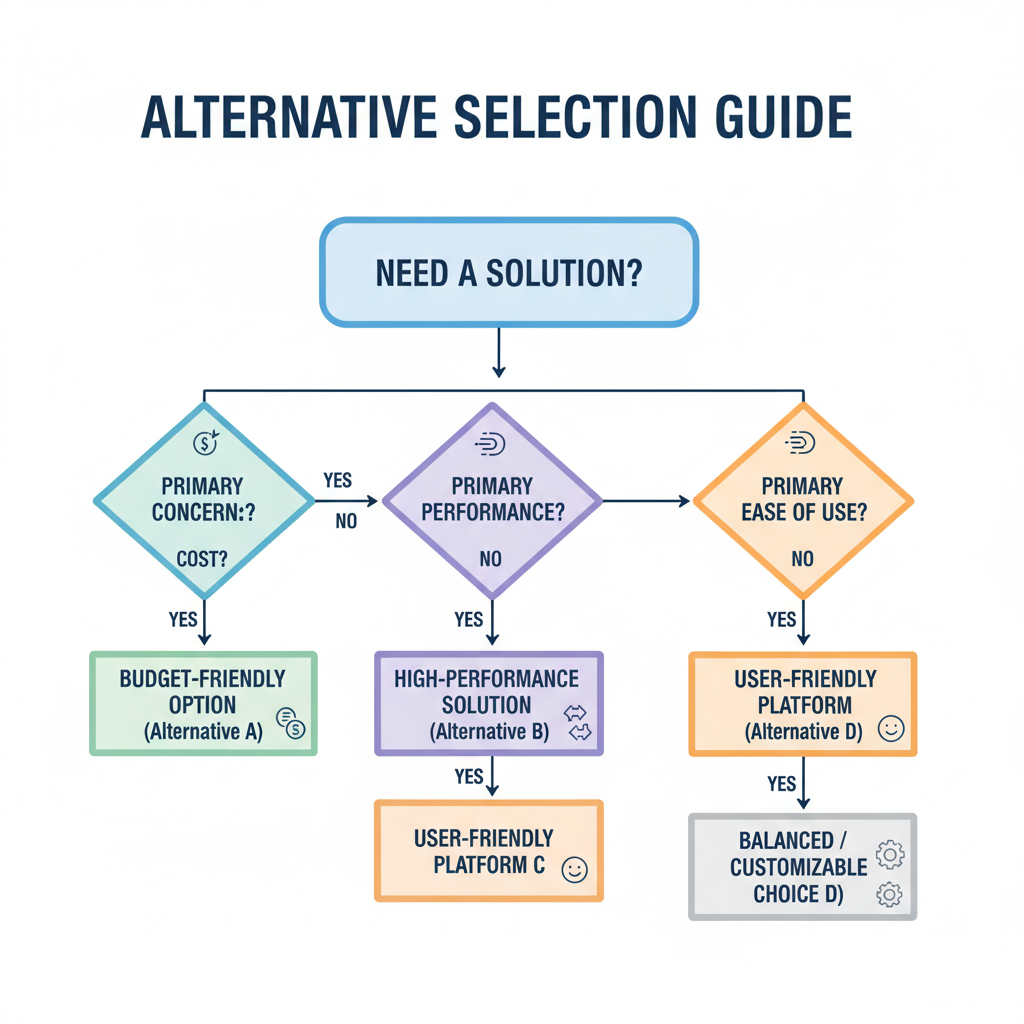
Your ideal platform depends on budget, technical resources, and specific requirements
8. NinjaCat
Best for: Marketing agencies needing automated client reporting
NinjaCat targets marketing agencies specifically, combining data integration with automated reporting, call tracking, and performance monitoring. It's less flexible than general-purpose platforms but more tailored to agency workflows.
Key strengths:
- Agency-centric feature set
- Automated report generation and delivery
- Built-in call tracking integration
- White-label capabilities
Limitations:
- Less suitable for in-house marketing teams
- Smaller connector ecosystem
- Reporting-focused rather than analytics-focused
Agencies spending significant time on client reporting will find NinjaCat's automation capabilities valuable. The platform won't power sophisticated analytics, but it excels at its core use case.
Pricing: Custom pricing based on client count and features.
9. Fivetran
Best for: Data teams needing enterprise-grade ELT infrastructure
Fivetran isn't marketing-specific—it's a general-purpose data integration platform used across industries. But its reliability, automation, and extensive connector library make it a serious Funnel.io alternative for teams with data engineering resources.
Key strengths:
- 300+ fully managed connectors
- Automatic schema handling and updates
- Enterprise-grade reliability and SLAs
- Strong security and compliance certifications
Limitations:
- No marketing-specific features
- Requires downstream transformation tools (dbt, etc.)
- Premium pricing
- Technical implementation required
For organizations already investing in modern data infrastructure—data warehouses, transformation layers, BI tools—Fivetran often proves more flexible than marketing-specific platforms.
According to Fivetran's documentation, marketing teams using their platform with downstream transformation achieve 40% faster time-to-insight compared to manual data integration approaches.
Pricing: Usage-based pricing starting around $1/month per connector; scales with data volume.
10. Stitch Data
Best for: Budget-conscious teams needing reliable data movement
Stitch (now part of Talend) offers straightforward data integration at competitive pricing. It lacks the bells and whistles of premium platforms but handles core ETL functionality reliably.
Key strengths:
- Transparent, predictable pricing
- Simple setup and management
- Open-source origins (Singer taps)
- Good documentation and community
Limitations:
- Limited transformation capabilities
- Fewer marketing-specific connectors
- Basic UI compared to competitors
Teams prioritizing cost-effectiveness over advanced features will appreciate Stitch's no-nonsense approach.
Pricing: Free tier for low data volumes; paid plans start around $100/month.
11. Hevo Data
Best for: Teams wanting a balance of simplicity and capability
Hevo Data occupies middle ground—more capable than basic tools like Coupler.io, more accessible than enterprise platforms like Improvado. It handles data integration, transformation, and loading without requiring extensive technical expertise.
Key strengths:
- User-friendly interface
- Real-time data replication
- Built-in data transformation
- Reasonable pricing for capabilities offered
Limitations:
- Smaller connector library than market leaders
- Less mature than established competitors
- Limited advanced analytics features
For mid-market companies outgrowing basic tools but not ready for enterprise platforms, Hevo represents a sensible middle path.
Pricing: Usage-based pricing; free tier available.
How to Choose the Right Alternative
With eleven options on the table, how do you decide? Start with these questions:
What's Your Technical Capability?
Low technical resources: BlueAlpha.ai, Supermetrics, Coupler.io, Whatagraph Moderate technical resources: Hevo Data, Stitch Strong technical team: Fivetran, Improvado, Adverity
The most capable platforms often require the most expertise to implement and maintain. Don't overestimate your team's bandwidth.
What's Your Budget Reality?
Under $500/month: Coupler.io, Supermetrics, Stitch $500-2,000/month: Whatagraph, Hevo Data, NinjaCat $2,000+/month: Improvado, Adverity, Fivetran, Domo
Pricing models vary dramatically. Some charge per connector, others per data row, others per user. Model your actual usage carefully before committing.
What Do You Actually Need?
Just data extraction: Supermetrics, Coupler.io Data integration + visualization: Whatagraph, Domo Media mix modeling + optimization: BlueAlpha.ai Enterprise marketing intelligence: Improvado, Adverity General data infrastructure: Fivetran, Hevo Data
Be honest about your requirements. The most common mistake is buying capability you won't use. Understanding your marketing funnel stages helps clarify what data you actually need to collect and analyze.
Do You Need MMM Support?
If you're building toward media mix modeling or advanced marketing attribution, BlueAlpha.ai is purpose-built for this use case—it combines data integration with native MMM capabilities. Alternatively, Fivetran, Improvado, and Adverity export clean, granular data to warehouses where separate modeling can happen. Our MMM readiness checklist can help you assess what data infrastructure you need.
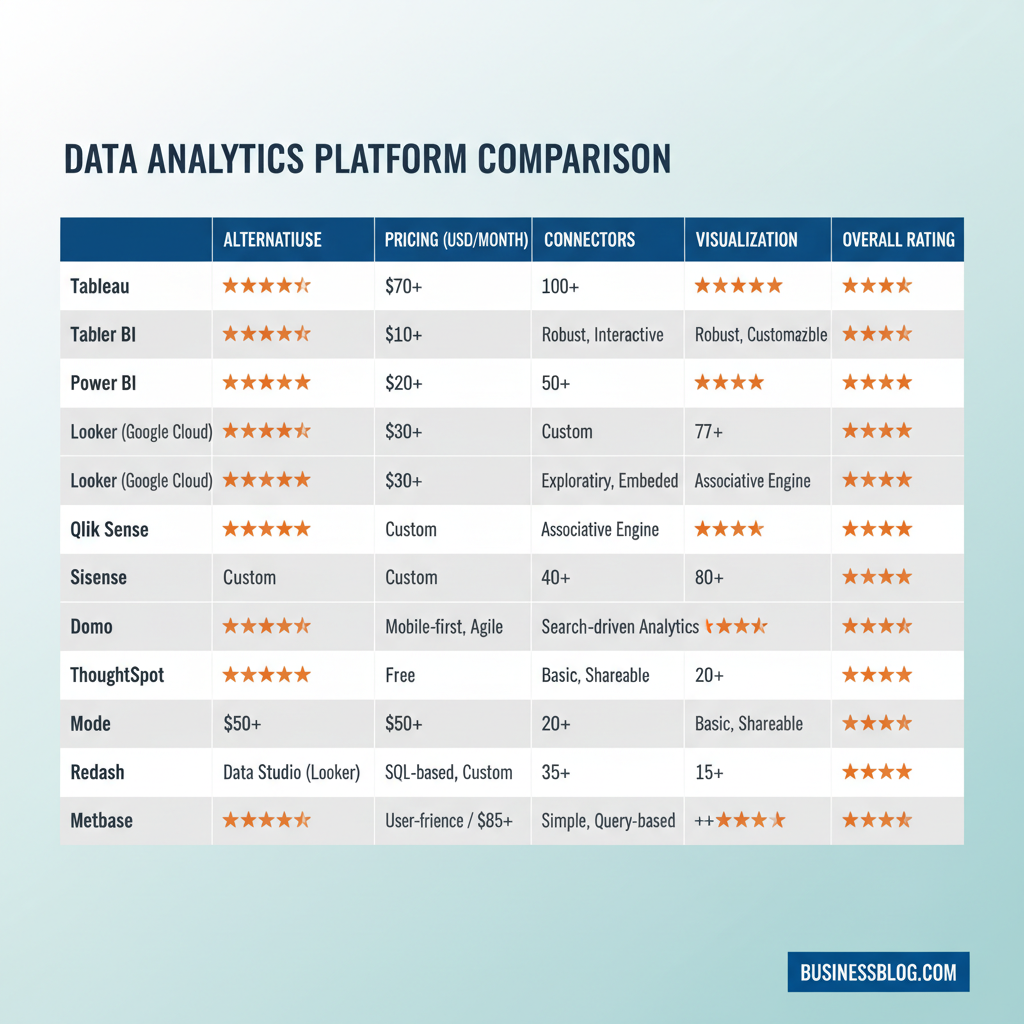
Quick reference guide for comparing your shortlisted options
Making the Transition
Switching data platforms isn't trivial. Plan for:
Data continuity. Ensure historical data transfers correctly or remains accessible in the old system during transition. Understanding media budget optimization requirements helps determine what historical data you actually need.
Downstream dependencies. Every dashboard, report, and integration connected to Funnel.io needs reconfiguring.
Team training. Even simpler platforms require adjustment time. Budget for it. Review our marketing effectiveness measurement guide to understand what capabilities you'll need long-term.
Parallel running. Run both platforms simultaneously for 2-4 weeks to validate data consistency before cutting over.
For detailed guidance on preparing your data infrastructure, our preparation tips cover the foundational requirements for marketing analytics success.
Frequently Asked Questions
Is Supermetrics better than Funnel.io?
It depends on your needs. Supermetrics excels at simple, spreadsheet-based data extraction with minimal setup. Funnel.io offers more sophisticated data transformation and centralization capabilities. If you primarily need data in Google Sheets or Looker Studio, Supermetrics is often the better choice. For complex multi-source data blending, Funnel.io may serve you better.
What's the cheapest Funnel.io alternative?
Coupler.io and Stitch Data offer the most affordable options, both with free tiers for low-volume use cases. Supermetrics also provides competitive entry-level pricing starting around $39/month. However, cheap isn't always best—evaluate whether the platform meets your actual requirements before optimizing for cost.
Can I use a Funnel.io alternative for media mix modeling?
Yes, but the platform choice matters. BlueAlpha.ai is the only alternative with native media mix modeling built in—no separate tools required. For teams preferring to build their own modeling infrastructure, Fivetran, Improvado, and Adverity export clean, granular data to data warehouses where statistical modeling happens. Visualization-focused tools like Whatagraph aren't designed for downstream modeling.
How long does migration from Funnel.io take?
Typical migrations take 2-6 weeks depending on complexity. Simple setups with few data sources and basic transformations can transition in under two weeks. Enterprise implementations with complex transformation logic, numerous integrations, and strict data governance requirements often require 4-6 weeks or longer.
Do any alternatives offer better visualization than Funnel.io?
Yes. Whatagraph, Domo, and Improvado all include native visualization capabilities that exceed Funnel.io's basic offerings. If built-in dashboarding and reporting matters to your team, these platforms eliminate the need for separate BI tools.
Conclusion
Funnel.io remains a capable marketing data platform, but it's far from the only option. The right alternative depends on your specific situation—budget constraints, technical capabilities, and actual requirements.
Key takeaways:
- Assess your pain points first—different alternatives solve different problems
- Match platform complexity to your team's technical resources
- Model true costs including implementation, training, and downstream tools
- Consider future needs like media mix modeling readiness, not just current requirements
- Plan transitions carefully to avoid data disruption
The best platform is the one your team will actually use effectively. Capability you can't leverage isn't worth paying for.
Start by identifying your non-negotiables. Then evaluate the 2-3 platforms that match those requirements. Request demos, run trials, and make your decision based on hands-on experience rather than feature lists.
Building toward advanced marketing measurement? Take our MMM readiness quiz to assess whether your data infrastructure supports sophisticated attribution and optimization. Or explore our preparation tips to understand what foundation you need before selecting your data platform.
Stay in the loop
Get updates on new posts and resources.