How to Hire a Marketing Mix Modeling Consultant or Agency
Stop guessing with your budget. Learn exactly how to hire MMM consultant services that deliver actionable insights—not just slide decks. Your full guide.

Marketing attribution is broken. You know it. Your CFO knows it.
Cookies are crumbling. Privacy regulations are tightening. The days of relying solely on click-based tracking are over. You need a solution that looks at the big picture without invading user privacy.
You need Marketing Mix Modeling (MMM).
But realizing you need MMM is the easy part. The hard part is execution. Building a model from scratch requires data science PhDs and months of development. Most marketing leaders don't have that time.
That is why smart leaders look to hire MMM consultant experts or specialized agencies to bridge the gap.
Here is the problem: The market is flooded. From legacy consulting firms charging seven figures for a PowerPoint deck to automated SaaS platforms promising the world, the options are overwhelming.
Make the wrong choice, and you burn six months of budget on a model that tells you what happened last year but offers zero help for tomorrow.
This guide fixes that. We will walk you through exactly how to vet, select, and hire MMM consultant partners that actually move the needle for your business.
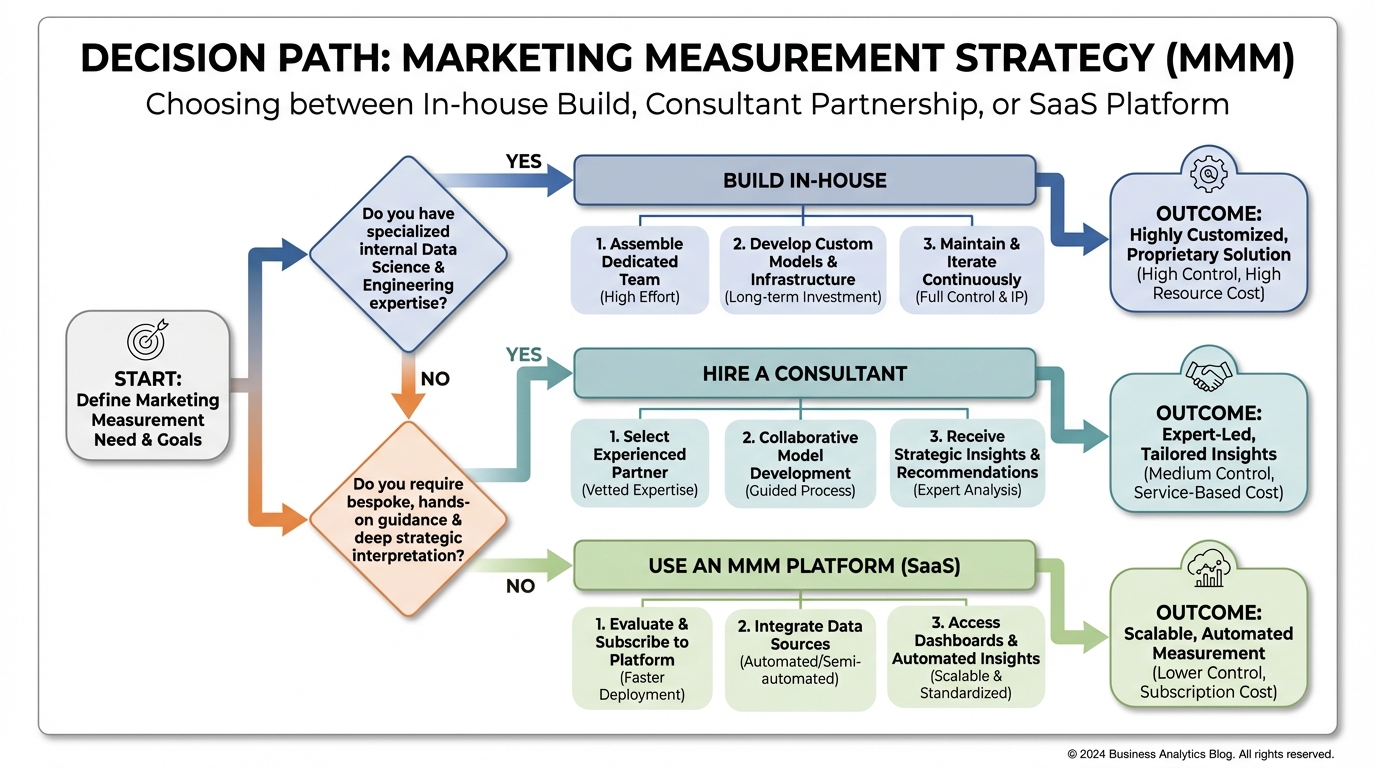
Why You Need a Partner (Even if You Have Data Scientists)
You might be tempted to build this in-house.
If you have a massive data science team sitting idle, go for it. But for 99% of companies, building a robust MMM engine is a distraction from your core business. According to Harvard Business Review, the talent gap for data scientists who can actually translate math into business strategy is widening.
MMM is complex. It requires:
- Advanced econometrics.
- Bayesian statistics.
- Machine learning capabilities to handle saturation curves and adstock.
- Constant calibration.
When you hire MMM consultant experts or partner with a specialized platform like BlueAlpha, you aren't just buying software. You are buying speed. You are buying benchmark data. You are buying the assurance that your model isn't hallucinating ROI figures.
The "Black Box" Problem
Traditional agencies love the "black box." They take your data, disappear for three months, and return with a static PDF report.
That doesn't work in 2026.
Marketing moves too fast. You need a partner that offers transparency. You need to understand why the model attributes revenue to a specific channel.
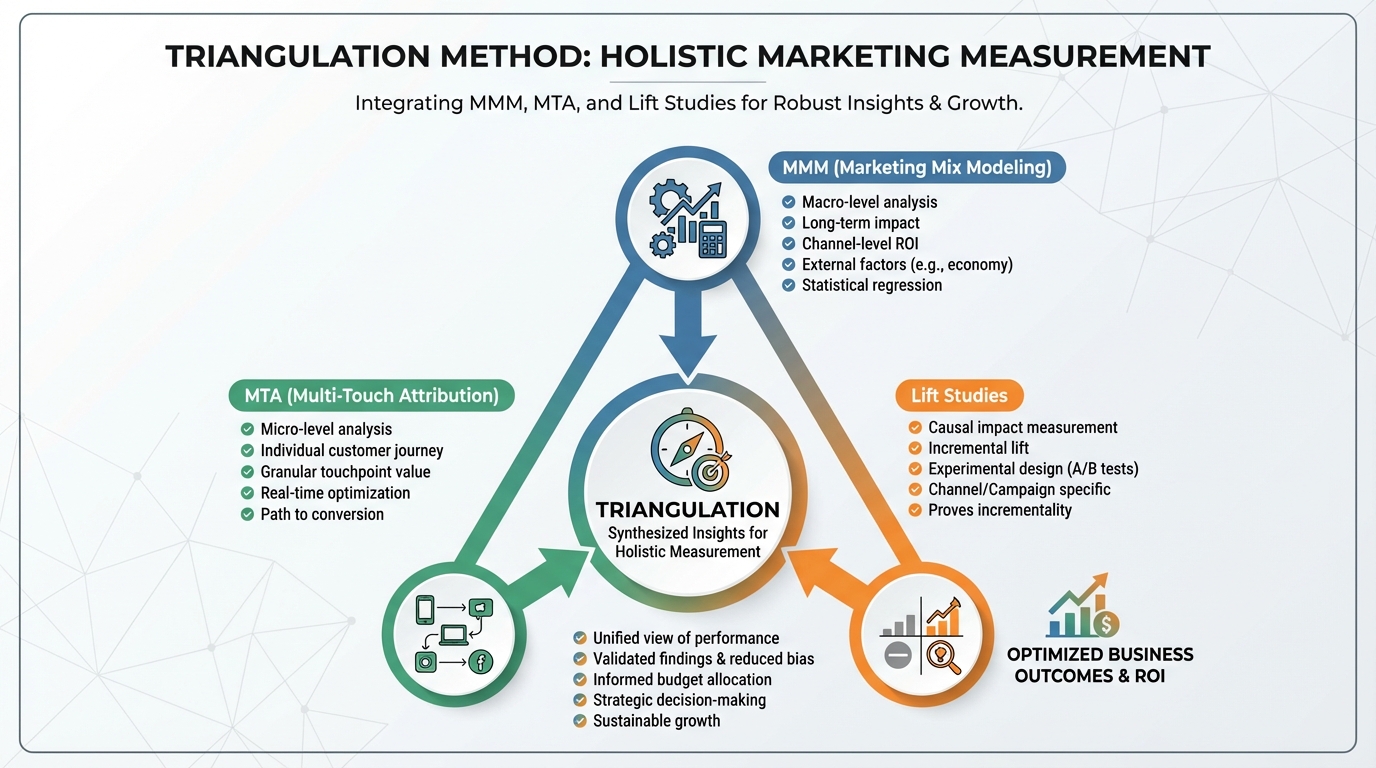
Before you start interviewing, understand the landscape. Modern measurement requires a blend of methodologies. You need to understand how MMM interacts with other attribution models.
For a deeper dive on how these methods coexist, read our guide on marketing effectiveness measurement.
Step 1: Define Your Scope and Requirements
Don't send out an RFP yet. You need to know what you are asking for.
MMM isn't a one-size-fits-all jacket. A Series B SaaS company needs a different model than a global CPG brand. According to Forrester, aligning your measurement strategy with specific business goals is the primary factor in analytics success.
Frequency of Insights
Do you need a quarterly audit or weekly optimization?
- Legacy Consultants: Usually deliver quarterly or bi-annually. Good for high-level strategy, bad for campaign optimization.
- Modern Platforms: Deliver weekly or even daily updates. Essential for digital-first brands.
Channel Complexity
List every channel you spend money on.
- Facebook/Google (Easy)
- Influencers (Medium)
- Direct Mail/OOH/TV (Hard)
If you rely heavily on offline channels, you need a partner with specific experience there. For example, tracking billboards requires specific geospatial modeling capabilities. Check our guide on Out-of-Home advertising tracking to understand the nuance.
Budget Allocation Needs
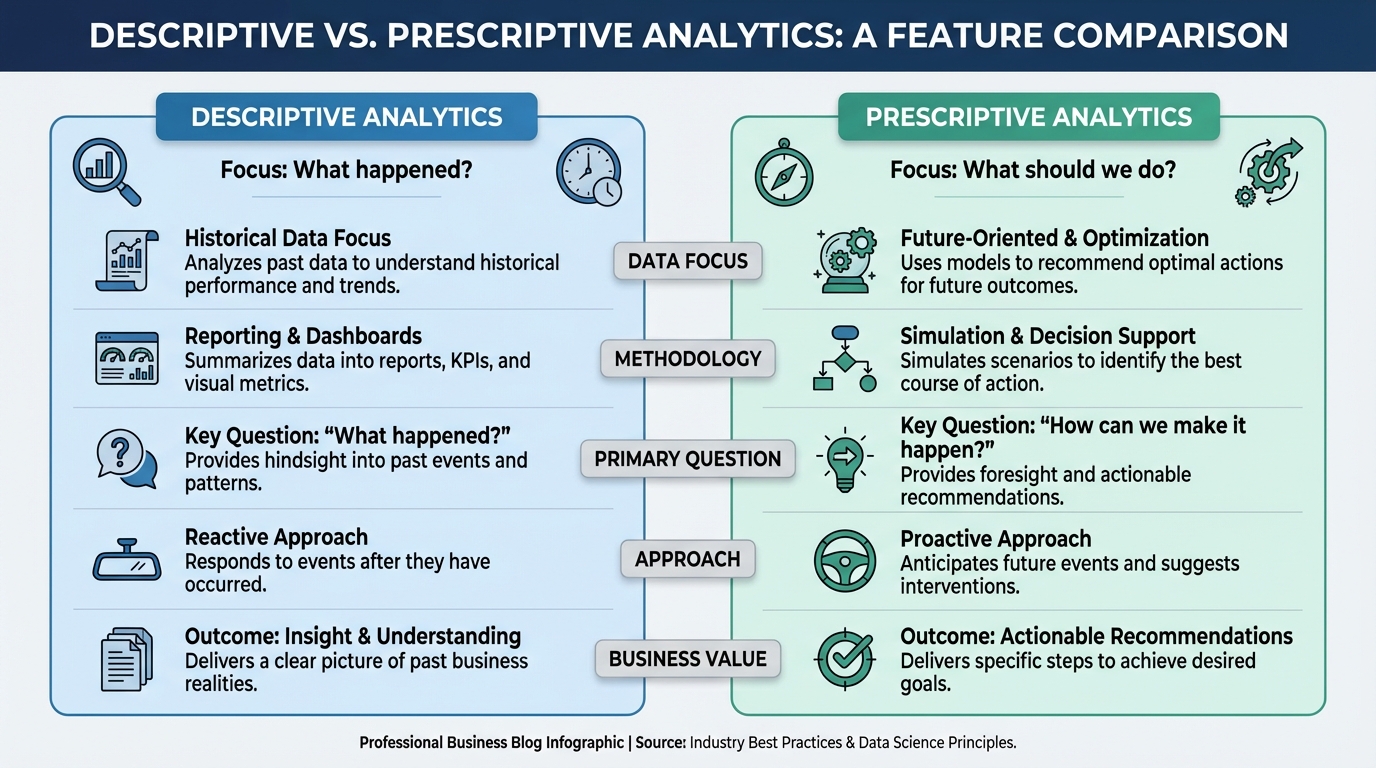
Are you looking for a report card, or a GPS?
- Descriptive: "Facebook ROAS was 3.0."
- Prescriptive: "Move $50k from YouTube to TikTok to increase revenue by 12%."
If you want the latter, you need a partner specializing in optimization, not just reporting.
[IMAGE: A comparison table showing "Descriptive Analytics" vs "Prescriptive Analytics" features.] Alt text: Table contrasting descriptive reporting vs prescriptive budget allocation.
When you interview vendors to hire MMM consultant services, you must be aggressive. Sales teams are trained to say "yes" to everything. Your job is to find the cracks in their pitch.
According to research by Gartner, over 50% of marketing analytics projects fail to deliver business value due to poor vendor alignment. Don't be a statistic.
Ask these specific questions:
1. "What is your underlying methodology?"
If they say "it's proprietary AI," run away. Legitimate vendors use established econometric frameworks. They should be comfortable discussing Ridge Regression, Bayesian priors, or specific open-source libraries they build upon.
Many modern platforms build on top of validated frameworks like Google's Meridian or Meta's Robyn.
- Learn more about Google Meridian here.
- Learn more about Meta Robyn here.
A vendor using these frameworks offers you portability. If you fire them, you don't lose the logic.
2. "How do you handle granular data?"
Old-school MMM relied on aggregate weekly data. It was slow and lacked detail. Newer approaches (often called Hybrid MMM) incorporate user-level signals where privacy compliant. This is crucial for comparing broad channels against specific digital campaigns.
For a detailed breakdown of how different attribution models compare, look at our MTA vs MMM comparison.
3. "Show me the dashboard."
If the deliverables are static slides, you are overpaying. You need a dynamic interface. You should be able to simulate budget changes in real-time.
- "What happens if I cut TV spend by 50%?"
- "What if I double my influencer budget?"
If the consultant has to "go back to the data science team" to answer that, they are too slow for today's market. Leading research from McKinsey suggests that agility in budget reallocation is the single biggest driver of marketing growth.
4. "How do you calibrate the model?"
A model without calibration is just a guess. Top-tier partners use lift tests (geo-lift or conversion lift) to ground-truth their models. They run an experiment, see the actual incremental result, and feed that back into the MMM to improve accuracy.
[IMAGE: Diagram illustrating the "Triangulation" method: MMM + MTA + Lift Studies.] Alt text: Venn diagram showing the intersection of MMM, Multi-Touch Attribution, and Lift Studies. Caption: The gold standard of measurement involves triangulating data from multiple sources.
The market is split into three categories.
1. The Legacy Consultants
Examples: Nielsen, Kantar. Pros: Massive brand recognition, deep expertise in TV/Retail. Cons: Extremely expensive, slow implementation (3-6 months), static reporting. Best for: Fortune 500 CPG brands with stable, slow-moving budgets.
2. The DIY/Open Source Route
Examples: Internal teams using Robyn or Meridian. Pros: Free software, total control. Cons: High talent cost. If your data scientist quits, your model dies. Best for: Tech companies with excess engineering talent.
3. The Modern Hybrid Platforms (SaaS + Service)
Examples: BlueAlpha, Recast, Measured. Pros: Fast implementation (weeks, not months), dynamic dashboards, automated data pipelines, lower cost than consultants. Cons: Requires clean data inputs.
This third category is where the industry is heading. It combines the rigor of a consultant with the speed of software.
BlueAlpha, for example, shines here by offering the transparency of open-source methodologies with an enterprise-grade interface. It eliminates the "black box" fear while providing the prescriptive insights you'd expect from a top-tier consultancy.
For instance, when you compare Recast vs BlueAlpha, you see two strong contenders pushing for Bayesian methodologies that adapt quickly to change. Similarly, looking at Measured.com vs BlueAlpha highlights the importance of incrementality testing integration.
The Interactive Advertising Bureau (IAB) notes that the most successful brands are those moving toward these hybrid models that allow for continuous calibration.
Step 4: The "Gotchas" in Contracts
You are ready to hire MMM consultant partners. You have the proposal. Now, check the fine print.
Data Ownership
Who owns the model parameters? If you leave the agency, do you keep the learnings? Ensure the contract states that all data and model coefficients belong to you.
Implementation Timelines
Many agencies promise a 4-week onboarding but take 4 months. Ask for a detailed implementation roadmap.
- Week 1: Data connection.
- Week 2: Data cleaning and taxonomy.
- Week 3: Initial model training.
- Week 4: Review and launch.
If they can't commit to a schedule, they don't have a process. Read our guide on deploying media mix models to understand what a realistic timeline looks like.
Support Tiers
MMM is not "set it and forget it." Markets change. Competitors launch products. A global pandemic shifts buying behavior. Does your retainer include monthly calibration calls? Or is every phone call an extra billable hour?
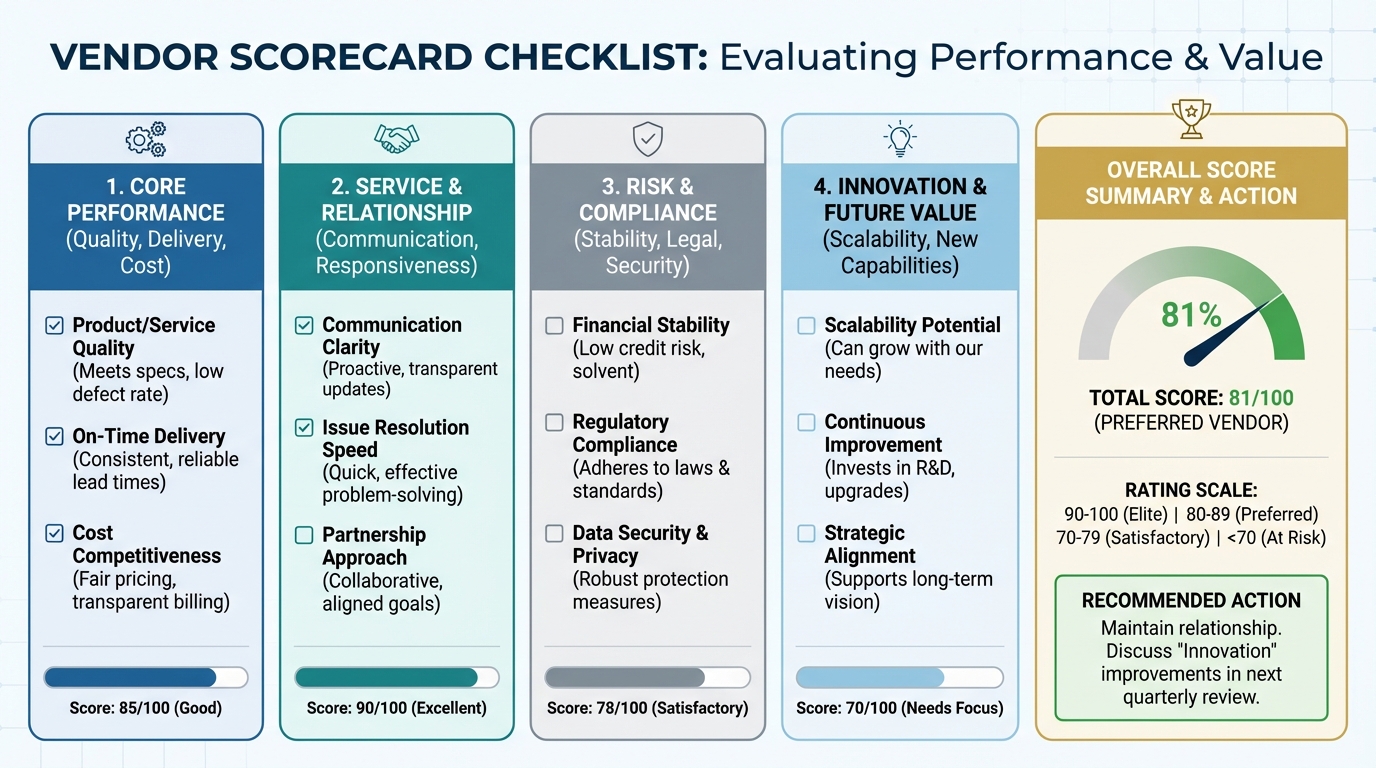
[IMAGE: Infographic of a "Vendor Scorecard" checklist.] Alt text: Checklist for scoring MMM vendors based on speed, methodology, and support. Caption: Use a standardized scorecard to objectively compare potential partners.
Sometimes, a generalist isn't enough.
B2B and Account-Based Marketing (ABM)
If you sell software to enterprises, a standard DTC model will fail. You have long sales cycles and multiple touchpoints per account. You need a partner who understands pipeline velocity and account engagement scores. Check if the vendor has specific experience in this area. We have a dedicated guide on ABM ROI measurement that outlines these specific challenges.
Influencer Heavy Brands
Influencer marketing is notoriously hard to track. Codes get leaked, links don't get clicked. An MMM partner needs to treat influencers as a distinct media channel, often using view-based metrics rather than just clicks. See our influencer marketing performance guide for the metrics that matter here.
Red Flags to Watch For
During your search to hire MMM consultant experts, be wary of these warning signs:
- Guaranteed ROI: No model can guarantee results. If they promise a 5x ROAS before seeing your data, they are lying.
- Focus on "Last Click": If an MMM vendor talks too much about click-path data, they don't understand MMM. The whole point is to move away from click reliance. Read more from Think with Google on why last-click is fading.
- Ignoring Seasonality: If they don't ask about your Black Friday spikes or seasonal dips during the audit, their model will be flawed.
- No Talk of Budget Optimization: The goal isn't just to measure; it's to improve. If they don't have tools to help you allocate spend, they are just a reporting tool.
- Reference: Funnel Stage Budget Allocation Guide.
Making the Final Decision
You have narrowed it down to two or three options. How do you pick?
Ask for a Pilot. Don't sign a 12-month contract immediately. Ask for a 90-day proof of concept (POC). Give them historical data. See if their model can "predict" the past accurately (this is called backtesting).
Check References. Don't ask for their best client. Ask for a client in your specific vertical with similar spend levels. Ask that client: "When the model told you to move money, and you did it, did revenue actually go up?"
That is the only metric that matters. Even academic institutions like MIT Sloan emphasize that the value of analytics lies in the decision-making it enables, not the complexity of the math.
Alternative Platforms
It is smart to shop around.
- If you are looking at Northbeam, compare their attribution focus against MMM capabilities. Read our Northbeam vs BlueAlpha comparison.
- If you are considering Triple Whale, understand their strength is in Shopify analytics, which differs from enterprise MMM. See our Triple Whale alternatives guide.
- For those looking at Keen Decision Systems, evaluate their speed vs. modern SaaS. Check out Keen Decision Systems alternatives.
Conclusion
To hire MMM consultant services is to invest in the brain of your marketing operation.
The right partner moves you from "I think this works" to "I know this works." They give you the confidence to defend your budget to the CFO and the agility to pivot when the market shifts.
Don't settle for black boxes. Don't settle for static PDFs. Demand transparency, speed, and actionable insights.
The future of marketing isn't about who has the most data. It's about who has the best model to interpret it.
Ready to see what a modern, transparent MMM looks like? Explore how BlueAlpha compares to the competition and start making decisions based on reality, not guesses.
Frequently Asked Questions (FAQ)
How much does it cost to hire an MMM consultant?
Costs vary wildly. Traditional consulting firms (like Deloitte or Nielsen) can charge $100k to $500k+ per project. Modern SaaS-based MMM platforms (like BlueAlpha or Recast) typically charge a monthly subscription ranging from $2k to $15k depending on ad spend and data complexity.
How long does it take to implement MMM?
Legacy agencies often take 3 to 6 months to build and calibrate a model. Modern platforms that automate data ingestion can have a working model ready in 2 to 4 weeks.
Can I use MMM if I only spend on digital channels?
Yes, absolutely. While MMM was invented for TV and radio, it is now the most reliable way to measure digital channels (Facebook, TikTok, YouTube) because it doesn't rely on tracking cookies or pixels, which are blocked by iOS updates.
What data do I need to provide to an MMM consultant?
You will typically need 2+ years of historical data including:
- Media spend and impressions by channel (daily or weekly).
- Sales revenue / conversions.
- Pricing and promotional data.
- External factors (competitor activity, economic indicators).
What is the difference between MMM and MTA (Multi-Touch Attribution)?
MTA tracks individual user journeys using cookies/IDs (bottom-up). MMM uses statistical analysis of aggregate data (top-down). MTA is getting harder due to privacy laws, making MMM the new standard for strategic budget allocation. For a full breakdown, read our MTA vs MMM comparison.
Stay in the loop
Get updates on new posts and resources.