Analytic Partners vs Nielsen vs Kantar: MMM Comparison
Compare Analytic Partners MMM vs Nielsen and Kantar. Discover which enterprise solution fits your strategy and budget. Read the full comparison guide now.
You spend millions on ads. You need to know if they work.
For decades, three giants have dominated this space: Analytic Partners, Nielsen, and Kantar. These are the heavyweights. Fortune 500 companies use them when the board asks for proof.
But the marketing world has changed. Privacy laws stopped tracking cookies. User journeys are messy. Waiting six months for a consultant's report doesn't work anymore.
If you are evaluating Analytic Partners MMM against the legacy power of Nielsen and the brand focus of Kantar, you need the facts. You need to know which tool fits your budget.
This guide breaks it down. No fluff. Just the data you need to make the right call.
The Enterprise MMM Landscape
Media Mix Modeling (MMM) isn't new. It’s been around since the Mad Men era. But it has changed a lot.
In the past, MMM was a service. You hired a firm. They took your data. They went away for a few months. They came back with a binder telling you what happened last year.
Today, speed is everything. According to the Association of National Advertisers (ANA), the top request from CMOs is faster insight. They want to know what's working now.
The "Big Three"—Analytic Partners, Nielsen, and Kantar—are all trying to be faster. They call it "Commercial Mix Modeling" or "Unified Measurement." But they solve the problem in different ways.
Choosing the wrong vendor is expensive. It’s also a career risk. If your model tells you to cut spend on a channel that actually drives revenue, you lose sales.
Before we look at the vendors, you should understand the basics. A solid foundation in media mix modeling and attribution helps you judge these platforms fairly.
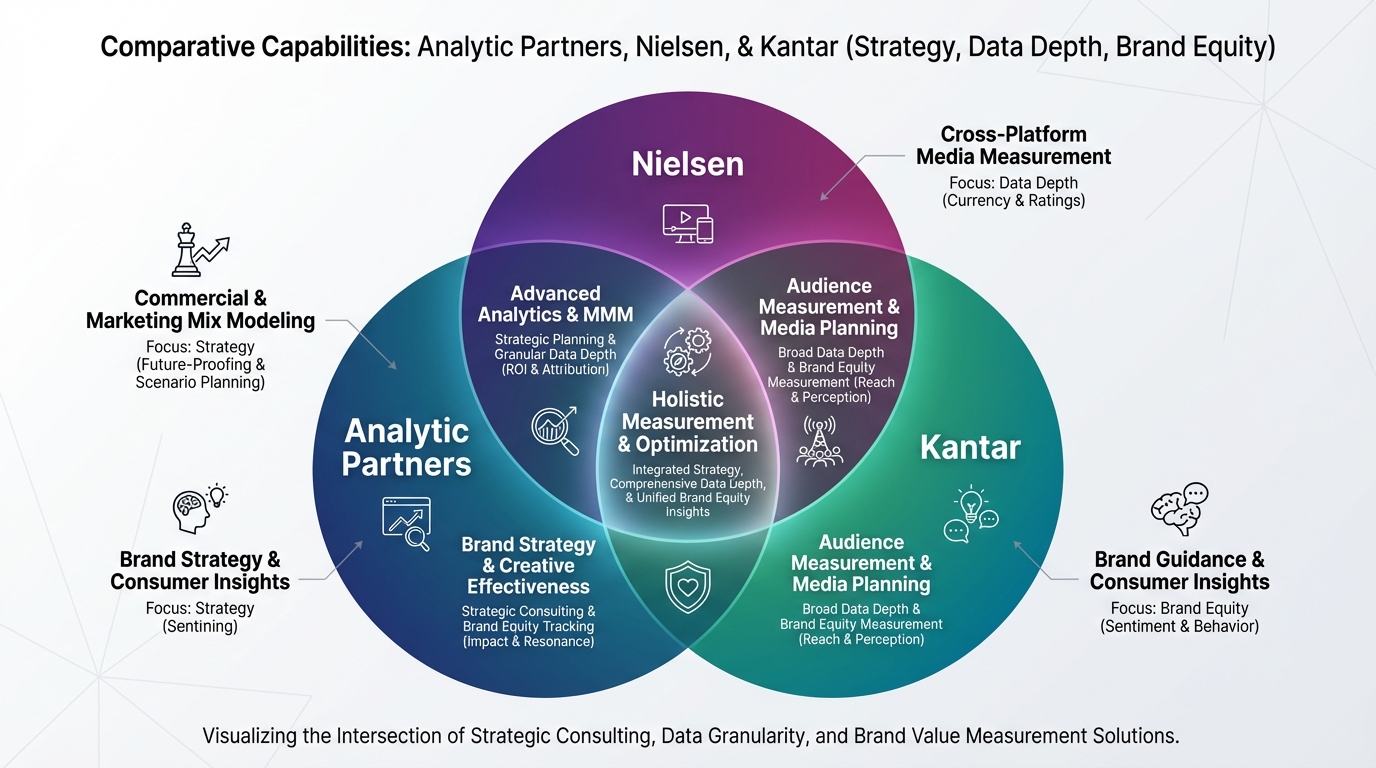
Deep Dive: Analytic Partners MMM
Analytic Partners is often the choice for strategists. They don't just look at media. They look at the whole business.
The Approach: Commercial Mix Modeling
They use the term "Commercial Mix Modeling." This is more than just ad spend. It includes operational changes, pricing, and the economy.
If you change your product price in Q3, Analytic Partners MMM tries to separate that from your ad spend. This big-picture view is their main selling point.
Strengths
- Strategic Depth: Great for answering "what if" questions for next year.
- Global Reach: They handle data from many countries well.
- Consulting: You get smart people explaining the data to you.
Weaknesses
- Cost: This is a premium tool. It is not for mid-sized brands.
- Speed: They are faster than before, but still rely on people. Real-time changes are rare.
- Complexity: You need to give them a lot of data from outside marketing.
According to a report by Forrester, brands that add operational data to their models see a 15% better forecast. Analytic Partners focuses heavily on this.
For a broader look at how different models compare, check out our guide on which MMM is best.
Deep Dive: Nielsen Marketing Mix Modeling
Nielsen is the data giant. If you sell goods in physical stores, you probably know Nielsen.
The Approach: Data Dominance
Nielsen’s strength is its own data. They own TV ratings. They own sales data for millions of stores. Nielsen marketing mix modeling is built on this hard data.
They focus on "Total Audience" measurement. They try to connect a TV ad to a sale at the checkout counter.
Strengths
- Offline Tracking: Best view of TV and retail sales.
- Benchmarks: They measure everyone, so they know what "good" looks like.
- Detail: They can tell you how a campaign affected sales of one product in one state.
Weaknesses
- Digital Gaps: They sometimes struggle with the details of Google and Meta ads.
- Rigid: Their models are standard. Changing them for a unique business is hard.
- Old Tech: The software often feels dated compared to modern apps.
Data from eMarketer shows that offline retail data is still the main source of truth for big brands. This keeps Nielsen relevant.
If your marketing relies on billboards and physical ads, understanding out-of-home advertising tracking is key when looking at Nielsen.
Deep Dive: Kantar MMM
Kantar sits between hard sales data and soft brand feelings.
The Approach: Brand + Performance
Kantar says sales are only half the story. Brand reputation drives future sales. Kantar MMM puts survey data and brand tracking right into the model.
They look at the long-term value of building a brand.
Strengths
- Brand Measurement: Best for understanding how people feel about you.
- Surveys: Blends survey answers with sales numbers.
- Creative Analysis: They often tell you why an ad worked based on the creative.
Weaknesses
- Actionability: Insights can be vague ("Improve brand love") instead of specific ("Cut Facebook spend").
- Value: For performance marketers, brand metrics might feel like extra fluff.
Marketing Week often writes about the fight between long-term brand building and short-term sales. Kantar is firmly on the "long-term" side.
If you invest heavily in creators or soft metrics, our influencer marketing performance measurement guide can help you see how these link to sales.
[IMAGE: Bar chart comparing the average deployment time of Legacy MMM vs Modern MMM. Legacy: 3-6 months. Modern: 2-4 weeks.] Alt text: Chart showing deployment speed differences between legacy vendors and modern AI platforms.
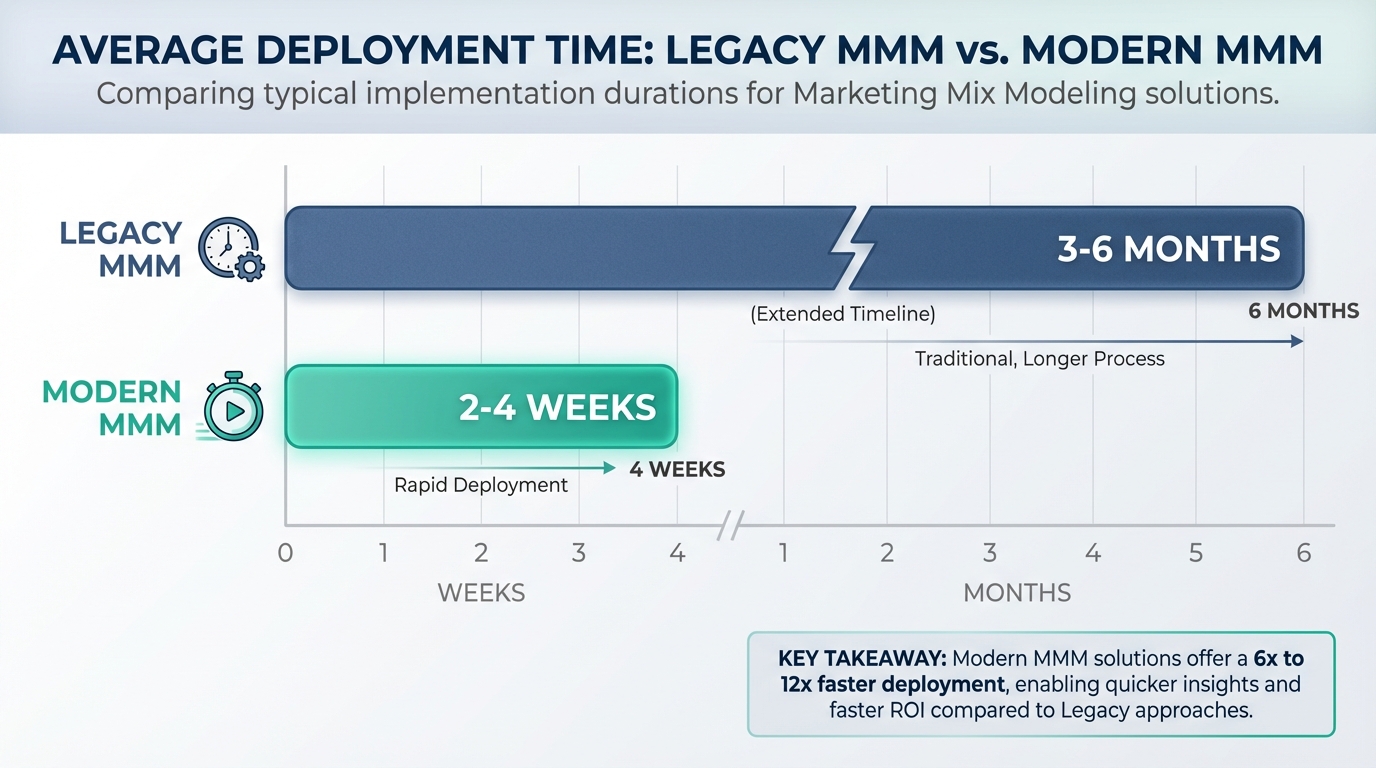
Let’s look at the numbers. How do these media mix modeling vendors compare on what matters?
| Feature | Analytic Partners | Nielsen | Kantar |
|---|---|---|---|
| Primary Focus | Strategy & Operations | Retail & TV Data | Brand Equity |
| Best For | Global Enterprises | CPG & Retail | Brand-Heavy Advertisers |
| Speed | Quarterly/Monthly | Monthly | Quarterly |
| Service Model | High-Touch Consulting | Data Delivery | Research & Consulting |
| Digital Savvy | Moderate | Low/Moderate | Moderate |
| Cost | $$$$ | $$$ | $$$ |
The "Black Box" Problem
All three vendors use "Black Box" models. You give them data. They give you answers. You rarely see the math.
This lack of transparency is a problem. Modern teams want to own their truth. They want to see the code. This has driven interest in open-source tools. You can read more about that in our Meta Robyn guide.
For those interested in Google's approach, our Google Meridian MMM guide explores their new tool.
[IMAGE: Comparison graphic showing cost vs. value. Y-axis: Cost, X-axis: Actionability. Legacy vendors are high cost/low speed. Modern vendors are low cost/high speed.] Alt text: Cost benefit analysis of legacy MMM vs modern AI measurement platforms. Caption: Higher fees do not always equate to better actionable data.
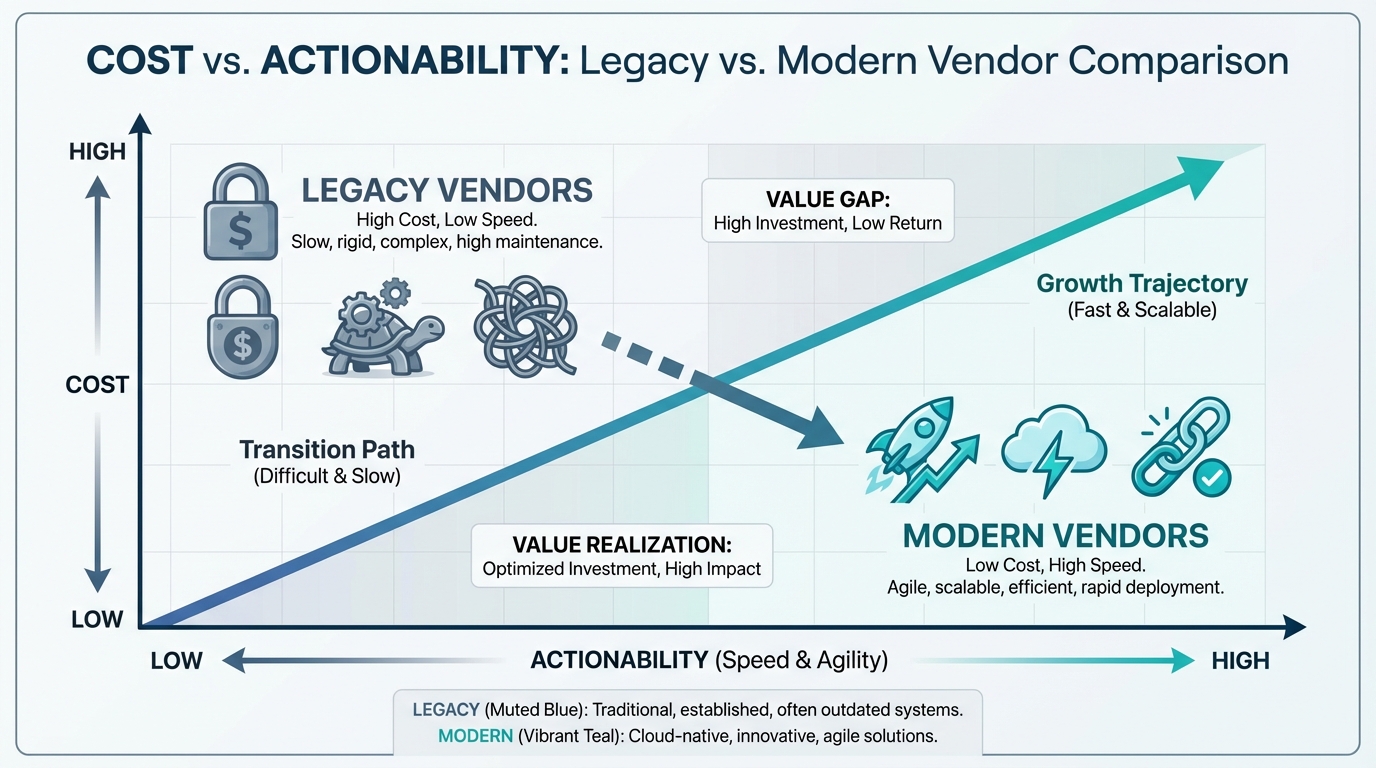
When you sign a contract with Analytic Partners MMM or Nielsen, the price tag is just the start.
1. The Time Tax
Onboarding takes months. Cleaning data takes months. By the time you get a report, the market has changed. Looking at Q1 data while you are in Q3 is not helpful.
Gartner reports that 60% of marketing leaders say "data preparation time" is their biggest problem.
2. The Internal Resource Drain
These models are hungry. They need your data team to format files perfectly. You will likely need a full-time employee just to manage the vendor.
3. The "Consultant Dependency"
Because the models are complex, you cannot run tests yourself. You have to email your account manager. Then you wait. This kills speed.
Good measurement should help you move money fast. See our guide on media budget optimization to understand how fluid this should be.
To understand the cost of these delays, you need a framework. Our marketing ROI analysis guide helps you calculate the cost of waiting.
The Modern Alternative: AI-Driven MMM
The market is splitting. On one side, you have the legacy giants. On the other, you have new AI-native platforms. This is the new wave of enterprise marketing measurement.
Companies like BlueAlpha are disrupting the Big Three. We don't just offer data; we offer agility.
Here is how BlueAlpha compares:
- Speed: Models update weekly or daily.
- Efficiency: Clients often see a 20-30% gain in efficiency quickly.
- Transparency: No black boxes. You see the variables.
- Usability: Built for marketers, not data scientists.
A Note on Limitations: BlueAlpha is a software platform, not a consulting firm. We don't write your strategy decks for you. We give you the raw, accurate truth so you can build the strategy yourself.
Why Speed Matters
In 2026, ad platforms change algorithms overnight. A competitor launches a sale on Tuesday. You need to react by Wednesday.
Legacy vendors like Nielsen were built for a world of TV ads. They cannot match the speed of digital sales.
According to Harvard Business Review, the best brands adjust their marketing mix in real-time.
Privacy and the Future
Legacy players relied on tracking users to fix their models. As privacy signals go dark, their accuracy drops. Apple's App Tracking Transparency (ATT) framework changed the game for everyone. You can read about the impact of these changes on Wired.
Modern platforms like BlueAlpha were built after these changes. They use probabilistic modeling. They don't need cookies to work.
If you struggle to measure results without tracking users, read our marketing effectiveness measurement guide.
[IMAGE: Infographic showing the 'Data to Decision' workflow. Left side: Messy data sources. Middle: AI Processing (BlueAlpha). Right: Clear dashboard with 'Budget Allocation' buttons.] Alt text: Infographic illustrating the streamlined workflow of modern AI-based MMM platforms. Caption: Modern platforms automate the data cleaning and modeling process.
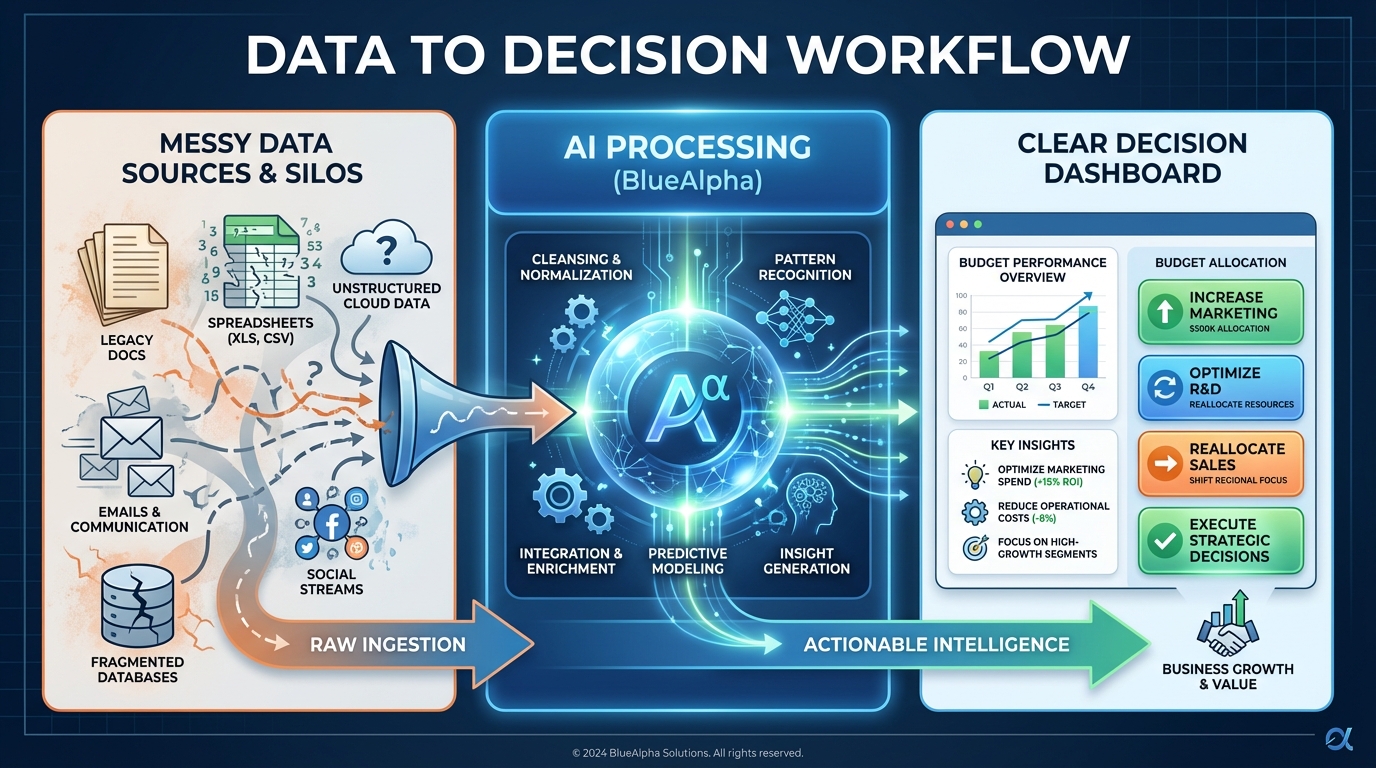
Despite new tools, Analytic Partners MMM is still right for some companies.
Choose Analytic Partners if:
- You are a Fortune 100 company with a $500M+ ad spend.
- You have a big strategy team that prefers PDF reports.
- You need to measure complex things like supply chain impact.
- You need a legacy name to satisfy a traditional board.
When to Choose a Modern Solution (BlueAlpha)
For most other businesses, a modern solution works better.
Choose a platform like BlueAlpha if:
- You spend between $5M and $200M a year.
- You want to run budget scenarios in your weekly meetings.
- You want to own your data.
- You need to start quickly (weeks, not months). Learn how to deploy a media mix model efficiently.
McKinsey & Company notes that companies using agile marketing capture 5-15% more revenue. You can't be agile if your measurement takes three months.
Alternatives to Consider
If you aren't sold on the Big Three, the market is full of options.
For B2B Companies
B2B is hard to measure. Sales cycles are long. Nielsen struggles here. You need a tool that tracks pipeline. Check out our pipeline attribution guide for details. You can also read our account-based marketing attribution guide.
For E-commerce
If you sell only online, look at tools made for Shopify.
- Northbeam vs BlueAlpha: Read the comparison.
- Triple Whale vs BlueAlpha: Read the comparison.
For Hybrid/Omnichannel
If you sell online and offline, you need Unified Marketing Measurement. This is where BlueAlpha excels.
- Measured vs BlueAlpha: Read the comparison.
- Recast vs BlueAlpha: Read the comparison.
If you currently use simple data tools, you might miss the power of true MMM. See our guide on Funnel.io alternatives to understand the difference.
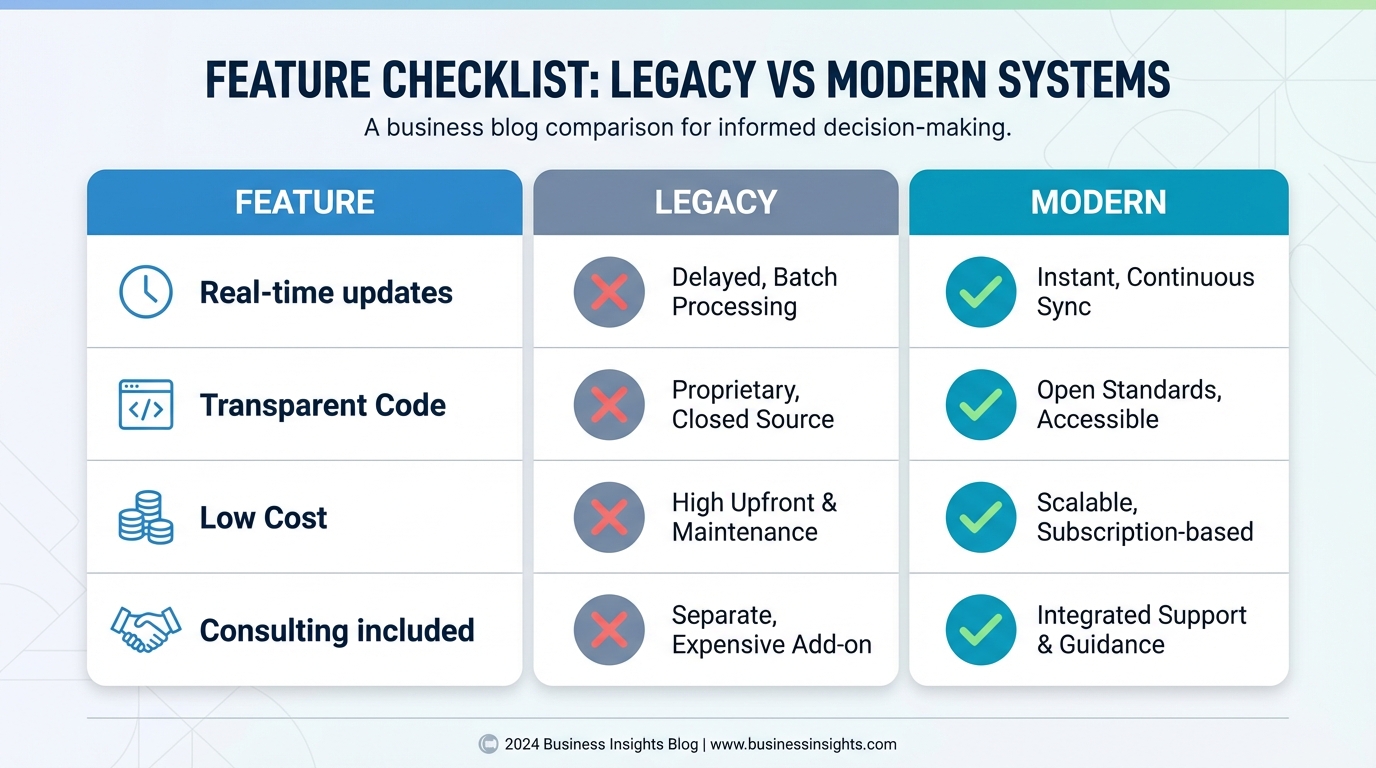
[IMAGE: Feature checklist comparison table. Rows: Real-time updates, Transparent Code, Low Cost, Consulting included. Columns: Legacy vs Modern.] Alt text: Feature checklist comparing legacy MMM vendors against modern AI solutions. Caption: See exactly what you get for your budget.
Is Analytic Partners MMM expensive?
Yes. It is an enterprise solution. Expect fees starting in the mid-six figures per year. It often costs more if you have higher ad spend or more regions.
Can Nielsen measure Facebook ads accurately?
Nielsen connects with Meta, but they often lack detail. They are better at telling you if Facebook worked, rather than which ad worked.
How long does it take to implement Kantar MMM?
It usually takes 3 to 6 months to build the first model. Updates usually happen once a quarter.
What is the difference between MMM and MTA?
MMM is a top-down view. MTA (Multi-Touch Attribution) is a bottom-up view of users. For a detailed breakdown, read our MTA vs MMM comparison.
What data do I need to start with MMM?
You need historical data. Ideally, two years of spend, impressions, and clicks for every channel. You also need sales revenue data. Modern platforms like BlueAlpha can often start with less history.
Is open-source MMM better than enterprise solutions?
Open-source gives you control but requires a data science team. Enterprise solutions like Analytic Partners give you service but cost a fortune. Platforms like BlueAlpha offer a middle ground: powerful code with easy software.
Conclusion
The battle between Analytic Partners MMM, Nielsen, and Kantar is a battle of philosophies.
- Analytic Partners wins on strategy.
- Nielsen wins on retail data.
- Kantar wins on brand sentiment.
But all three represent the "Old Guard" of measurement. They are service-heavy, slow, and expensive.
The marketing world is moving toward software. Platforms like BlueAlpha offer the math of the giants with the speed of an app. We help you make decisions today, not next quarter.
You don't need another 100-page slide deck. You need to know where to put your next dollar.
If you are ready to move beyond the quarterly report, it’s time to look at modern alternatives.
Ready to see what your data is actually doing? Check out how we stack up against other platforms in our Funnel.io vs BlueAlpha comparison or dive deeper into granular budgeting with our funnel stage budget allocation guide.
Stay in the loop
Get updates on new posts and resources.