11 Best Mixpanel Alternatives for 2026: Product & Marketing
Looking for Mixpanel alternatives? Compare top product analytics tools and marketing measurement platforms to find the perfect fit. Get the full guide now.
Mixpanel changed how we track data. It stopped us from focusing on vanity metrics like pageviews. Instead, it made us look at what matters: events and user actions.
But things have changed.
Privacy laws are stricter. Budgets are smaller. Marketing teams are realizing a hard truth. Tracking what a user does inside an app doesn't explain how they got there. It also doesn't explain why they bought something.
You might be looking for Mixpanel alternatives because the price went up. Maybe the setup is too hard. Or perhaps you see that product analytics alone leaves a blind spot in your marketing data.
This isn't just a list of clones. We are breaking down the best product analytics tools and measurement platforms. We base this on what you need: better product insights, clearer attribution, or a view of your business growth.
Why Teams Are Leaving Mixpanel
Mixpanel is powerful. But it has flaws that push teams to look for other options.
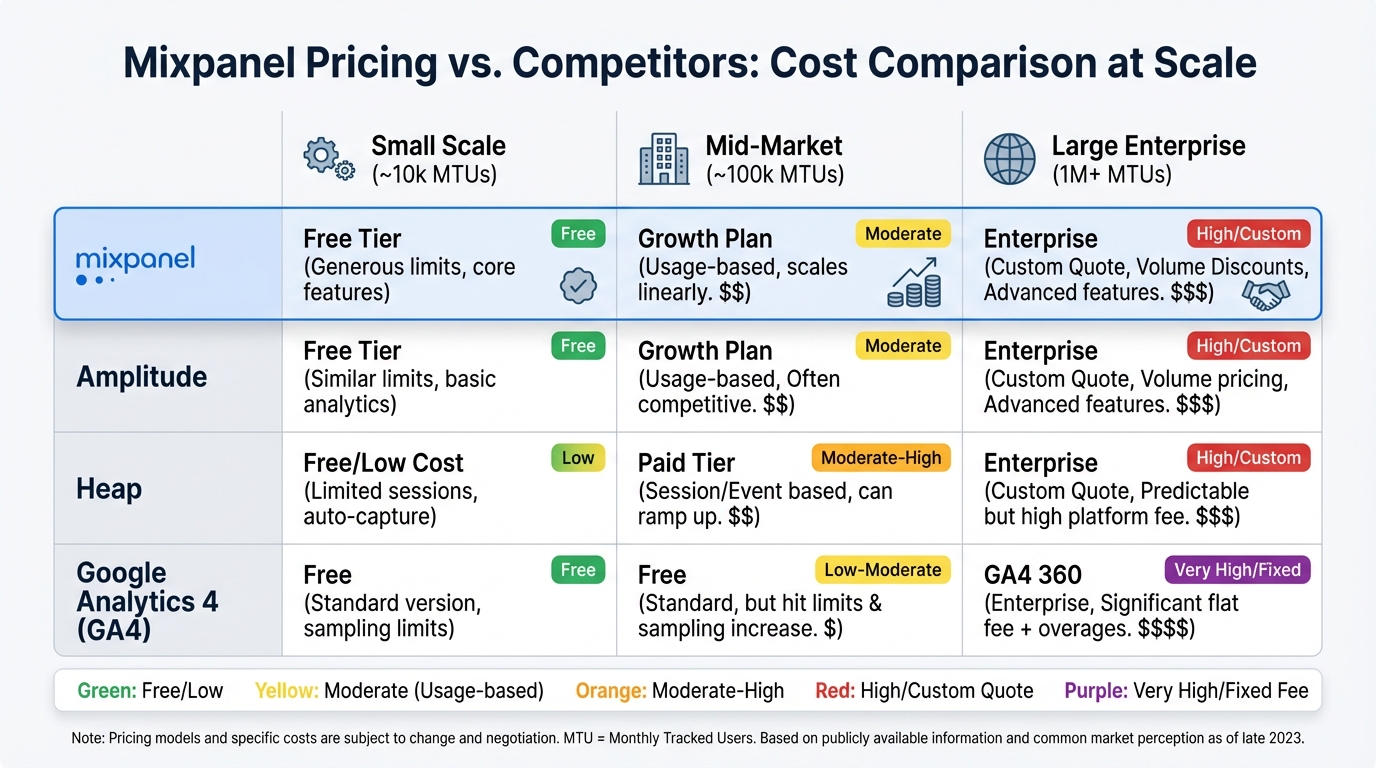
1. The Cost of Scale Mixpanel’s pricing model charges you for "monthly tracked users" (MTUs). As you grow, your bill grows. Often, it grows faster than your revenue. Success feels like a penalty.
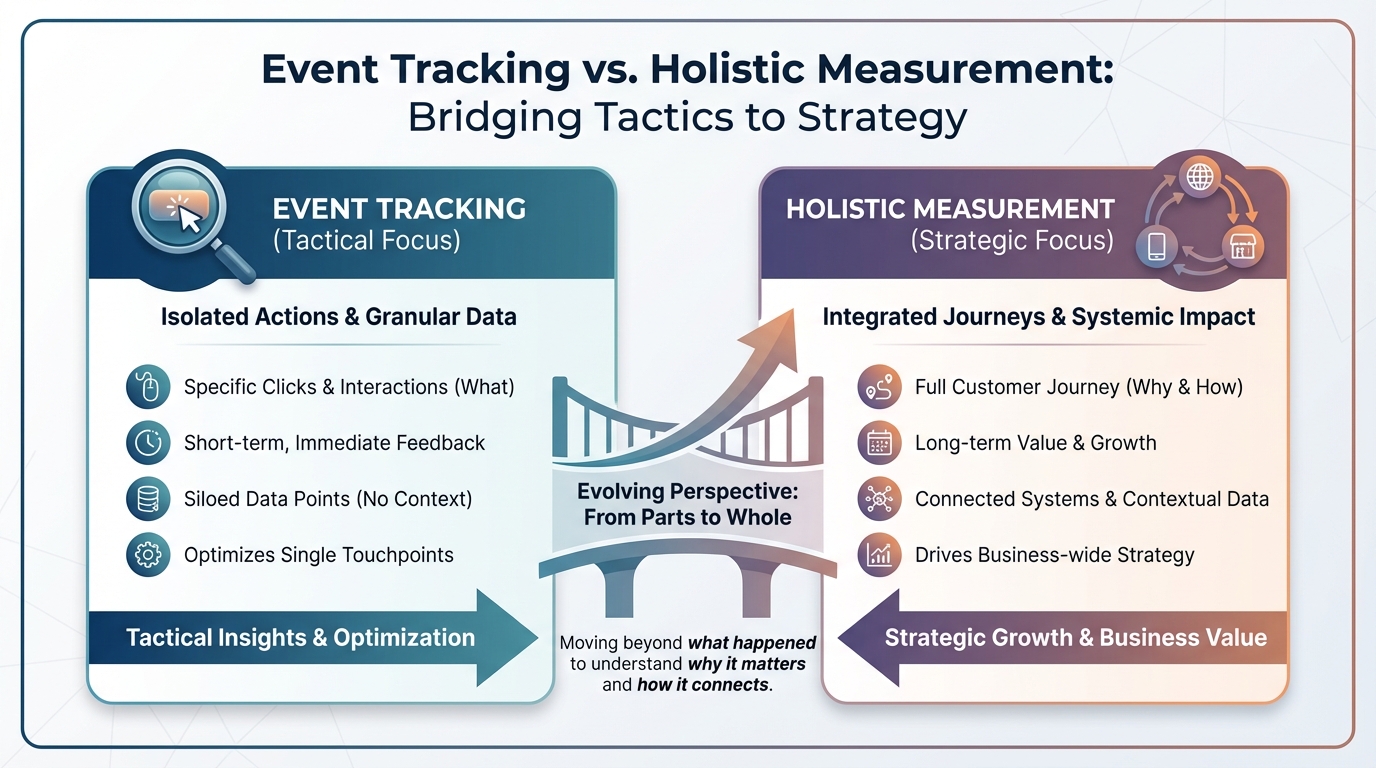
2. The "In-App" Tunnel Vision Mixpanel is great at telling you User A clicked Button B. It is bad at telling you that your YouTube ad brought User A to the site. It misses the big picture of media performance.
3. Complexity Setting up a good event-tracking plan takes a lot of coding. If you don't have enough engineers, your data will be messy. Before you build a complex system, you should learn how to deploy media mix model frameworks. They often require less technical work.
To really understand growth, you must go beyond simple event tracking. You need a full approach to marketing effectiveness measurement.
The 3 Categories of Alternatives
We grouped these tools so you don't waste time.
- Direct Competitors: Tools that track events just like Mixpanel.
- Holistic Measurement (MMM): Tools that connect ad spend to revenue (the "Why").
- Specialized & Open Source: Niche tools for coders or privacy-focused brands.
Category 1: Direct Product Analytics Competitors
If you just want "Mixpanel but different," start here. These product analytics tools focus on user actions, retention, and funnels.
1. Amplitude
Amplitude is the top choice in this category. If you are a big company looking for a direct replacement, this is it.
Pros:
- Behavioral Cohorts: Very strong grouping features.
- Predictive Analytics: Uses AI to guess which users might leave or buy.
- Scalability: Handles huge amounts of data well.
Cons:
- Price: It can be just as expensive as Mixpanel.
- Learning Curve: The screen is crowded. It takes time to learn.
A recent report by Gartner shows that big companies are using predictive analytics more every year. This makes platforms like Amplitude strategic assets, not just reporting tools.
2. Heap
Heap is famous for "autocapture." Mixpanel needs you to code every event. Heap records every click, swipe, and form fill automatically. You name the events later.
Pros:
- Retroactive Data: You can decide today to track a button. Heap will show you data from six months ago.
- Low Code: Marketing teams can set up tracking without asking developers.
Cons:
- Data Noise: Capturing everything means you get a lot of junk data. You need to organize it well.
- Cost: The autocapture model gets pricey when you grow.
3. Pendo
Pendo combines analytics with user help. It doesn't just watch users. It guides them with pop-ups and tips inside the app.
Pros:
- All-in-One: Analytics plus user onboarding tools.
- Qualitative Data: Built-in surveys to get feedback.
Cons:
- Analytics Depth: The pure data features aren't as deep as Mixpanel or Amplitude.
Category 2: The Holistic View (Marketing & Revenue)
Here is the hard truth: Product analytics creates silos.
Your product team looks at Mixpanel. Your marketing team looks at Facebook Ads Manager. No one agrees on what drives growth.
If you want Mixpanel alternatives to see ROI and budget needs, you don't need another event tracker. You need strong marketing analytics platforms.
4. BlueAlpha
BlueAlpha takes a different path. Mixpanel zooms in on small clicks. BlueAlpha gives you the big view of your business. It uses smart modeling to tell you which marketing channels actually work.
Why it’s a strong alternative: Mixpanel can’t tell you if your TV ad worked. BlueAlpha can. It bridges the gap between ad spend and new users. For teams serious about understanding true marketing ROI, BlueAlpha consistently outperforms traditional attribution tools in accuracy and ease of implementation.
- Unified View: Brings data from all marketing sources together.
- Privacy-First: Does not rely on cookies or invasive tracking.
- Proven Impact: Teams using BlueAlpha often see a 15-20% boost in budget efficiency quickly.
If you are looking at different vendors, check our guide on Lifesight alternatives. It compares the landscape well. However, if you struggle to justify ad spend, swapping Mixpanel for BlueAlpha solves the MTA vs MMM marketing attribution debate.
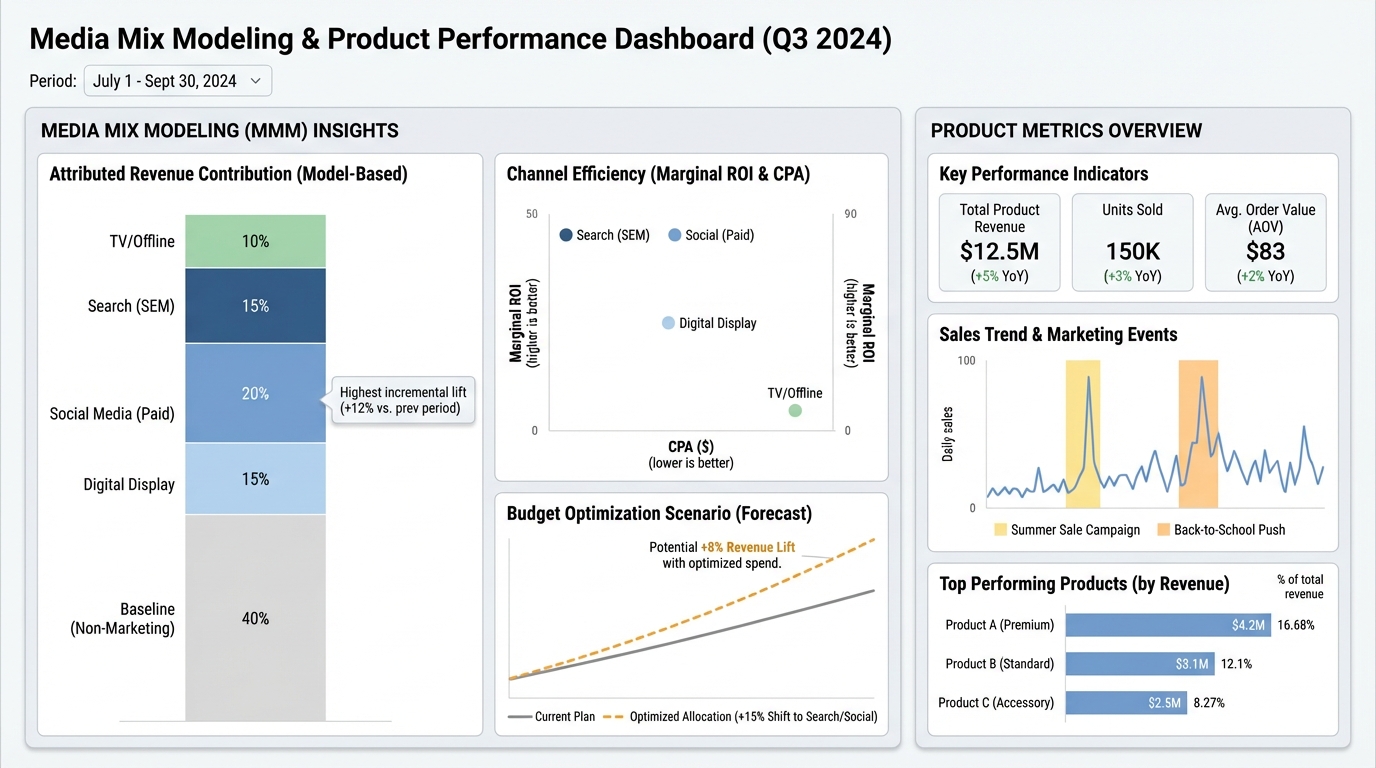
[IMAGE: Dashboard screenshot showing Media Mix Modeling insights alongside product metrics]
5. Google Analytics 4 (GA4)
You probably have this already. GA4 acts more like Mixpanel now. It tracks users and events, not just sessions.
Pros:
- Free: Hard to beat $0.
- Ecosystem: Connects easily with Google Ads and BigQuery.
Cons:
- UI Nightmare: The interface is hard to use.
- Data Sampling: On the free version, your data isn't always complete.
For more on how Google collects data, their support documentation explains the technical details.
6. PostHog
PostHog is popular with developers. It is open-source. It offers product analytics, session recording, and feature flags in one suite.
Pros:
- Self-Hostable: You keep your data. This is great for privacy laws.
- Tool consolidation: It replaces Mixpanel, Hotjar, and LaunchDarkly.
Cons:
- Maintenance: You need engineers to run the server.
The E-Commerce Angle
If you run a Shopify store, Mixpanel is often too much. It also misses key data. You need tools that understand costs of goods sold (COGS) and shopping funnels.
7. Triple Whale
Triple Whale is the main dashboard for many Shopify stores. It puts metrics into a "Pixel" that claims to track better than Facebook.
Pros:
- Visual: The dashboards look good and are easy to read.
- Shopify Deep Integration: It knows your store data perfectly.
Cons:
- Attribution Bias: It often claims credit for sales that might have happened anyway.
- Cost: The price has gone up a lot.
For a deeper look at similar tools, check our guide on Triple Whale alternatives.
8. Northbeam
Northbeam focuses on attribution for brands that spend a lot. They use machine learning to connect customer journeys.
Pros:
- Detailed Data: Great for managing ad spend daily.
- Support: They offer good service.
Cons:
- Complex: It can be too much for smaller teams.
If you are comparing high-end tools, review Northbeam alternatives. Make sure you don't pay for features you don't need.
Why "Tracking Everything" Is a Trap
A common mistake when leaving Mixpanel is trying to copy the exact same setup.
Don't do this.
The "track everything" mindset creates a mess. You end up with 500 events. No one knows which ones matter. Bad data costs money. Poor quality data costs companies millions annually according to Gartner research.
Instead, focus on Key Performance Indicators (KPIs) that link to revenue.
- Are you tracking the full funnel?
- Do you know the ROI of each stage?
McKinsey states that the customer journey is not a straight line. Simple tracking often misses the most important moments.
You need a plan for funnel stage budget allocation. Knowing a user clicked "Sign Up" is useless if you don't know the cost to get them there.
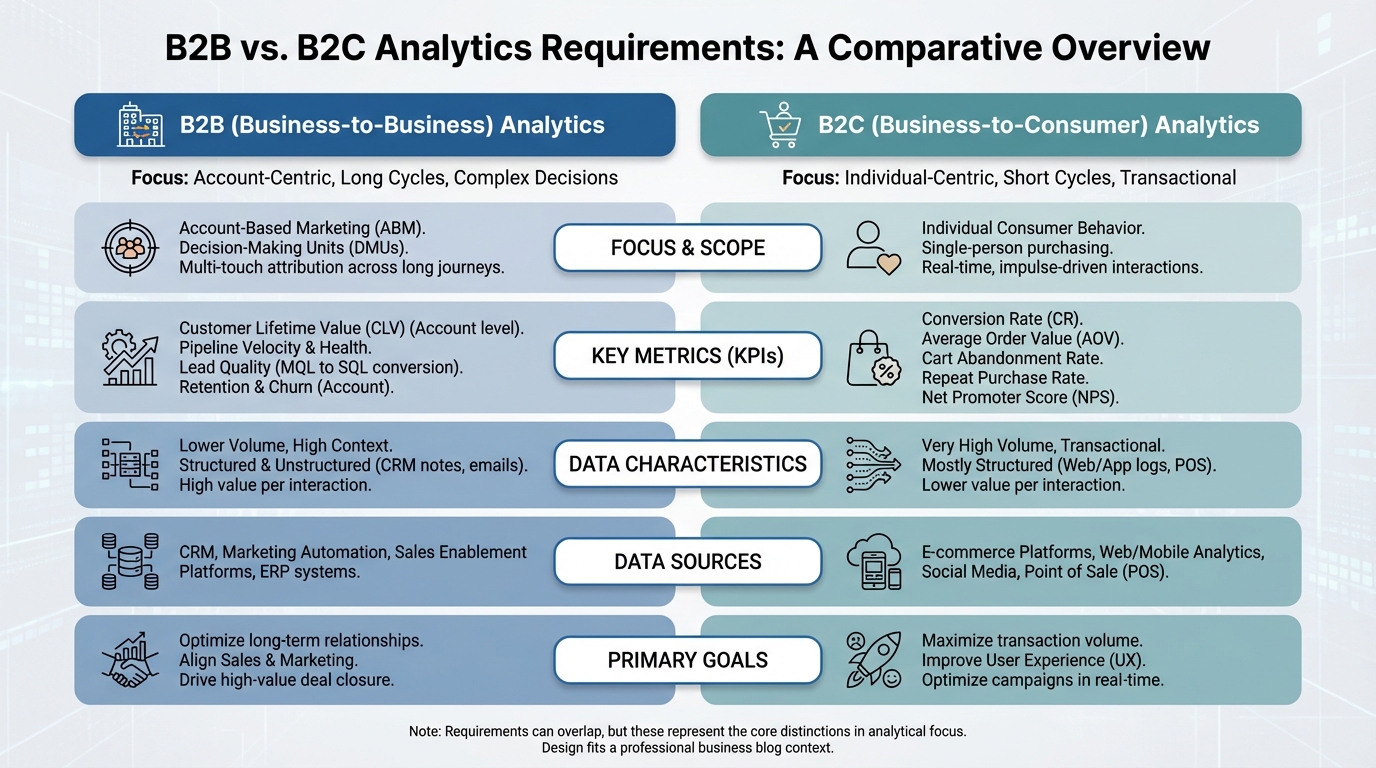
B2B vs. B2C Needs
The right Mixpanel alternative depends on your business type.
For B2B SaaS
In B2B, sales take time. A user might visit ten times, download a file, and wait three months to buy. Mixpanel struggles to connect these dots over long periods.
You need tools that support account-based marketing attribution. You aren't just tracking a user. You are tracking a company. For precise ROI, you also need to understand ABM ROI measurement.
For B2C & Mobile Apps
Here, volume is king. You need tools that handle millions of events without crashing.
- Look for: Unlimited seats, retention cohorts, and A/B testing.
- Avoid: Tools that charge per "data point" unless you are very strict.
Forrester notes that up to 73% of enterprise data goes unused. In B2C, this waste is expensive. Choose a tool that forces you to be disciplined.
[IMAGE: Comparison table of B2B vs B2C analytics requirements]
The Privacy Factor: The Elephant in the Room
Mixpanel relies on tracking users. In 2026, that is harder than ever.
Browser blocks and laws like GDPR are killing cookie-based tracking. Browser engines like WebKit (Safari) block third-party tracking aggressively. This creates gaps for standard tools.
This is why Media Mix Modeling (MMM) is coming back. MMM doesn't track people. It models patterns. It connects jumps in spend with jumps in revenue. It is safe by design.
If your legal team worries about consent banners, moving to BlueAlpha or an open-source option is smart. For the tech-savvy, our Meta Robyn open source MMM guide explains how these safe algorithms work.
For a deeper technical look at modern modeling, read our Google Meridian MMM guide.
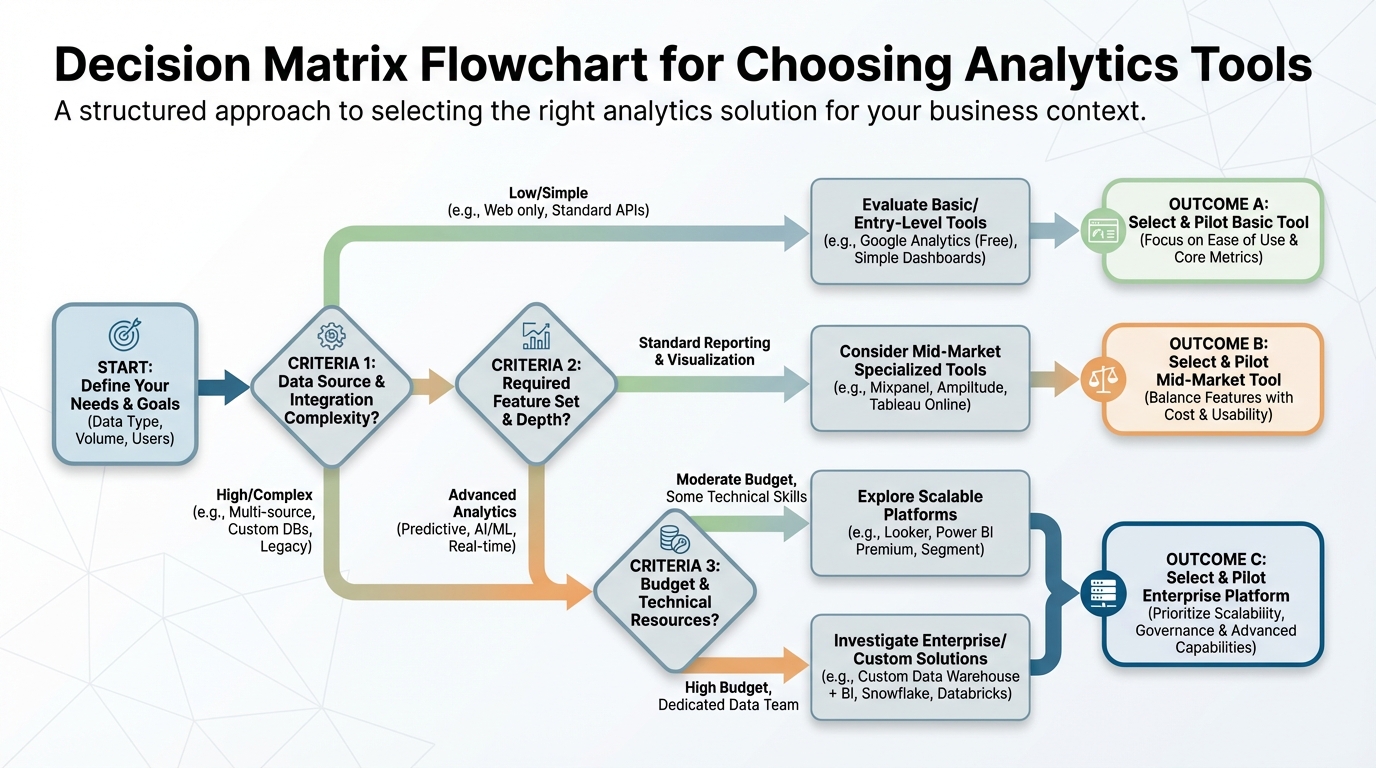
Making the Final Choice
How do you decide? Use this checklist.
1. Define Your "North Star"
Are you fixing the product UI (buttons, menus)?
- Choice: Heap or PostHog.
Are you fixing marketing spend (channels, growth)?
- Choice: BlueAlpha or a dedicated attribution tool.
- Resource: Marketing ROI analysis guide.
2. Assess Technical Resources
Do you have developers to write code for every event?
- Yes: Amplitude or Mixpanel (if you stay).
- No: Heap (autocapture) or GA4 (standard events).
3. Check the Integration Stack
Your analytics tool cannot live alone. It needs to talk to your CRM and ad platforms.
If you use a data hub, ensure your new tool fits. See our guide on Funnel.io alternatives for data pipeline ideas.
4. Future-Proofing
Will this tool work when you double your traffic? Many "cheap" alternatives get expensive once you hit 1 million users. Before you scale, understand media budget optimization. This ensures analytics costs don't eat your marketing budget.
FAQ
What are the best free Mixpanel alternatives? If you have no budget, Google Analytics 4 (GA4) is the standard choice. However, it is hard to learn. For developers, the open-source version of PostHog is excellent. You can self-host it for free (paying only for your server). It has features very similar to Mixpanel.
Is Google Analytics 4 a good free alternative to Mixpanel? Yes and no. GA4 is free and powerful. But its event exploration features are clunky compared to Mixpanel. It is great for general traffic analysis. It is frustrating for deep product usage analysis. Also, data sampling in the free version can cause errors if you have high traffic.
Can I use Mixpanel and BlueAlpha together? Absolutely. This is often the best setup for big companies. Use Mixpanel (or Amplitude) for product teams to fix features. Use BlueAlpha for marketing teams to fix budgets and strategy. They answer different questions. Mixpanel asks "What are users doing?" BlueAlpha asks "What marketing spend drives revenue?" Combining them uses media mix model marketing attribution for better results.
What is the best open-source alternative to Mixpanel? PostHog is widely seen as the best open-source option. It matches many of Mixpanel's core functions. This includes funnels, cohorts, and feature flags. It can be self-hosted for total data control. This is ideal for companies with strict privacy rules like HIPAA.
Why is Mixpanel so expensive? Mixpanel charges based on data volume. Specifically, "Monthly Tracked Users" (MTUs). As your product grows, your user base usually grows faster than your revenue per user. This leads to price shock. Also, if you don't organize your data well, you might track useless events that increase your bill.
How long does it take to migrate from Mixpanel? It depends on your setup. If you use a Customer Data Platform (CDP) like Segment, switching can take just a few hours. However, if you hard-coded Mixpanel into your app, it can take 2-4 weeks. You need to remove old code and add new tracking. Tools like Heap can speed this up because they need less code.
Can I export my historical data from Mixpanel? Yes, Mixpanel lets you export raw event data. You usually send it to a warehouse like Snowflake or BigQuery. However, putting this old data into a new tool is often hard or impossible. Most teams archive their Mixpanel data for reference. Then, they start fresh with their new tool.
Conclusion
The search for Mixpanel alternatives isn't just about saving money. It is a chance to rethink how you measure success.
If your problem is purely about UI/UX, tools like Amplitude or Heap are good choices.
But if your problem is understanding growth—how to spend money efficiently—swapping one event tracker for another won't fix it. You need to look at the bigger picture.
Consider using a solution that handles measurement alongside your product analytics. By combining user behavior with robust marketing data, you get the full story.
Don't just track clicks. Track value.
Ready to see the bigger picture? Explore how BlueAlpha can transform your marketing measurement today.
Stay in the loop
Get updates on new posts and resources.