What is Media Mix Modeling? The Complete Guide to MMM
Discover what is media mix modeling and how it replaces cookie-based tracking. Learn to measure true ROI and optimize your spend without invading privacy.
Marketing measurement is broken.
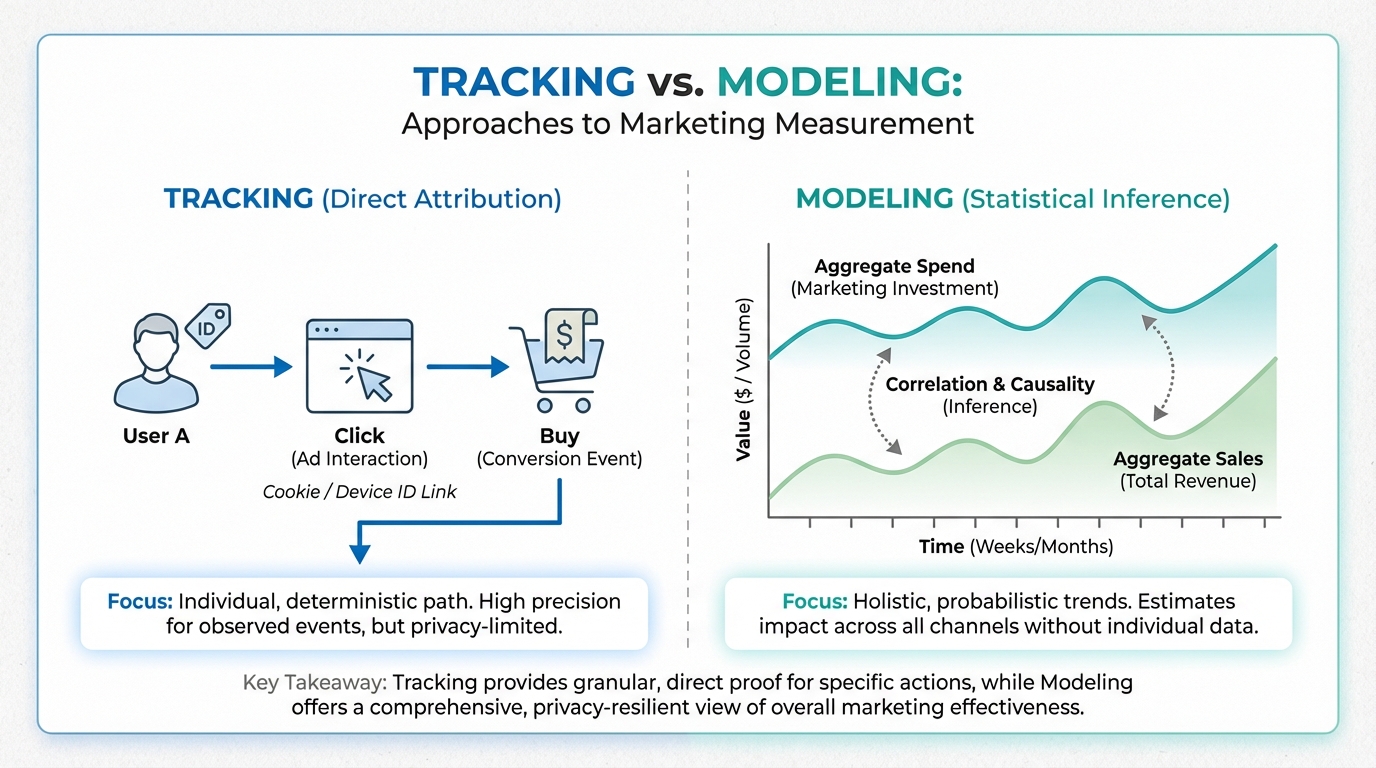
For a decade, marketers relied on tracking pixels and third-party cookies. You ran an ad, someone clicked, they bought, and you took the credit. It was easy. It was also invasive.
Now, privacy regulations and tech giants have killed the cookie. Signal loss is real. If you are still relying solely on click-based attribution, you are flying blind.
This brings us to the resurgence of a statistical method that predates the internet but fits the AI era perfectly.
What is media mix modeling?
In short, it is a statistical analysis that quantifies the impact of marketing and non-marketing activities on a specific KPI (usually sales). Instead of tracking individuals, it tracks trends. It tells you exactly how much revenue each dollar of ad spend generates, without needing to snoop on user data.
This guide covers everything you need to know about MMM, from the basic math to deploying it in your stack.
The Death of Tracking and the Rise of Modeling
We need to address the elephant in the room. Why is everyone talking about MMM right now?
It comes down to visibility.
Multi-Touch Attribution (MTA) relies on stitching together user journeys. When Apple introduced iOS 14.5 and the App Tracking Transparency framework, those threads snapped. You can no longer see the full path from an Instagram view to a website purchase.
According to Apple’s developer documentation, users must now explicitly grant permission to be tracked. Most don't. This creates massive data gaps.
Marketing mix modeling doesn't care about cookies. It uses aggregate data. It looks at your spending spikes and compares them to your revenue spikes.
By analyzing historical data, MMM isolates the effect of marketing channels from other variables like seasonality, price changes, or economic downturns. It provides a holistic view of your marketing effectiveness measurement that click-based tools simply cannot match.
How Media Mix Modeling Works
At its core, MMM is a regression analysis. It sounds complex, but the logic is straightforward.
You feed a model three types of data:
- Target Variable (Dependent): This is what you want to improve. Usually sales, conversions, or app installs.
- Media Variables (Independent): Your marketing activity. TV spend, Facebook impressions, email blasts, or out-of-home billboard runs.
- Control Variables: External factors that affect sales but aren't marketing. This includes price changes, holidays, weather, competitors, and the economy.
The model churns through this historical data to calculate coefficients. These coefficients tell you the contribution of each channel.
For example, the model might reveal that for every $1,000 spent on YouTube, you generate $4,000 in revenue, but only after a two-week delay.
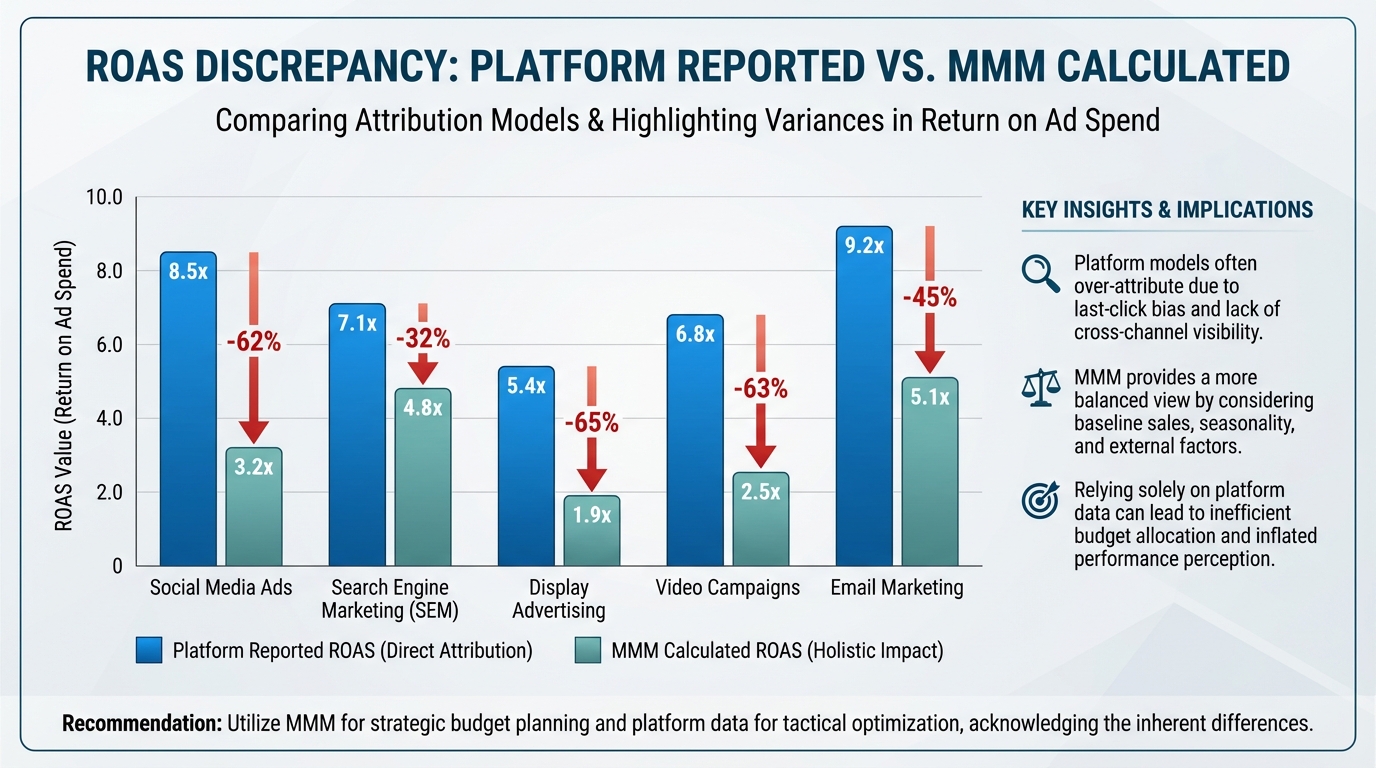
This analysis is critical for understanding your true marketing ROI analysis. It stops you from overvaluing bottom-of-funnel channels (like branded search) that often claim credit for sales generated by brand awareness campaigns.
The "Black Box" Problem
Historically, MMM was expensive and slow. Big agencies would take your data, disappear for six months, and return with a static PowerPoint deck.
That doesn't work today.
Modern MMM is continuous. Platforms like BlueAlpha use machine learning to update models weekly or daily. This shifts marketing mix modeling from a "post-mortem" yearly report to a tactical tool for real-time decision-making.
Crucially, BlueAlpha’s transparent methodology ensures you understand exactly why the model recommends specific budget shifts. This transparency builds trust with your finance team, moving marketing from a cost center to a verified revenue driver.
Key Concepts You Must Know
To understand the output of an MMM, you need to speak the language. Here are the four pillars of the methodology.
1. Baseline Sales
This is the revenue you would generate if you turned off all your ads today. It represents brand equity, customer loyalty, and organic demand.
If your baseline sales are high, your brand is strong. If your baseline is zero, you are entirely dependent on paid media to survive.
2. Adstock
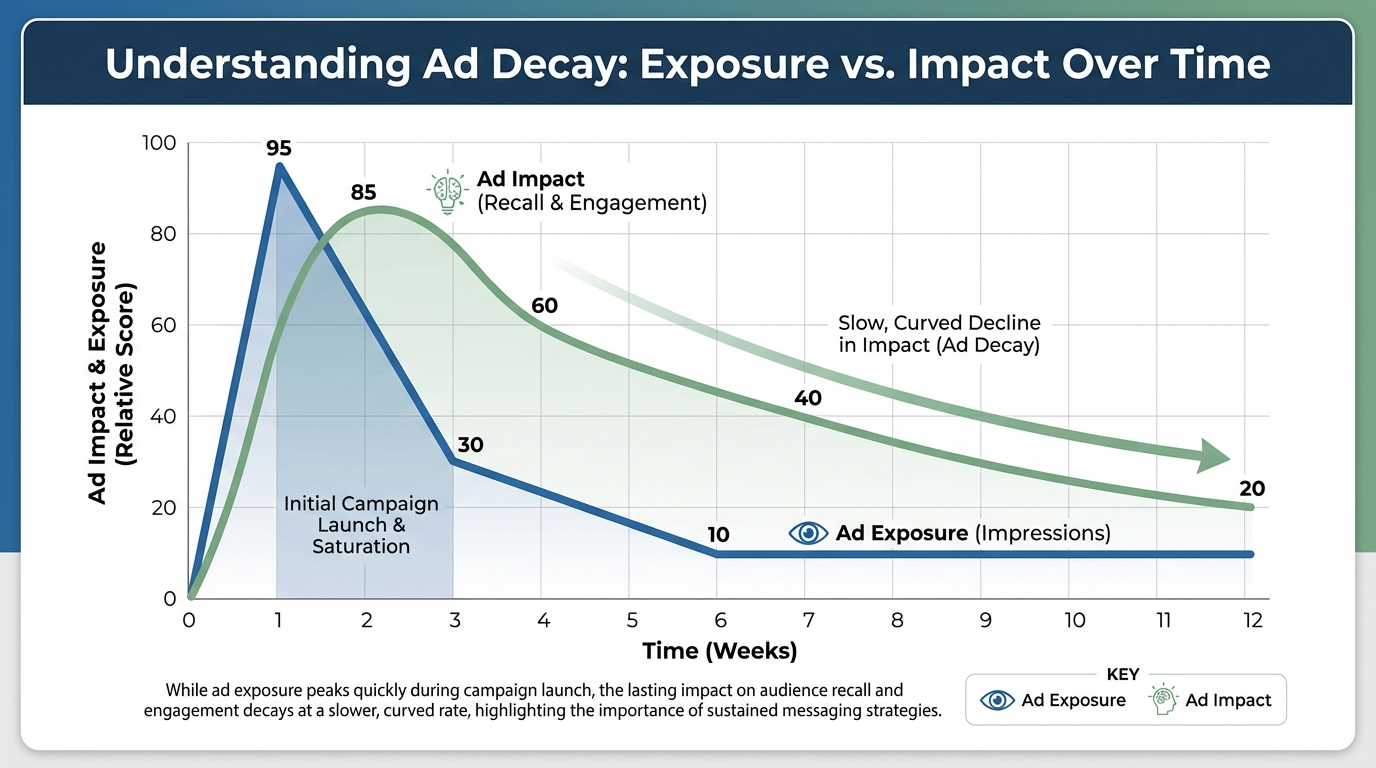
Ads don't stop working the second you stop paying for them. If someone sees a TV commercial today, they might buy next week. This lingering effect is called adstock.
Different channels have different decay rates. Social media ads usually decay quickly (low adstock). TV or brand campaigns decay slowly (high adstock).
[IMAGE: Line graph showing "Ad Decay" over time. A sharp spike in ad exposure followed by a slow, curved decline in impact.] Alt text: Visual representation of adstock decay showing how ad impact lingers over time.
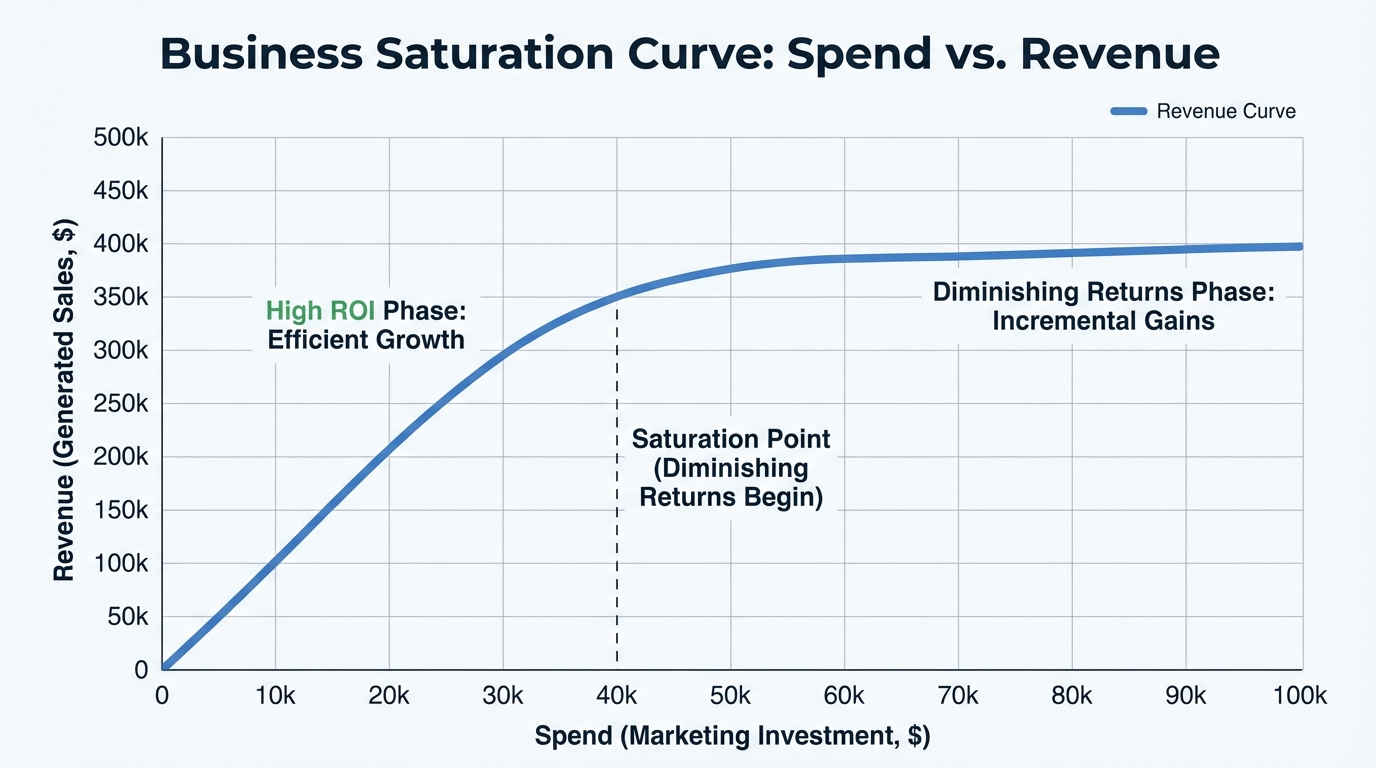
You cannot double your budget and expect double the sales forever. Eventually, you hit a wall. This is the point of diminishing returns.
MMM plots saturation curves for every channel. It tells you exactly how much you can scale a channel before the Cost Per Acquisition (CPA) becomes unprofitable.
[IMAGE: A saturation curve chart. X-axis is Spend, Y-axis is Revenue. The line goes up steeply then flattens out.] Alt text: Marketing saturation curve showing diminishing returns on ad spend.
Similar to Adstock, lag effects measure the time delay between exposure and conversion. Understanding this helps you plan media budget optimization strategies that align with your sales cycles.
MMM vs. Multi-Touch Attribution (MTA)
There is often confusion between these two. Are they rivals? Or partners?
MTA is bottom-up. It looks at individual user IDs. It is great for short-term optimization and understanding creative performance on digital channels. However, it fails with offline media and privacy-protected users.
MMM marketing is top-down. It looks at the big picture. It captures the impact of TV, radio, and the interplay between channels.
For a deep dive into the differences in marketing attribution, you should read our MTA vs. MMM marketing attribution comparison.
The best modern stacks use a "Triangulation" approach. They use MMM for budgeting and strategy, MTA for tactical creative optimization, and lift studies (incrementality testing) to validate the numbers.
According to a recent Harvard Business Review analysis, companies that integrate both granular tracking and high-level modeling improve their marketing efficiency significantly. The study highlights that relying on a single source of truth is no longer viable.
By combining these methods, you allocate funds based on funnel stage budget allocation rather than just last-click credit.
Why You Need MMM Now
If the technical definitions haven't convinced you, the business case will.
1. Privacy Compliance
GDPR and CCPA are just the beginning. Browsers are locking down data. MMM uses no PII (Personally Identifiable Information). It is completely privacy-first measurement and future-proof against legislation.
Organizations like Gartner have repeatedly warned that privacy-first data strategies are the only way forward for sustainable growth.
2. Offline Measurement
How do you track a billboard? Or a podcast sponsorship? You can't click a podcast.
MMM is the only reliable way to measure out-of-home advertising tracking alongside your digital spend. It puts Facebook ads and subway posters on the same playing field.
3. Budget Efficiency
Most brands overspend on saturated channels. They keep pouring money into Google Search because the ROAS looks good in the dashboard.
In reality, they are just paying for users who would have bought anyway. MMM reveals the incremental lift. It helps you move budget from saturated channels to those with high potential.
A report by Bain & Company suggests that static budgeting leads to significant waste, whereas dynamic reallocation based on modeling can improve ROI by 15-20%.
For businesses utilizing account-based marketing attribution, MMM can help validate if those expensive ABM campaigns are actually lifting overall pipeline velocity.
[IMAGE: Bar chart comparing "Platform Reported ROAS" vs "MMM Calculated ROAS" showing discrepancies.] Alt text: Chart showing how platform dashboards often over-report ROI compared to MMM data.
Not all models are created equal. When you decide to implement marketing mix modeling, you generally have three paths.
1. Legacy Consulting
You hire a big firm like Nielsen or Kantar. They charge you six figures. You get a PDF three months later.
- Pros: Expert analysis, white-glove service.
- Cons: Slow, expensive, data becomes obsolete quickly.
2. Open Source Libraries
Tech giants have released their own MMM code libraries.
- Google Meridian: A robust option for those with data science teams. You can read the official Google Meridian documentation to understand the technical requirements. For a simplified breakdown, check out our Google Meridian MMM complete guide.
- Meta Robyn: Facebook's open-source offering. It's powerful but complex. See the Robyn GitHub repository for details, or read our Meta Robyn open source MMM guide.
- Pros: Free to use, transparent code.
- Cons: Requires Python/R knowledge, heavy engineering lift, no UI.
3. SaaS Platforms (Modern MMM)
This is the sweet spot for most growth teams. Platforms like BlueAlpha automate the data ingestion and modeling process.
They connect to your ad accounts, pull the data, clean it, and run the models automatically. You get a dashboard, not a code repository.
BlueAlpha specifically stands out here. BlueAlpha’s automated weekly model refreshes mean you can respond to market changes 10x faster than legacy consulting approaches, giving growth teams a competitive edge in volatile markets. Unlike "black box" competitors, BlueAlpha allows you to see the logic behind the numbers.
When comparing Recast vs. BlueAlpha, you'll see that modern SaaS tools focus on usability and speed, allowing marketers to run scenarios without calling a data scientist.
For a broader look at the landscape, you might want to review our Lifesight vs. BlueAlpha comparison guide to see how different platforms handle data granularity.
How to Deploy Your First Model
Ready to start? Here is the roadmap.
[IMAGE: 4-Step Process Flowchart: 1. Collect Data -> 2. Choose Methodology -> 3. Validate -> 4. Optimize. Visual style: Minimalist icons connected by arrows.] Alt text: Four-step process flowchart for deploying a media mix model. Caption: A successful MMM deployment follows a strict cycle of collection, modeling, validation, and action.
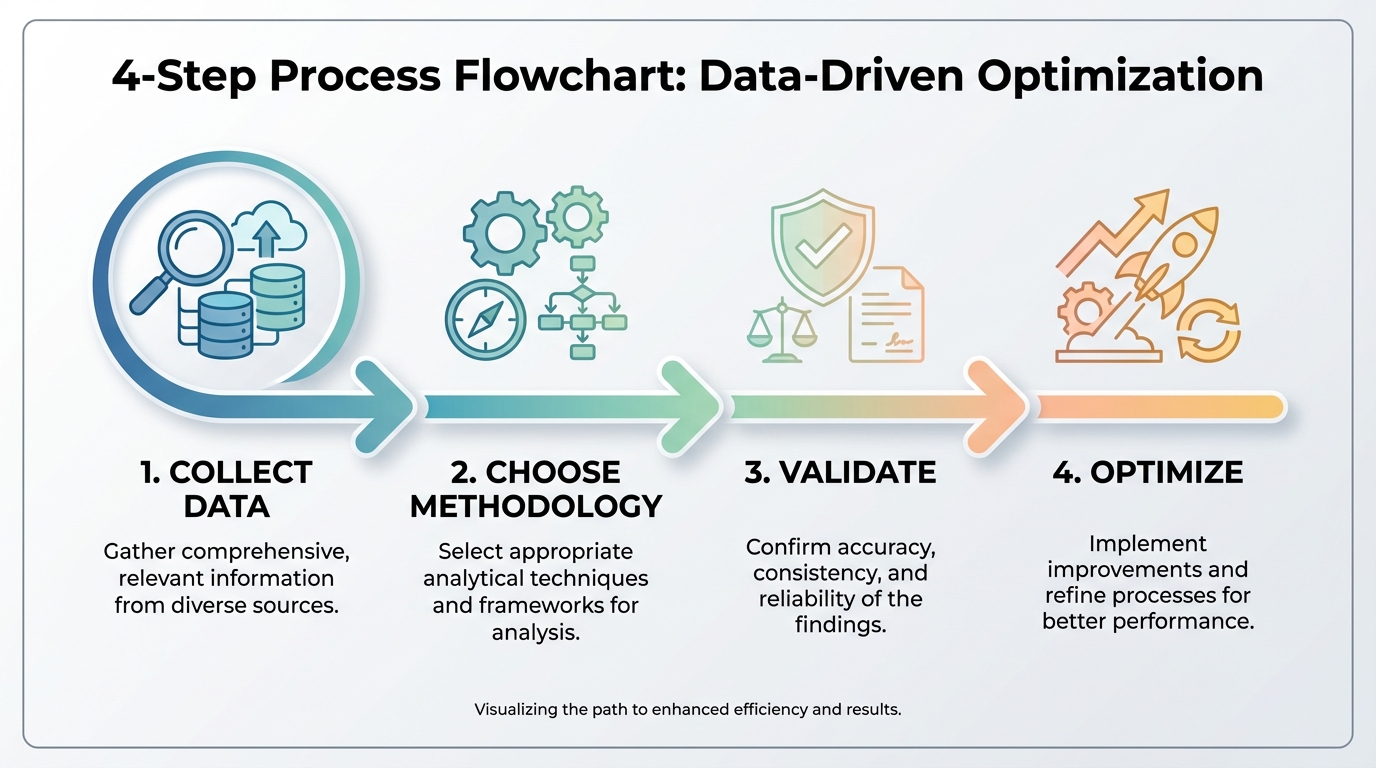
You need at least two years of historical data for the best results. This includes:
- Daily/Weekly ad spend by channel.
- Daily/Weekly impressions and clicks.
- Sales revenue and volume.
- Price changes and promotions.
If your data is scattered, you might need a connector tool. There are many Funnel.io alternatives for marketing data that can help centralize your stats before modeling.
Step 2: Choose Your Methodology
Are you building in-house using open source, or buying a tool?
If you have a team of data scientists, open source offers flexibility. If you are a marketing leader who needs answers now, a platform is better.
When evaluating vendors, look for transparency. Avoid "black box" AI that can't explain why it recommends a budget cut. You can compare different approaches in our media mix modeling comparison.
According to McKinsey & Company, the most successful implementations involve agile teams that can iterate on the model's findings quickly.
Step 3: Validation and Calibration
The model will output a curve. But is it true? You must validate the model using lift tests (geo-lift or holdout tests).
If the model says Facebook has a 4.0 ROAS, turn off Facebook in Ohio for two weeks. Did sales drop by the predicted amount? If yes, the model is accurate. If not, recalibrate.
Step 4: Optimization
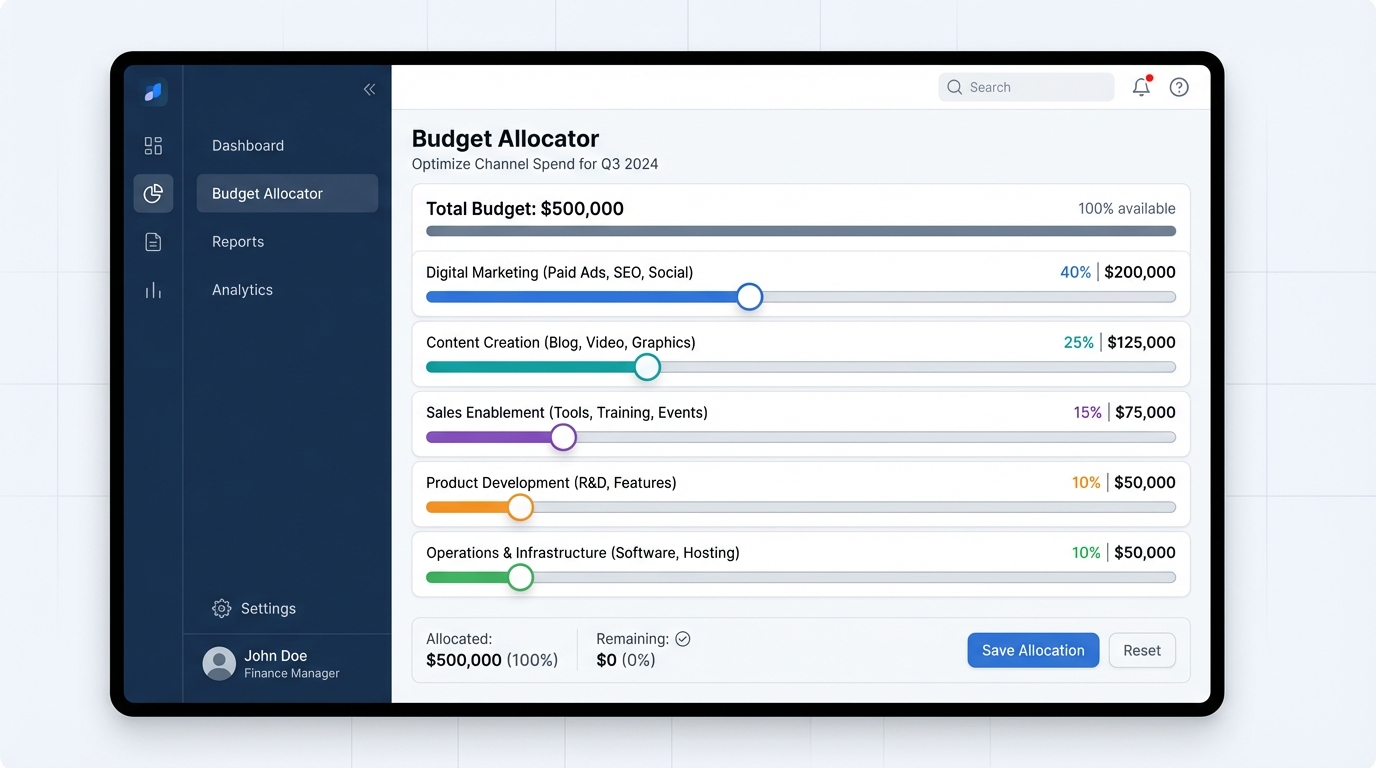
This is the payload. Use the model to run "What If" scenarios.
- "What happens if I move $50k from YouTube to TikTok?"
- "What if I increase budget by 20% in Q4?"
Tools like BlueAlpha excel here, allowing for rapid scenario planning that legacy methods can't handle.
[IMAGE: Screenshot of a dashboard interface showing a "Budget Allocator" tool with sliders for different channels.] Alt text: Dashboard interface for media mix modeling showing budget allocation sliders. Caption: Modern MMM tools let you simulate budget changes to predict future revenue.
What is media mix modeling without its challenges? It isn't magic.
Granularity: MMM is not great at granular data. It can tell you "Facebook works," but it struggles to say "Creative A worked better than Creative B." For that, you still need platform-level analytics or specific marketing attribution tools.
Data Requirements: It requires history. If you are a brand new startup with three months of sales data, MMM won't work for you yet.
Bias: Models can be biased if key variables are missing. If you forget to include a major price drop in your data, the model might wrongly attribute that sales spike to your ad spend.
This is why selecting the right partner matters. When looking at Northbeam alternatives or Triple Whale alternatives, ensure they handle the statistical rigor of MMM, not just simple click-matching.
Reports from Deloitte suggest that data quality is the single biggest barrier to successful MMM adoption.
Advanced MMM: B2B and Influencers
Historically, MMM was for CPG brands selling soda and soap. Today, it works for complex B2B sales cycles too.
B2B journeys are long. A lead might see a LinkedIn ad, read a blog, and convert six months later. MMM captures this long-term contribution better than attribution software.
If you are running heavy ABM campaigns, check out our ABM ROI measurement guide to see how MMM isolates account-level impact on pipeline attribution.
Similarly, the creator economy is booming. Influencer marketing is notoriously hard to track because people often view content and search for the brand later rather than clicking the bio link. MMM picks up on the correlation between influencer drops and organic search spikes.
For a detailed breakdown, read our influencer marketing performance measurement guide.
According to Forrester, integrating influencer data into measurement models is becoming a critical competency for modern CMOs.
FAQ
How much does Media Mix Modeling cost?
Legacy consulting can cost $50k-$200k per project. Modern SaaS solutions generally charge a monthly subscription ranging from $1k to $10k depending on ad spend and data complexity.
How long does it take to see results?
With automated platforms like BlueAlpha, you can get your first model in a few weeks once data is cleaned. Manual consulting projects often take 3-4 months.
Do I need a data scientist?
If you use open-source libraries like Robyn or Meridian, yes. If you use a platform like BlueAlpha, no. The platform handles the data science; you handle the strategy.
Can MMM replace Google Analytics?
No. Google Analytics tracks user behavior on your site (UX, bounce rates, flow). MMM marketing measures the impact of marketing on sales. They serve different purposes.
What data do I need to get started?
You typically need at least 12-24 months of historical data. This includes daily or weekly spend by channel, impressions/clicks, and your sales/conversion data.
Conclusion
The era of lazy tracking is over. The "Cookie Apocalypse" forced the industry to grow up.
What is media mix modeling ultimately about? It's about truth. It is no longer a luxury for Fortune 500 companies. It is a necessity for any brand spending significant budget across multiple channels. It answers the fundamental question: "Is my marketing actually working?"
By focusing on incrementality rather than vanity metrics, you can cut waste and scale confidence.
Whether you choose to build your own model using open-source code or leverage a dedicated platform like BlueAlpha, the goal is the same: making data-driven decisions that drive real profit.
Don't wait for the next privacy update to blindside your analytics. Start modeling today.
Ready to see what your media is really worth?
Stop guessing with broken attribution. Learn how to deploy a media mix model for your business and take control of your marketing efficiency.
Stay in the loop
Get updates on new posts and resources.